As growers across Southern Africa seek to improve crop establishment, water efficiency, and production consistency, specialised growing media is attracting growing interest in greenhouse, nursery, and high-value horticultural systems.
While conventional farming still relies on soil, protected agriculture and propagation systems increasingly depend on carefully formulated substrates designed to optimise germination, root development, aeration, and nutrient management.
According to Dean Oellerman, branch manager at Greenhouse Technologies, growers are looking for more reliable solutions that can support diverse crops and production environments.
Understanding growing media and substrates
The growing medium plays a critical role in greenhouse and nursery production, influencing water availability, root health, nutrient retention, and overall crop performance.
Common substrates used in protected agriculture include:
- Coir (coconut fibre): A renewable substrate valued for water retention and air porosity.
- Perlite: A lightweight volcanic material that improves drainage and aeration.
- Vermiculite: An expanded mineral known for its strong moisture-holding capacity.
- Peat moss: Widely used for its balance of water retention and aeration, though sustainability concerns have encouraged alternatives.
- Rockwool: Common in hydroponic systems for its water retention, insulation, and airflow properties.
Related stories
- ‘Our power, our planet’: Farmers innovate to protect soil and water
- Healthy soil: The power of soil aggregates and microbes
- Farminist founder blends farming skills with smart business
- Sustainable farming: How to balance soil health and income
Coir and peat: more than soil substitutes
Coir and peat moss are described as specialised substrates developed for seedling production, greenhouse systems, and intensive horticulture.
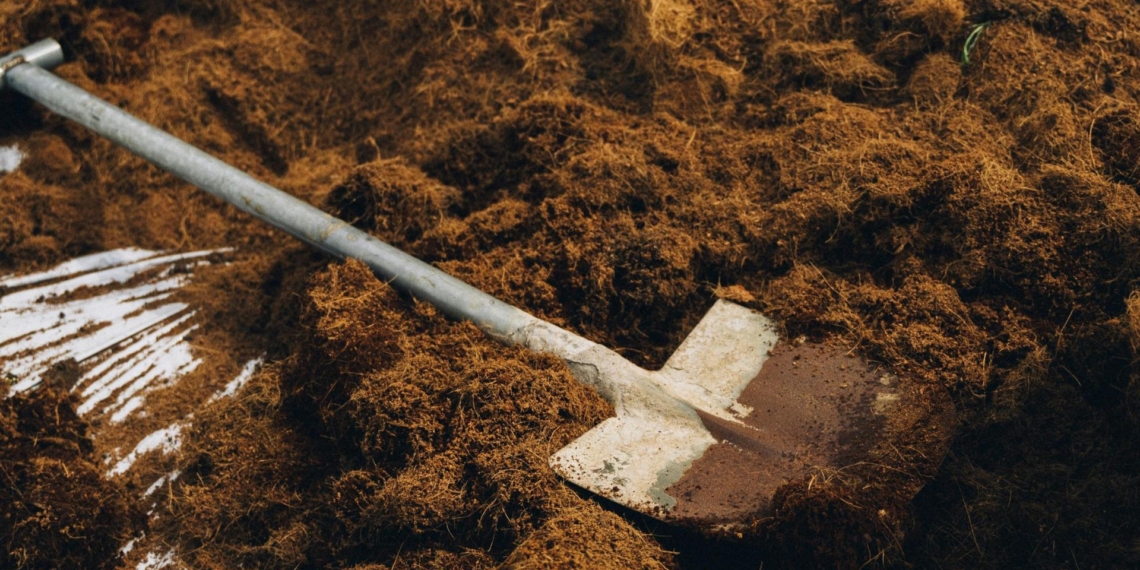
Produced mainly from coconut husks sourced from India and Sri Lanka, coir undergoes milling, drying, and compression before reaching growers. Transported in compact blocks or pellets, it is easier and more cost-effective to distribute across Southern Africa.
Once hydrated, however, the product expands significantly. Oellerman noted that a five-kilogram compressed block can yield roughly 60 litres of usable growing media.
Peat moss, by contrast, is a naturally occurring organic substrate harvested from wetland bog systems. Greenhouse Technologies sources its peat from Lithuania, where deposits form in permanently wet environments.
Peat is graded into different particle sizes depending on the crop and production system. Fine grades are suited to seedling trays and propagation systems, while coarser products are typically used in larger containers and longer-term crops such as blueberries.
“The finer peat mixes are generally used in seedling trays and smaller pots,” Oellerman explained. “The coarser products are used in larger containers, particularly for blueberries and mother plants in cannabis production.”
According to Oellerman, successful substrates must balance three key functions: moisture retention, oxygen availability, and drainage.

Hygromix and the importance of strong roots
Adding further perspective, soil scientist Peter Mudau highlighted the role of Hygromix in soilless production systems.
“Hygromix is one of the most common growing media used for soilless crop production, especially in nurseries. It sometimes contains fungal strains which further help in colonising and suppressing plant pathogens,” Mudau said.
Mudau emphasised that early crop performance depends heavily on healthy root development.
“A strong root system and automatic high crop performance depend highly on the initial stage of crop growth. The ability of Hygromix to provide a plant-pathogen-free environment, good aeration, and moisture retention stabilises crop growth. However, due to limited nutrients available for the entire growth stages in the Hygromix composition, supplementary nutrient addition is needed,” he explained.
Strong root systems can improve transplant establishment, nutrient uptake, and resilience to environmental stress, but Mudau stressed that growing media alone is not enough.
“Nutrient and water monitoring are essential when using Hygromix as a medium for crop growth. Poor water management might lead to nutrient deficiencies in the plant,” Mudau said.
Without careful irrigation and nutrient management, even high-quality substrates may not deliver optimal performance.
Balancing benefits with cost
While specialised growing media can support healthier root zones and cleaner production environments, cost remains a challenge for some producers.
“The utilisation of such commercially made growing media is good for a plant-pathogen-free environment, but very costly compared to bulk soil. Therefore, it won’t be easy for poorly financed farmers to produce high volumes of crops compared to well-established farmers with a stable financial structure,” Mudau said.
Adoption depends not only on agronomic benefits, but also on affordability and farm scale.
Improving germination and seedling performance
One of the main reasons growers adopt specialised substrates is improved propagation success.
Many operations still rely on bark, sand, or locally mixed media, but Oellerman said these alternatives do not always deliver the same consistency.
“A lot of growers still use bark or river sand, but they often don’t get the same success rates with germination,” he explained. “With these products, growers can achieve between 98% and 100% germination.”
According to Oellerman, seedlings raised in specialised substrates develop vigorous root systems while still in the tray, providing a stronger foundation before transplanting into the field. This can translate into improved transplant survival, faster establishment, and more efficient uptake of water and nutrients.
Adapting substrates for Southern African conditions
Growing media formulations that work internationally do not always suit Southern Africa’s hot, humid climates and varied irrigation conditions.
“We’ve developed products specifically for South African climates,” Oellerman said. “Our conditions are hot and humid, so we’ve adapted the recipes to improve drainage while still retaining moisture and nutrients around the roots.”
Perlite is often incorporated to improve airflow and water movement through the root zone.
“Perlite helps the water move through the medium more effectively. That gives growers more control over irrigation and nutrient management,” he explained.
Water efficiency is also driving innovation among growers operating in drought-prone regions. According to Oellerman, some blueberry growers reduce infrastructure costs by filling planting holes directly with specialised substrate rather than using containers.
“Blueberry production is expensive. Some farmers dig a 25-litre hole directly into the ground and fill it with specialised substrate instead of using a container,” Oellerman explained. “You still have a high-quality substrate directly around the roots, but you reduce the cost of the container.”
Suitable for growers of different scales
Although premium growing media is often associated with commercial nurseries, Oellerman believes smaller-scale farmers can also benefit.
Products are available in multiple packaging sizes, from smaller 70-litre bales suited to limited seedling production to 210-litre bales designed for high-volume propagation.
Applications include commercial seedling nurseries, on-farm propagation systems, greenhouse and tunnel production, and high-value crops such as blueberries and cannabis.
A strategic production decision
Transitioning to specialised substrates often requires adjustments to irrigation, nutrition, and crop management practices. However, as greenhouse production, protected agriculture, and intensive horticulture continue expanding across the Southern African region, substrate selection is becoming a strategic management decision.
For many growers, successful production begins not in the field, but in the root zone.
READ NEXT: Why SA should embrace landrace seeds during global uncertainty