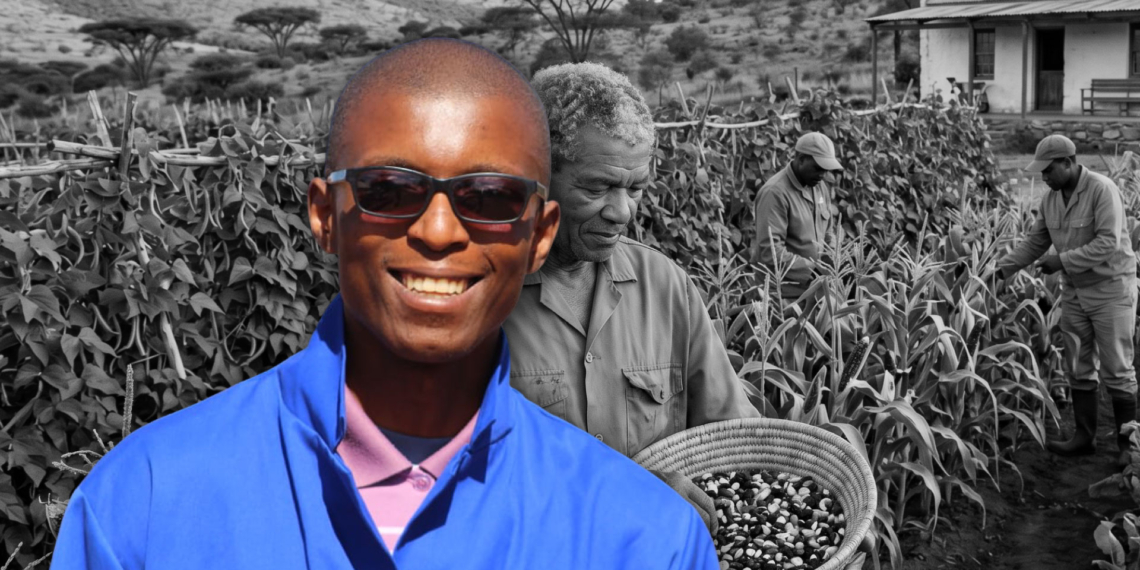
Is the future of South African farming hidden in its past? As commercial seed chains face disruption, Dr Lehlogonolo Matelele, a scientist at the department of agriculture, argues for the elevation of landrace seeds.
Across the globe, the seed industry is facing mounting pressure. Climate shocks, geopolitical tensions, rising input costs, and disruptions in global supply chains are exposing the fragility of highly centralised, commercial seed systems. For South Africa, these challenges are not distant headlines; they are increasingly felt in farmers’ fields, input prices, and food systems.
But within this uncertainty lies an opportunity. It may be time to fully recognise and elevate the role of landrace seeds, locally adapted, farmer-managed seed varieties, as a cornerstone of a more resilient, inclusive, and sustainable agricultural future.
A system under strain
Modern seed systems, dominated by commercial hybrids and proprietary varieties, have delivered significant gains in productivity over the past decades. However, they are also heavily dependent on stable global markets, consistent input supplies, and predictable climatic conditions. Today, those conditions are no longer guaranteed.
South African farmers, particularly smallholders, are increasingly vulnerable to:
- Rising seed and input costs
- Limited access to diverse crop varieties
- Climate variability, including droughts and floods
- Market volatility and supply chain disruptions
These pressures are prompting a critical question: Can a narrow genetic base sustain agriculture in an era of uncertainty?
Rediscovering landrace seeds
Landrace seeds, traditional crop varieties that have evolved over generations through farmer selection, offer a compelling alternative.
Unlike uniform commercial seeds, landraces are:
- Genetically diverse, allowing them to adapt to changing conditions.
- Locally adapted, often thriving in specific agro-ecological zones.
- Culturally embedded, linked to traditional knowledge and food systems.
- Farmer-managed, reducing dependence on external inputs.
In many rural communities across South Africa, these seeds have quietly persisted, maintained by farmers who understand their value not just as crops, but as heritage and resilience.
Related stories
- High-quality seeds, high stakes for smallholder farmers
- Seed banking: How smallholders protect SA’s crop heritage
- Mastering seed germination: The key to a strong maize harvest
Climate resilience rooted in diversity
As climate change intensifies, diversity is becoming one of agriculture’s most important assets.
Landraces often demonstrate:
- Better tolerance to drought and poor soils.
- Resistance to local pests and diseases.
- Stable yields under low-input conditions.
This makes them particularly valuable for smallholder farmers who operate in marginal environments and cannot always rely on irrigation, fertilisers, or pesticides.
In this context, landraces are not relics of the past; they are tools for the future.
The value of landrace seeds extends beyond productivity. They are central to cultural identity, traditional knowledge, and local food systems. Crops such as indigenous maize varieties, sorghum, beans, and leafy greens carry unique flavours, nutritional profiles, and culinary traditions that are increasingly being recognised and celebrated.
Moreover, landraces contribute to agro-biodiversity, the foundation of resilient farming systems. In a world where genetic diversity is rapidly declining, its conservation is not just desirable; it is essential.
Bridging formal and informal seed systems
South Africa’s seed landscape is often described as a dual system:
- A formal sector, driven by commercial breeders and regulated markets
- An informal sector, where farmers save, exchange, and adapt seeds
Historically, policy and investment have favoured the formal system. However, the current global uncertainty is exposing the limitations of this imbalance.
Recognising landraces means more than acknowledging their existence; it requires:
- Integrating them into national seed policies.
- Supporting community seed banks and local seed networks.
- Investing in participatory breeding approaches.
- Protecting farmers’ rights to save, use, exchange, and sell seeds.
A more balanced approach could strengthen national seed security while empowering local communities.
Economic and cultural value
Landraces also hold untapped economic potential.
There is growing demand, both locally and globally, for:
- Indigenous crops
- Nutrient-rich traditional foods
- Climate-resilient agricultural products
By supporting landrace-based value chains, South Africa can:
- Create new market opportunities for smallholder farmers
- Promote agro-biodiversity
- Strengthen food sovereignty
At the same time, preserving these seeds safeguards cultural identity and indigenous knowledge systems that are often overlooked in modern agriculture.
A turning point for policy and practice
Despite their importance, landrace seeds often exist on the margins of formal agricultural systems. Seed laws and certification standards tend to favour uniform, commercially bred varieties, making it difficult for farmer-managed seeds to be recognised, exchanged, or marketed. This creates a paradox: while landraces are crucial for resilience and sustainability, they remain largely unsupported by policy frameworks.
However, there are signs of change. Globally, there is growing recognition of farmers’ rights to save, use, exchange, and sell farm-saved seeds. In South Africa, this conversation is gaining momentum, particularly within civil society, research institutions, and farmer networks.
A window of opportunity
The current global uncertainty may, unexpectedly, offer a window of opportunity. As the limitations of industrial seed systems become more apparent, there is space to rethink and rebalance priorities.
Recognising and supporting landrace seeds does not mean abandoning modern plant breeding. Rather, it calls for a more inclusive approach, one that values both scientific innovation and farmer knowledge.
This could involve:
- Reforming seed policies to accommodate farmer-managed varieties.
- Supporting on-farm conservation, household seed banks, community seed banks and local seed networks.
- Investing in participatory plant breeding that involves farmers directly.
- Promoting markets for indigenous and locally adapted crops.
The way forward
As the seed industry navigates an uncertain future, the answers may not lie solely in laboratories or global markets. They may also be found in the fields of smallholder farmers, in the seeds passed down through generations, and in the knowledge embedded in local communities.
The time has come to bring landrace seeds out of the shadows and into the centre of agricultural policy and practice. In doing so, South Africa has an opportunity not only to strengthen its food systems but also to lead by example in building a more resilient and inclusive agricultural future. Because in the face of uncertainty, diversity is not a weakness; it is our greatest strength.
- The views and opinions expressed in this article are those of the author and do not necessarily reflect the views or positions of Food For Mzansi.
READ NEXT: Agriculture adds 960 000 jobs as strong harvests fuel growth