As the world marks Earth Day, the spotlight is shifting toward the foundation of all agriculture: the soil. While South African government leaders promote environmental stewardship among the youth, farmers on the ground are turning to innovation to combat soil degradation and water scarcity.
Against the backdrop of growing environmental pressure, deputy minister of forestry, fisheries and the environment, Narend Singh, is today leading the Earth Day 2026 celebrations at Avoca Primary School in Durban.
Held under the global theme “Our power, our planet”, the event, in partnership with the Mohanji Foundation, marks the launch of a school food garden initiative. The programme is designed to promote self-reliance and nutrition while teaching learners about waste management and community action.
Innovation in the face of farming challenges
While the department focuses on school-level action, agripreneurs are grappling with the physical realities of farming, such as maintaining soil health.
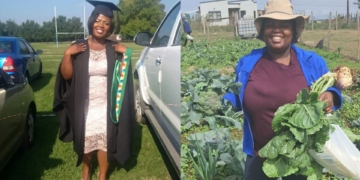
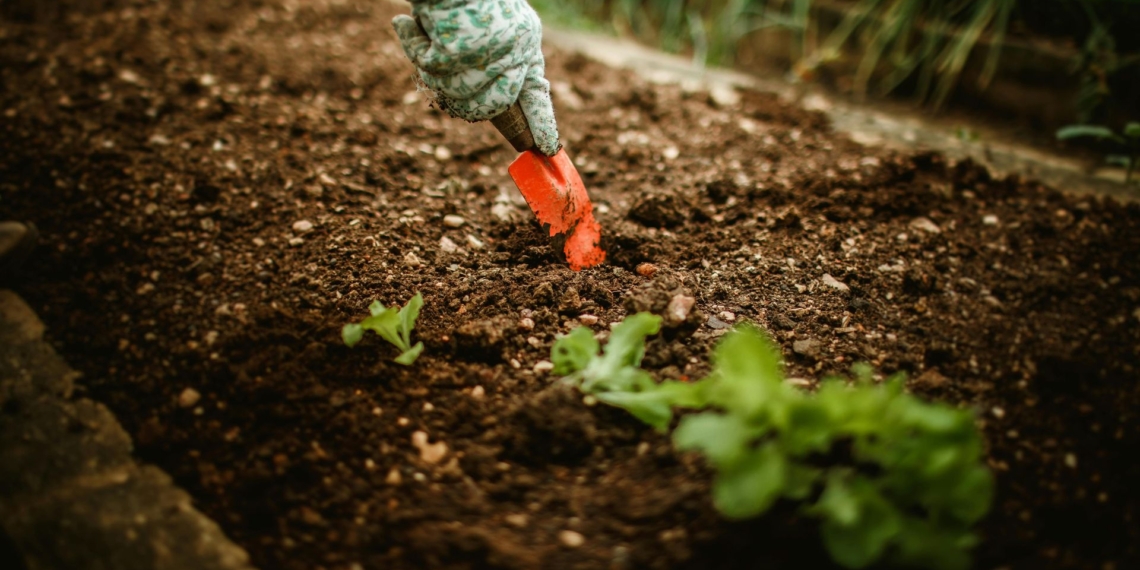
Phumeza Dolo, a farmer and herbalist from the Eastern Cape, said her journey started with significant soil obstacles. “The challenges I encountered with soil initially were stones as I kept digging down,” she explained.
Related stories
- Earth Day highlights urgent need for smarter irrigation
- Healthy soil: The power of soil aggregates and microbes
- Flourishing go-getter ditches city for farm
- Flagstaff farmer keeps hope growing when the rain stops
“Most of the soil I am working with currently is prepared in buckets or containers and closely pH-monitored. I use lights to make my plants grow faster and grow some aquaponically as well as hydroponically in order for me to get a fast growth rate because of the high demand,” she said.
Despite these advances, Dolo admitted that weather fluctuations make traditional soil conservation difficult. “My soil conservation methods are not satisfying as the weather and seasons change.
“They have a bad or unstable habit towards production, and therefore, I outsource herbs I don’t have rather than being inconsistent in my ingredients.”
In Gauteng, crop farmer Tebogo Makgatho is dealing with similar issues, specifically soil that struggles to retain moisture and a lack of baseline data.
“My crops like spinach and pumpkin get fungus, and my soil doesn’t hold enough water for a long time. I think the fact that we have never tested our soil is a challenge because we don’t really know what kind of soils we are working with,” Makgatho noted.
Conserving water and the land
To counter this, Makgatho is leaning into water-saving technologies. He has recently integrated a drip irrigation kit and is optimising a circular flow hydroponic system to be more efficient.
“I think operating hydroponic systems for food production integrated with solar can be a greener path,” he says. Regarding soil, his approach is strictly organic. “We only consider organic fertiliser when purchasing and ensure we don’t add things that have a residual effect in the soil.”
Makgatho is also experimenting with deficit irrigation for cabbage and onions. By stressing the plants during their early stages and only increasing water during bulbing or head formation, he avoids the traditional 80-100% irrigation cycle.
For Makgatho, the true measure of Earth Day’s success lies in the longevity of the land. He has experimented with biochar on spinach with significant results, producing large, healthy leaves without the need for additional fertiliser and is now exploring carbon sequestration.
“Mostly, it’s about whether we can harvest from that land. If we can, then we know it has worked. If future generations can still harvest there, only then will the land be truly conserved,” Makgatho said.
READ NEXT: Updated plant health protocols open doors for SA citrus in China