For 16 years, Christine Mesolo was committed to her transport business. However, after buying her first two plots in 2011, it took her by complete surprise how much she loved farming. Christine is one of the inspiring women who was selected for the Corteva Women Agripreneur 2022, a year-long blended development programme at the Gordon Institute of Business Science (GIBS) Entrepreneurship Development Academy (EDA).
Born and bred in Pretoria, Mesolo considered herself an office lady before her farming journey started.
“I have never had an interest in farming at all and prior to starting farming, I was an office lady,” says Mesolo.
Her transport company was quite a success, but Mesolo and her husband decided to take a leap of faith in 2011 and bought two plots.
“When my husband [and I] decided to buy the farms that we are currently operating and residing at, I was like ‘wow’. Out of all the things we decided to venture into buying plots.”
Building from scratch
Initially, the plan was for Mesolo to go into events planning and use the land for that purpose. She had the skills to be able to run the back office and she was determined to do just that. Not once has Mesolo ever thought she would be part of the daily farming operations and running a farm completely.
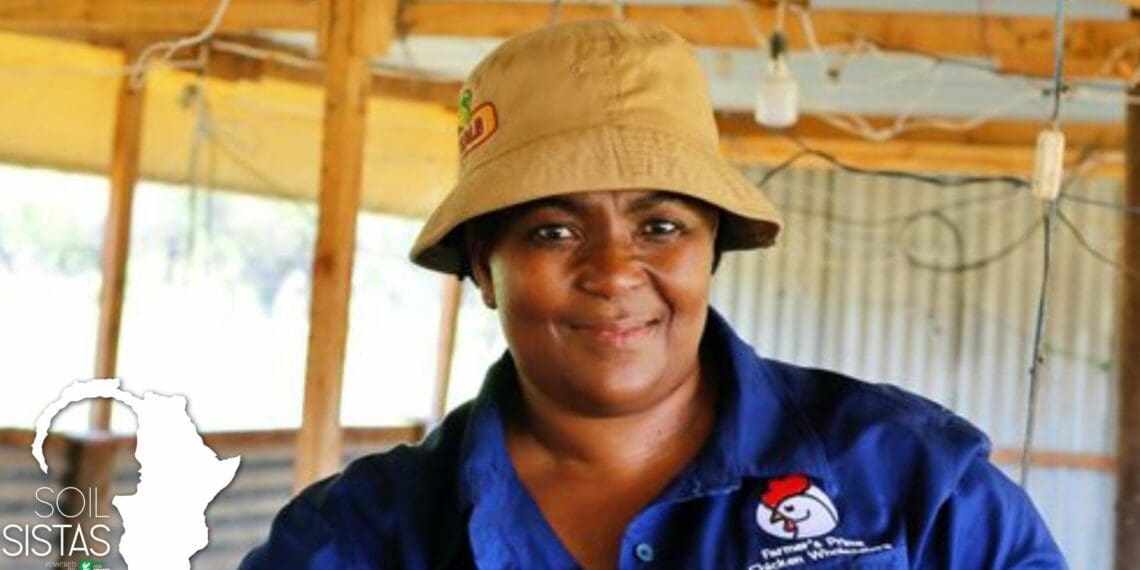
In 2020 when Covid-19 struck, a neighbour encouraged Mesolo to go into broiler farming because the transport industry was at a standstill and the uncertainty had an impact on her financially.
“On the one farm we reside and on the other, we do broiler rearing,” she explains. “On the plot where we live, we farm with crops such as spinach and herbs”.
They also intend to venture into citrus farming soon.
Starting with the basics
Mesolo started with 500 chickens and her neighbour guided her through the process. She was also warned about the expectancy of mortality in her coop.
“I followed through with all her advice and out of the 500 chickens, only five died,” says Mesolo.
After the success of the first batch, Mesolo got a second batch of chickens. She followed the procedure as she did with the first, and the results were the same. With a low mortality rate, good quality and weight, she has not looked back since, and the demand has grown.
“We rear chickens from a day old to six weeks. I started with 500 and currently have about 25 000 that we grow in a cycle. We also add more value to the business by selling both live and dressed ones, package them into different chicken portions, process them into chicken sausages, chicken mince, chicken patties, nuggets, and chicken biltong, to name a few,” she explains.
Today, Mesolo runs the transport business and the farm simultaneously. It is absolutely challenging but worth it, she says. “It was a fulfilment, and that’s how I started.”
Making it through the hurdles
Even though Mesolo did not have the knowledge or background in agriculture, it did not stop her from continuing. Her biggest challenge was not being certain if this is where she belongs and if she could make a success out of the business.
“I am a perfectionist. If I do something, I want to do it 100%. I don’t have room for failure. I wanted to be certain that whatever I am doing doesn’t have issues,” Mesolo says.
Google was her friend, she adds, but to truly equip herself, she had to find a place she wanted to learn and the Corteva programme was the next step.
“Agriculture is a business. It’s not just ordinary farming. It is a business making sure that the production of chickens is 100%.”
Life-changing Corteva programme
The Corteva programme was just what Mesolo needed to grow. She was determined to push through all the adversities to become a successful businesswoman.
“I grabbed the opportunity with both hands. God answered my prayer by opening the training door that is handed in both theory and practical experience, one on one mentoring to learn from, so that I can incorporate all valuable lessons learned and still learn for the next level. Big up to Corteva with what they are doing in impacting women in agriculture so that they flourish in agricultural business.”
Connecting and collaborating with other women was one of the best things the programme could have brought into Mesolo’s life. She says it has indeed changed the way she looks at her business and where she is heading.
Mesolo has a love for her community, specifically her employees. She believes it is important to train and equip them with the necessary skills to better the farm, but also their lives.
“We are giving back by making sure we provide employment. We make sure that we train them to better their lives.”
She invested in the lives of farmworkers’ children. To her, it is important to help them become educated and build the skills to become successful in life regardless of where they come from as individuals.
ALSO READ: West Coast abalone farm is a beacon of hope
Get Stories of Change: Inspirational stories from the people that feed Mzansi.