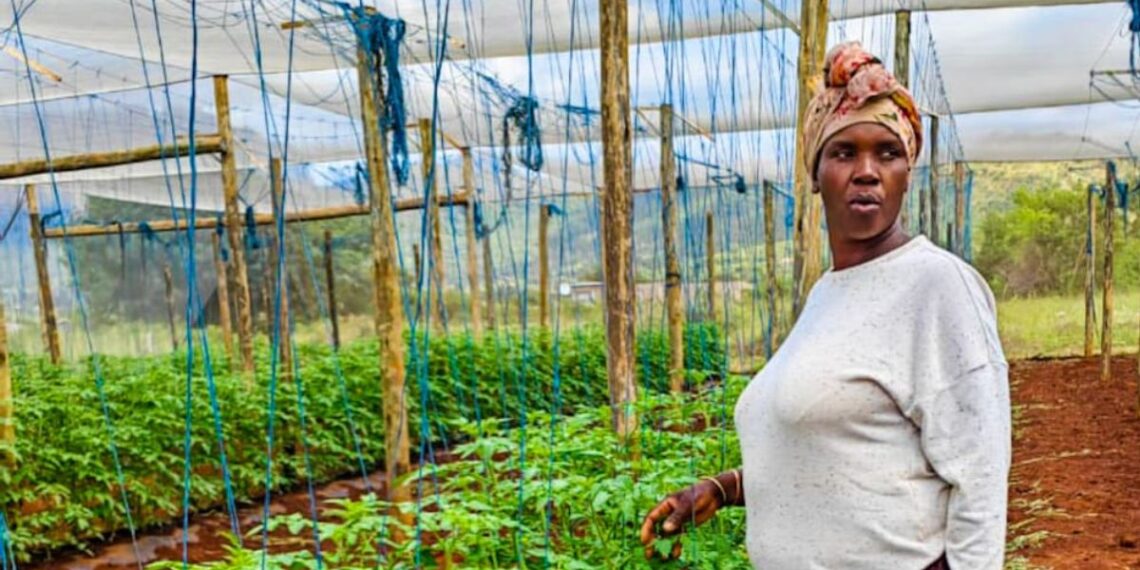
Leydah Sekgobela of Polokwane, Limpopo, starts each day with her hands in the soil, tending to her 9.2-hectare farm where marrows, green beans, baby corn, tomatoes, and cherry peppers flourish.
“I told myself that if farming was going to be my future, I was in it to make money,” she says. Since taking the leap into self-employment in 2013, Sekgobela has proven that small-scale farming can yield big results.
“I began with peppadews but quickly realised this was a seasonal crop. To make the farm viable, I had to grow crops all year. I had to find cash crops. Spinach and cabbage, which can be grown all year round, proved the answer,” she explains.
Selling her produce wasn’t easy. “Then I had a cash crop but no market. I had to travel around shops and local markets to sell my vegetables. I didn’t have contracts but felt that my produce spoke for itself because of its high quality and would sell to shopkeepers and even hawkers.”
Coping with competition and negotiating realistic prices remained challenging.
“The tough bargaining around prices taught me that to be a successful farmer and salesperson, you must be reliable and offer quality produce.
“Once I had proved that I always delivered what I promised when I promised it, I found that I became a preferred supplier and that retail buyers would be loyal. I now have buyers who are prepared when times are tough to buy at decent prices.”
From small farm to big impact
A turning point for Sekgobela came through her partnership with Spar and its rural hub.
“Our four-year relationship with Spar started with a site visit as they were looking for farmers they could work with under Spar rural hub. They came to our farm; they were impressed at first sight and that started the connection.
“At the time of their visit, we had cabbage on the land and immediately sold this to Spar. We were also advised to grow cocktail tomatoes rather than the cucumbers we had been growing in tunnels and were not doing well. Today, we are producing about 20 tonnes of tomatoes a year and making a profit.”
Related stories
- EC student farmer turns family farm into future opportunity
- Force of nature: Amoré Viljoen revives black-owned fruit farm
This partnership has been transformative in many ways. Leydah now benefits from contracts that provide certainty regarding prices, a single customer who purchases her entire crop, and access to packing facilities.
Extension officers visit her farm every two weeks, offering guidance on production techniques and problem-solving. She can also send photos for quick advice if challenges arise between visits. In addition, Spar provides loans for seeds and fertiliser, and even support for labour costs, helping her manage operational expenses and grow the business sustainably.
“Although we grew several different crops for Spar, we are now concentrating on cocktail tomatoes and baby marrows,” Sekgobela says.
“The fact is that even if you have trustworthy supervisors, they don’t know how much you have personally invested in the farm, what you have spent on buying seedlings, fertiliser, and all the other farming needs, which is all the factors that make your attachment to the land deep and lasting.”
Sekgobela produces about 135 tonnes of crops annually, supplying Spar’s rural hub, a food canning company, and packing operations.
“It came as no surprise when her incredible progress was recognised and named the ‘Most Improved Farmer of the Year’ by Kagiso Trust’s Tyala Impact Fund last year in September 2024, an achievement that made all of us very proud,” says Mpudi Maubane, Spar’s PR, communication, and sponsorship manager.
“Leydah has proved that emerging women farmers are fast becoming an agricultural force to be reckoned with. They are strong women who have demonstrated that with dedication and hard work, they can match the quality of produce from the fields of the biggest commercial farms with the resources and technologies that emerging farmers can only dream about,” Maubane adds.
Empowering women, growing futures
Spar’s broader role is about more than business. It is about creating a sustainable, inclusive food system that supports emerging farmers and strengthens local economies.
“Ongoing support for agriculture is focused on practical interventions. Our involvement with agriculture and food security is based on helping to create an inclusive food system that includes emerging farmers, particularly the support and empowerment of female farmers,” says Maubane.
“Spar helps small-scale farmers increase outputs and their ability to supply markets in urban centres. This strengthens local economies by ensuring that affordable prices are received for crops, spending takes place in communities, and employment opportunities are created by Spar becoming the primary customer.
“Through our two rural hubs in Limpopo, farmers are mentored and assisted with boosting their agricultural knowledge and production techniques. In addition, they receive assistance and support to manage their operational costs and buying capital assets. The result is that small-scale farmers can produce crops in commercial quantities.”
Giving back is also central to Sekgobela’s vision. “Giving back and encouraging others, particularly women, to enter farming is important, so we encourage young potential farmers to test their choice of agriculture as a career by working as interns on our farm.”
Through grit, determination, and the support of partners like Spar, Sekgobela has transformed a small farm into a thriving operation. In doing so, she has shown that Mzansi women farmers are not just growing crops, but growing a movement, planting the seeds of change for the country’s agricultural future.
READ NEXT: Corteva uplifts South Africa’s women farmers