The Centre for Ecological Intelligence (CEI) at the University of Johannesburg (UJ) is an innovative hub dedicated to advancing sustainable urban agriculture, food and nutrition security, and active community engagement.
Founded with the vision of creating a centre that supports research, teaching, and advocacy in agroecology and environmental sustainability, CEI has established itself as a beacon of hope and innovation in community settings such as schools, villages, and campuses in Gauteng, Eastern Cape, and Mpumalanga.
A living laboratory for experiential learning
The CEI is more than just a research centre; it is a living laboratory where theory meets practice. The centre has set up integrated food systems at various sites, offering incubation hubs for experiential learning. It also provides practical experience for undergraduate and postgraduate students and integrated learning for agricultural students and youth employment service interns.
The University of Johannesburg CEI project manager, Godfrey Ndamane, said undergraduate and postgraduate students from diverse disciplines engage in hands-on research and projects that bridge the gap between academic knowledge and practical application. These projects include aquaponics, hydroponics, agroecology, the circular economy, transforming food waste into rich and liquid fertiliser, entrepreneurship within the water-energy-food nexus, and more.

“We train urban farmers, people who want to go into farming, and students curious about agriculture.
“Our focus is on crop production but we are also exploring poultry farming and aquaculture. We want each of our projects to be commercially viable and to have a societal impact on our surrounding community,” said Ndamane.
Innovative projects and sustainable practices
Since its inception, CEI has successfully implemented several groundbreaking projects. These include the UJ food gardens, aquaponics and hydroponics projects, and the Siyakhana Igadi Solwazi Project.
The centre’s integrated food systems project, initiated in 2021, transformed a barren space on a hilltop at the UJ Bunting Road campus into a vibrant hub of activity and learning. This project integrates fish farming and vegetable cultivation with a focus on commercialising vegetables rather than fish.
“We identified a space on campus and saw the potential to create something impactful.

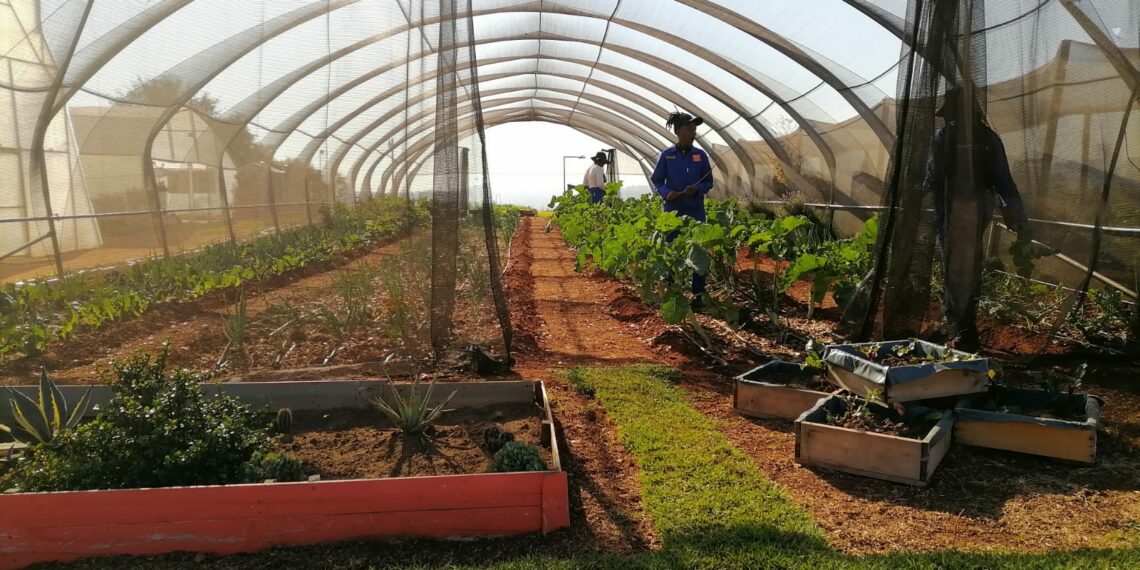
“Our first project was with a ‘groundbreaking’ aquaponic system which integrates fish farming and vegetable cultivation. This inventive system has attracted huge research interest. We then established a seedling nursery, two grow tunnels for vegetable and herb production, and a wormery. Our goal is to create a hub where students can conduct research and learn in a real-world environment,” he said.
According to Ndamane, the CEI’s commitment to sustainability is evident in its vermicomposting project which turns organic waste into valuable compost using earthworms. This initiative not only fosters a good relationship with the campus community but also promotes sustainable waste management practices.
Community engagement and social impact
Community engagement is at the heart of CEI’s mission, according to Ndamane. He believes through collaboration and hard work all involved parties will benefit.
He said the centre actively involves local communities in its projects, addressing pressing social issues such as poverty, hunger, job creation, and climate change resilience.
“Through partnerships with local schools, such as Yeoville Community School, Yeoville Boys School, and New Nations High School which accommodate disadvantaged communities, CEI aims to help set up food gardens and educate the community about sustainable agriculture.

“I think gone are the days where universities are just there to produce graduates without impacting community development. We want to open up this place to people who are curious and passionate about making a difference,” Ndamane said.
Achievements and aspirations
Ndamane said the achievements of CEI are numerous. “The centre has provided aquaponics training to students and unemployed individuals, coordinated impactful projects like the CEI Research Training and Food Systems Hub, Phumulani Agri Village, and contributed to academic and applied research.”

Their produce supplies the Waterford Restaurant, a commercial restaurant for the UJ’s School of Tourism and Hospitality, demonstrating a successful semi-commercial model that benefits the university and its students.
Looking ahead, CEI aims to expand its projects and continue fostering innovation in urban agriculture. With plans to develop a solar greenhouse fully operated on solar energy, and enhance its research capabilities, the centre is poised to lead the way in sustainable food systems and ecological intelligence.
“The Centre for Ecological Intelligence is a testament to the power of collaborative, inclusive, and sustainable practices in urban agriculture. By transforming theoretical knowledge into practical solutions, CEI not only advances academic research but also creates tangible benefits for local communities.
“As CEI continues to grow and innovate, it stands as a model for how universities can contribute to a fair, just, and sustainable society,” Ndamane said.
ALSO READ: Harvest hell: Late, foreign maize seedlings devastate NC farmers
Sign up for Mzansi Today: Your daily take on the news and happenings from the agriculture value chain.