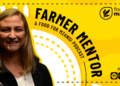
Mosa Balesamang does not just raise sheep; she raises the bar. With a scientist’s brain and a farmer’s heart, she shares how she runs her farm in Botswana in this episode of the Farmer Mentor series.
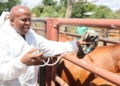
When Mosa Balesamang walks into a kraal, phone in hand, you know it’s not just about checking up on her sheep. She’s getting ready to film a digital masterclass. The animal scientist, livestock consultant, and rising star of Botswana’s agri-TikTok scene is helping rewrite what it means to farm.
If you ask Balesamang when it all started, she won’t tell you it began in a lab or a lecture hall. “I think what came first was being a farmer’s daughter. That just made way to animal science, which gave way to sheep farming, which gave way to consultancy. So it was predestined.”
Though she didn’t grow up permanently on the family farm, school holidays meant taking the dusty drive to the land, a place she once resisted. “At that time, it sounded like punishment,” she laughs. “I don’t want to go to the dirt. Look at me. How many years later, and I want to grow a family and an empire on that same land.”
Now a third-generation farmer, Balesamang has found purpose in what she once pushed against. “Funny. What I once despised is now what I live and breathe.”
When knowledge meets legacy
Earning her animal science degree in 2017 was a turning point, but also a full-circle moment. “I always saw what we did on the farm and identified gaps. I thought, there must be better ways of doing this, maybe we’d make money.”
Convincing her father to move away from traditional farming was not easy. Sometimes, she would suggest things, and her father would say, “Yeah, I hear you”. However, ten years later, nothing would’ve changed. “So I thought, let me come back with expert advice,” she shares.
Now, if Balesamang suggests a certain breed of sheep, her father listens because he trusts that his daughter knows what she is talking about.
READ NEXT: Avocado farmer grows success by thinking like a boss
Balesamang’s farm is no ordinary setup. She recently introduced a new breed called Île-de-France. “Previously, we had black-headed Dorpers, very hardy, common in Botswana. However, I wanted to cross that with the Île-de-Frances maternal traits, good milk quality, and high weaning weights.”
The result, she shares, is a dual-purpose breed tailored for both meat and mothering. “We’re already in the third generation of our cross, and I am seeing the change.”
TikTok, tractors, and trust
In an industry often known for gatekeeping, Balesamang has made it her mission to share farming advice on social media. From dehorning to lambing season, she documents everything.
Social media, she shares, has also helped her with market access. “The whole online community feels like family. So when I say I have sheep for sale, people already trust the quality. The content does the work.”
However, not everyone was convinced at first. Especially her brother. “He loathes it,” she says. “He’s always like, ‘Do you have to document everything?’ And I tell him, ‘Go away, brother. This is my money.’”
Related stories
- Debt-free farming: Saunderson’s path to feedlot prosperity
- Mbokane’s mission: Start small, fall hard, rise higher
Farming like a scientist
Being a young woman in Botswana’s agricultural sector hasn’t been easy. “Five years ago? It was hard. As a woman and youth, you’re questioned, especially by older men. ‘What can you possibly teach me?’ they ask.”
However, Balesamang didn’t flinch. “Farming is dynamic. So is science. What worked ten years ago might not work now. Medicines have changed. So have pathogens. We need to move.”
Balesamang sees farming as more than just producing livestock. For her, it’s a relationship with the land and animals built on respect, care, and long-term thinking. Her approach reflects a deep sense of responsibility, not only as a farmer but also as a scientist and environmental steward.
“I partner with the environment. You don’t stomp on the land. You glide with it,” she jokes.
Her sheep are free-range, grazing on savanna grasslands in a rotational system that gives nature time to recover. “Minimal disturbance. That’s my policy. As an animal scientist, I feel it’s my duty to advocate for environmental sustainability. To be a custodian.”
Balesamang offers advice for the next generation of agri-leaders: “You’ll be doubted. Questioned. Looked down on. But the dream must burn. It must burn brighter than all the no’s and all the maybes. It must bother you. If you don’t do something toward it every day, it should burn inside of you.”
For her, it is not just a passion. It is purpose, and Balesamang is living it – online, in the kraal, and everywhere in between.
READ NEXT: Agriculture sector to confront climate crisis at key summit
Sign up for Mzansi Today: Your daily take on the news and happenings from the agriculture value chain.