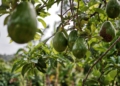
The Missionvale Care Centre (MCC) in Gqeberha has an organic vegetable garden, growing broccoli, spinach, cabbage, tomatoes, cauliflower, carrots, beetroot and more. They layer hay to “blanket” the growing produce, trapping moisture. It’s important in the Nelson Mandela Bay municipality, which almost saw Day Zero in 2022 and has been in a drought for a decade.
They do not use municipal water for the sizeable plot, instead using JoJo tanks and a reservoir. The run-off is collected into the reservoir, and the JoJo tanks collect the infrequent rainwater.
“The reservoir is a bank, and the JoJo tanks are like the ATMs,” said marketing manager Linda van Oudheusden.
Xoliswa Buzo runs the garden with a skilled team, training about 25 people for half the year before they rotate onto another programme. After working in the garden, community members receive token currency called “MCC bucks”, which they can use at the swap shop for food, clothing and toiletries.
The harvest goes towards food parcels, the culinary school and the swap shop.
Nomsa Buru and Jossita Jacobs run the nutrition unit, which hands out food parcels, daily bread and soup powder. It’s important for the little ones to see their parents cooking, said Van Oudheusden.
Shorter queues, more independence
“Our whole mission is to develop people and get them on a path of independence,” said Van Oudheusden. They moved away from a welfare model towards a more developmental angle. The strictly charity approach had unintentionally set the narrative of “I can’t do it for myself”.
After a meeting, they put together a community exchange system: a platform for community members to do something in exchange for what they receive. Either people recycle, volunteer, do skills development programmes or attend a support group, for which they receive MCC bucks.
“So there’s great dignity. It’s not a handout. And they can choose what they need, rather than us deciding for them. I don’t know what groceries you have in your cupboard, what you’ll need this week, and that changes all the time.”
This year alone, they produced R400 000 in produce, based on retail value.
When Van Oudheusden started, there were more than 1 000 people on the waiting list for a weekly food parcel of basic goods.
“The queue outside the nutrition unit has shortened, but it’s not because people are not hungry. It’s not because they don’t need the food. It’s because they’re standing at the queue in the swap shop because now they’ve done something for it. So it’s a completely flipped mindset, and it’s a very beautiful thing to me, how the community embraced this.”
Now, the nutrition unit generally only deals with emergency cases; a shack burnt down, a job loss, someone retiring, or people on the referral list from the doctor who need monitoring for malnourishment. People are vetted by the doctor, a social worker or the manager, Sabrina Lambers. Minors are tracked and weighed and given fortified porridge and protein drinks, among other things.
“There’s a lot of malnutrition in the community, from small children to old people,” Lambers said.

Related stories
- Engineering change: Dibesho’s fruitful transformation
- Sustainable champion: MJ dreams of taking aquaponics to townships
Watering the garden of self-sufficiency
Lambers explained that the Gardens of Faithfulness are a small-scale version of the large garden, which is based on the “Farming God’s Way” model. There’s no heavy machinery and no pesticides, and they rotate crops and ensure crop cover.
The small gardens idea is that a household buys R15 worth of seedlings to grow about R580 in produce.
The Gardens of Faithfulness have been rolled out three times, with not as much positive uptake as the MCC would have wished for.
“It is very difficult to have been oppressed for a very long time and have been told that you are not able to do anything for yourself,” Lambers said. She adds that it is likely that the smallest outside factor will derail a project, and the MCC needs financial capacity to monitor the project.
However, after a recent meeting with Farming God’s Way, they’ve decided to do another roll-out, starting with gardens in the primary school of 200 pupils who share the responsibility for growing food. They hope that as part of the learning journey, people will also start home gardens and it will snowball.
Difficulties with the home gardens are mainly proximity to water, space to grow and fencing to prevent animals from eating the growing food, Van Oudheusden said.
“We’ve come so close to day zero here, so we’ve learnt to be mindful and to really capture every drop from every possible surface,” she mused.
In Missionvale, there are RDP homes with municipal water installed, and people who live in shacks have to walk quite a distance to collect water. Electricity and water remain topical in South Africa, van Oudheusden said, but without electricity, one can light a candle or make a fire to cook, but you can’t make water.
While a lot of elderly people are interested in the home gardens, they may not be physically able to carry a five-litre container home themselves.
Healthy conversations
The MCC runs an after-school care centre and a youth development programme, among many other initiatives, as reported by Daily Maverick’s Estelle Ellis.
Within the youth development programme, there is a programme called Food Serenity for unemployed young people. It’s a popular education approach where facilitators guide the conversation, but it’s focused on getting knowledge and perceptions out of people.
The programme has discussions about ideas for healthy living, what “good or bad” food is, and the cycle of plant growth, and young people do a bit of farming.
“It’s very holistic, very interconnected. The hope for us is that the kids will go home and tell their parents about “this is how I know what good food is, and this bad food’,” Lambers explained.
Missions for the future
As a bigger organisation, people don’t understand how necessary food is within everything the MCC does, Van Oudheusden said. People will provide spades or wheelbarrows for the gardens (which are needed), but food is crucial for the swap shop shelves.
“We can only run the swap shop twice a week because we run out of food every single week. And it’s not fair because our deal with the community is you do one of the four things, and we will give you a platform to get what you need, and then they get to the swap shop, and there’s no food.”
Lambers added: “We need to be able to stock our swap shop in order to keep the circular trading flowing. What we would love to see in future is that we have so many home gardens that the community can trade back their vegetables so that we can put their vegetables in our swap shop. We need money for salaries, people to monitor and mentor programmes and community workshops.”
This article was first published on Daily Maverick and written by Lillian Roberts.
READ NEXT: Closing the divide: Why transformation must start with farmers
Sign up for Mzansi Today: Your daily take on the news and happenings from the agriculture value chain.