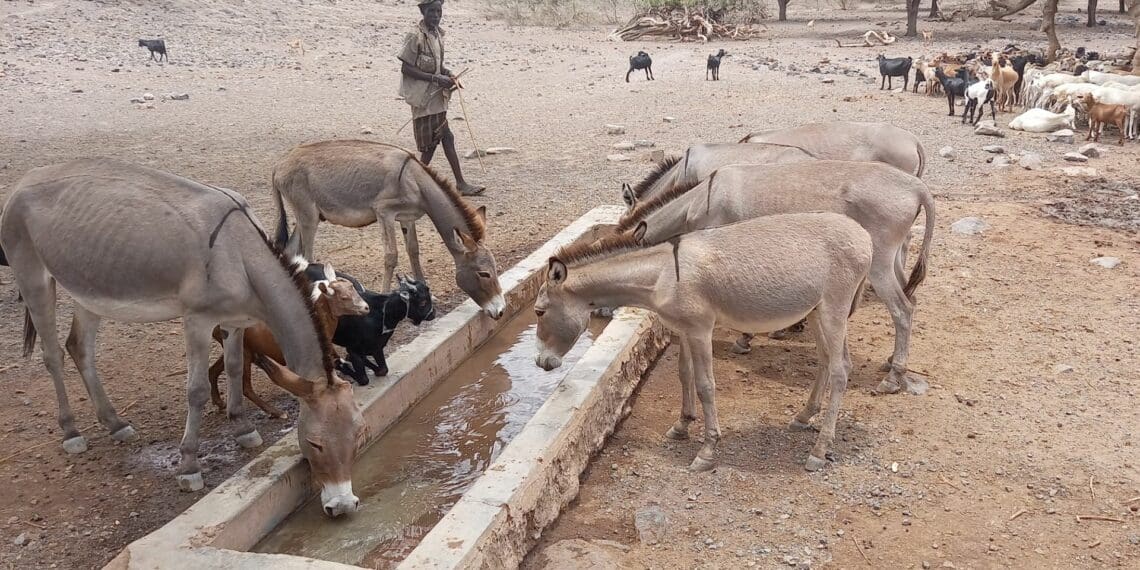
A common sight around West Africa is to see livestock grazing freely, even in major cities, on highways and in airports.
Every year, about 300 million heads of livestock (mostly cattle) move across West Africa. Based on seasonal factors, they leave their usual grazing areas in search of water and pasture.
These practices, called pastoralism, or transhumance, go back millennia. They helped maximise land use in dry regions.
Ecowas and its regulations
In a bid to support these practices, the Economic Community of West African State (Ecowas) drew up regulations in 1998 and 2003. All Ecowas member states were to apply the regulations. In a bid to support these practices, Ecowas drew up regulations.
As an expert in food and agricultural law, natural resources development and international trade, I examined the regulations to see what effects they might be having on investments in the livestock sector.
My findings show that livestock productivity has not improved in the region since the introduction of the new rules. Cattle productivity has fallen and milk production has improved very minimally. Clashes between farmers and herders have increased, along with insecurity. Elites take advantage of the regulations to exploit poor herders.
I conclude that the regulations may be discouraging meaningful large-scale investments such as ranching that could increase productivity, create jobs and ensure peace in the region.
Movement of livestock across West Africa
Ecowas is the only regional economic community in Africa with specific regulations governing transhumance. The regional body is made up of 15 states.
Its regulations aim to improve livestock productivity and food security, enhance the environment and reduce poverty.
The regulations allow free movement of livestock across the borders of member states under certain conditions. For example, herders must possess the Ecowas International Transhumance Certificate, and a minimum of two herders must accompany the herds. The herders must be at least 18 years old.
Member states are obligated to apply the regulations. But they’re not doing so uniformly. Some coastal states don’t allow the herders into their countries. For instance, the Benin Republic recently banned the entry of foreign herders into its territory. Togo and Côte d’Ivoire control the number of herders that enter their territories annually.
For its part, Nigeria is moving towards more sedentary cattle farming. Several states in Nigeria, such as Benue and Oyo, have also banned pastoralism.
These countries have restricted the movement of herds because of negative experiences such as farmer-herder clashes, cattle rustling and other forms of criminality.
Impact of Ecowas transhumance regulations
In my paper, I argue that Ecowas regulation allows transhumance to exist in a form that is inimical to other business investment options – like ranching – for livestock production in the region.
Investors want profit, safe environments and certainty in rules. Pastoralism, on the other hand, encourages cheap labour and other practices that put large-scale investment in livestock at risk.
Bad business environment
Transhumance has been commercialised – and criminalised – in ways that produce a negative environment for the livestock business.
The movement of herds has contributed to conflicts between farmers and pastoralists, gender-based violence, insecurity and other forms of criminality.
Traffickers, smugglers, bandits and drug peddlers capitalise on livestock movement to commit crimes.
Proliferation of arms, terrorism, kidnapping and drug use have also increased in the guise of transhumance.
In Nigeria, for instance, it has been alleged that Boko Haram insurgents disguise themselves as pastoralists to convey improvised explosive devices to attack communities.
Limits modern methods
I also argue that the Ecowas regulations, by allowing herds to move around the region, discourage investment in modern methods of livestock production. This is because the cost of production in transhumance is low. Land and fodder are free. Labour is cheap and exploitative. All this makes other business models, such as ranching, relatively unattractive by comparison. It affects their profits and investment risks.
Some countries which practise pastoralism, such as Mongolia and Tibet, restrict it to arid regions.
What should be done?
In my view, the practice of transhumance in West Africa should be gradually phased out. By this I mean a gradual – and then finally a total – ban on herder movements across borders.
This is because it is not an efficient use of land. About a third of West Africa’s land area is used for agriculture. Two-thirds of this serves as rangeland and pastures while one-third is used for crop production. Designated rangelands should be established in semi-arid areas of the region. Pastoralism should be restricted to these rangelands.
In my view, conflict will be reduced if transhumance is restricted to arid and semi-arid regions. This in turn will make ranching more attractive, making room for large-scale investments that could create jobs and improve food security.
In the immediate future focus should be given to:
- The strict implementation of the International Transhumance Certificate. The certificate usually contains particulars on the composition of the herd, the vaccinations given, the itinerary of the herds, and the destination of the pastoralist. The responsibility of issuing the certificate rests on the country of origin. This should reduce incidences of criminal elements disguised as herders.
- Limiting the number of cattle that people can have in a moving herd. This will help avoid herds straying, and resultant conflicts.
- Introducing new rules requiring the use of ear tags. This would help with traceability when cattle are stolen or when they destroy farmlands.
This article was first published in The Conversation and written by Jane Ezirigwe.
Sign up for Mzansi Today: Your daily take on the news and happenings from the agriculture value chain.