Monday, June 15, 2026
SUBSCRIBE
22 GLOBAL MEDIA AWARDS
Food For Mzansi
  • News
  • Changemakers
  • Lifestyle
  • Farmer’s Inside Track
  • Food for Thought
No Result
View All Result
  • News
  • Changemakers
  • Lifestyle
  • Farmer’s Inside Track
  • Food for Thought
No Result
View All Result
Food For Mzansi
No Result
View All Result
in News

Women farmers call for inclusive growth and development

From title deed struggles to limited resources, women in farming say many barriers remain despite democratic gains. On Freedom Day, female farmers and sector leaders reflect on how land reform, secure rights and practical support can transform agriculture for future generations

by Tiisetso Manoko
27th April 2026
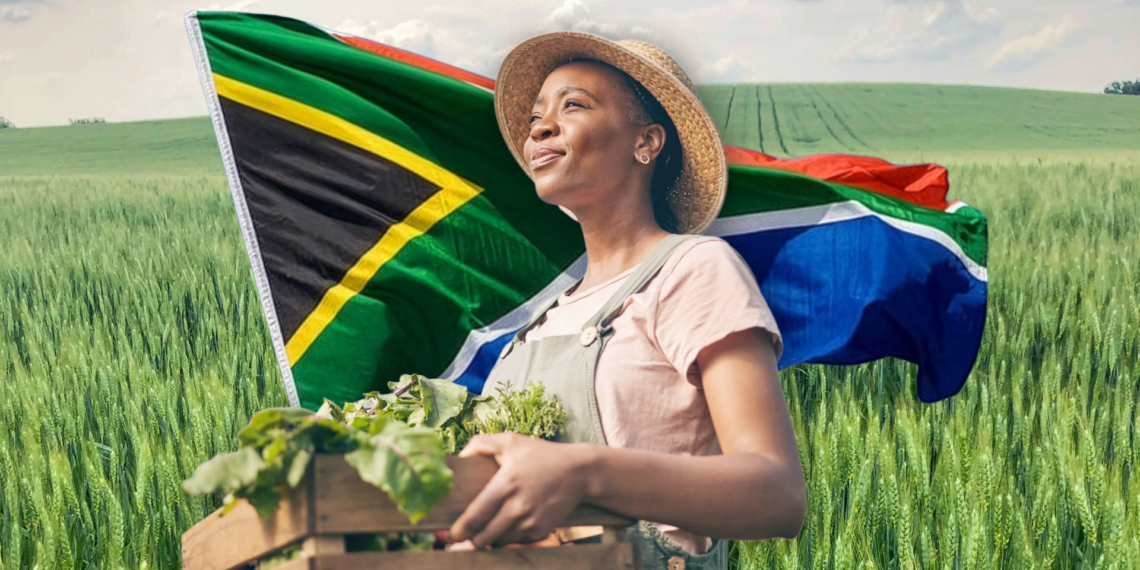
As the country celebrates Freedom Day, women in agriculture say land ownership, finance, markets and leadership opportunities remain key barriers to true empowerment. Photo: Gareth Davies/Food For Mzansi

As the country celebrates Freedom Day, women in agriculture say land ownership, finance, markets and leadership opportunities remain key barriers to true empowerment. Photo: Gareth Davies/Food For Mzansi

Share on FacebookShare on TwitterShare on WhatsApp

Today, South Africa is celebrating 32 years of hard-earned freedom. For some, the day brings back sad memories, while for others, it means a day to reflect on the journey the country has taken.

Over the past years, more women have entered the agricultural space, more so, women farmers, young and dedicated to making it in the previously male-dominated field. Nowadays, more women are taking on leadership roles in different entities within the sector.

While there have been many strides made, women in the sector still feel the need to be part of decision-making; importantly, access to land, markets, and finance are still the biggest barriers for many women.

Access to resources key for women to succeed

Rebaone Alecia Paul, a livestock and crop farmer on Ditlharedintsi farm near Ganyesa in North West, said as a young female farmer, she feels women in rural areas do not reach development as fast as they should.

“It is important for rural women to also enjoy the fruits of freedom, especially those in the agricultural space. Women need secure land ownership through proper documentation, inclusion in land reform, and legal protection.

“They must have decision-making power and recognised rights in both formal and communal systems. It is equally important to provide local input hubs, reliable water systems, affordable finance, and training. Support cooperatives and ensure women have access to markets to sell their produce,” she said.

Paul indicated that agricultural programmes should be flexible, include childcare support, and promote labour-saving tools. “Women must be recognised as farmers and supported with health and well-being services,” she said.

Agro-processor Keatlegile Mnguni said even though labour laws are meant to protect farmworkers, they sometimes lead to more short-term and outsourced jobs, especially for women.


Related stories
  • Women farmers step forward to shape SA’s food future
  • CGE: Women farmworkers still trapped in systemic exploitation
  • Women gain ground in agri careers, but pay gaps remain
  • NW agripreneur creates condiments with care and purpose

“Agricultural programmes and policies need to go beyond legislation and actively address these realities by securing more employment models, ensuring that the protections extend to seasonal and permanent workers.

“We need to see initiatives that are organising women-led cooperatives that pool resources for shared equipment and bulk input purchasing. And lastly, involving women directly in the design and leadership of these interventions ensures that solutions are not only practical but responsive,” she said.

Mnguni noted that if these measures can be implemented without fail, it would lead to shifting women from inactive beneficiaries to active decision-makers in shaping their own agricultural systems.

Long walk to land ownership

Maureen Chisane, a crop farmer in West Rand, Gauteng, said she has been farming for the past 36 years, and she has yet to receive her title deed.

“Operating without knowing if you’re coming or going is very painful and hard. We have knocked on the doors of the government for a long time. At the moment, we are just farming without any expectations. When it comes to women in the sector, I think we are still marginalised and not taken for granted.

“It is not easy farming as a woman in South Africa, I do not think it will change,” she said.

Meanwhile, Peter Setou, chief executive of the Vumelana Advisory Fund, said communal land ownership can play an important role in reducing rural poverty. However, beneficiaries must have secure rights, including title or use rights, to enable them to unlock value and access finance. 

“Notwithstanding the advancements that have been made in the land reform space, progress in land redistribution remains slow, and more needs to be done to address racially skewed land ownership patterns. This must, however, go hand in hand with support to ensure productive use of redistributed land.

“Ultimately, the success of land reform will not be measured by the amount of land transferred, but by how that land improves livelihoods, creates jobs and supports inclusive economic growth,” he said.

READ NEXT: Farmers urged to embrace agroprocessing for growth

Sign-up for the latest agricultural news delivered straight to your inbox every day with Mzansi Today!

Tiisetso Manoko

Tiisetso Manoko is a seasoned journalist with vast experience in community media. He possesses diploma in media studies majoring in journalism, certificate in civic leadership. He loves news from all angles with particular interest in local government, agriculture and politics. He is a staunch Mamelodi Sundowns Football club supporter.

Tags: Commercialising farmersFreedom DayInform meWomen EmpowermentWomen in Agriculture
Food for Thought

Labour crackdown: Farmers face rising risks over illegal workers

by Katlego Ngwane
11th June 2026

South African agriculture relies heavily on foreign labour, but intensifying government crackdowns mean undocumented workers pose massive criminal and financial...

Read moreDetails
Corteva’s Nicholas Goble takes the helm at Sansor

Corteva’s Nicholas Goble takes the helm at Sansor

11th June 2026
Limpopo grain farmer combines business brains with farming brawn

Limpopo grain farmer combines business brains with farming brawn

10th June 2026
Food is available, but can everyone access it? North West grapples with hidden dimensions of food insecurity. Photo: Supplied/Food For Mzansi

Hunger crisis: SAHRC demands action on food affordability

10th June 2026
From survival to expansion: Agbiz Congress tackles sector growth

From survival to expansion: Agbiz Congress tackles sector growth

10th June 2026

CGA warns of lower citrus exports after devastating storms

Corteva’s Nicholas Goble takes the helm at Sansor

UCT Water Hub transforms wastewater to grow food and hope

Limpopo grain farmer combines business brains with farming brawn

Labour crackdown: Farmers face rising risks over illegal workers

Join Food For Mzansi's WhatsApp channel for the latest updates!

JOIN NOW!
Next Post
Revycare fungicide: BASF’s cutting-edge solution for citrus black spot, featuring the new Revysol ingredient for enhanced disease control and easier application. Photo: Supplied/Food For Mzansi

SA growers keep Middle East citrus supply flowing

THE NEW FACE OF SOUTH AFRICAN AGRICULTURE

With 21 global awards in the first six years of its existence, Food For Mzansi is much more than an agriculture publication. It is a movement, unashamedly saluting the unsung heroes of South African agriculture. We believe in the power of agriculture to promote nation building and social cohesion by telling stories that are often overlooked by broader society.

UCT Water Hub transforms wastewater to grow food and hope

Record-breaking campaign delivers 16 million meals to fight hunger

EC sheep farmers face rising climate risks to communal flocks

Funding and raw truths inspire farmers in Mpumalanga

No land? No problem: Secunda farmer turns old dumping site green

SA livestock exports take massive hit amid ongoing FMD crisis

  • Awards & Global Impact
  • Our Story
  • Contact Us
  • Cookie Policy
  • Privacy Policy
  • Copyright

Contact us
Office: +27 21 879 1824
News: info@foodformzansi.co.za
Advertising: sales@foodformzansi.co.za

Contact us
Office: +27 21 879 1824
News: info@foodformzansi.co.za
Advertising: sales@foodformzansi.co.za

  • Awards & Global Impact
  • Our Story
  • Contact Us
  • Cookie Policy
  • Privacy Policy
  • Copyright

Chat Options

I'm Lerato, your AI assistant!
No Result
View All Result
  • News
  • Changemakers
  • Lifestyle
  • Farmer’s Inside Track
  • Food for Thought

Copyright © 2024 Food for Mzansi

This website uses cookies. By continuing to use this website you are giving consent to cookies being used. Visit our Privacy and Cookie Policy.