Agriculture is not only the work of our hands, but the testimony of our hearts, said Gauteng agriculture and rural development MEC Vuyiswa Ramokgopa at the Soul to Soil brunch, held today at Kleinkaap Boutique Hotel in Centurion, Gauteng.
Presented by Food For Mzansi in partnership with the Agricultural Development Agency (Agda), the brunch brought together leading women from across South Africa’s agricultural landscape. This included policymakers, researchers, academics, agribusiness executives, and farmers under the theme “In full bloom.”
In her keynote address, Ramokgopa paid tribute to the women who continue to transform South Africa’s food systems.
“We gather as individual women, each with our own stories and struggles,” Ramokgopa said, “but together, we represent generations of resilience. Women who have tilled the soil of hope, planted the seeds of change, and harvested futures far greater than our beginnings.”
She called women “the backbone of food security” and reminded guests that women’s hands feed nations.
“Across our continent, women make up nearly half of the agricultural labour force. In South Africa, women are driving transformation — from smallholder farmers growing for township markets to agritech innovators redefining sustainability.”
Among the stories she shared was that of Sophy Mofokeng, a livestock farmer from Meyerton whose family-run business, Thahameso General Trading, now supplies major clients and trains young people in animal management. “When women farm, we don’t just produce; we nurture, we teach, and we multiply hope,” Ramokgopa quoted Mofokeng as saying.

‘Transformation is impossible without women’
The MEC noted that agricultural growth and transformation in South Africa cannot happen without women’s leadership. “Your vision redefines value chains. Your courage ensures that agriculture is not only productive, but equitable,” she said.
Quoting another farmer whom she met earlier, Ramokgopa added: “When a woman plants, she doesn’t just think of yield. She thinks of generations.”
She reaffirmed her department’s commitment to empowering women through the Women in Agriculture and Rural Development (Ward) programme. The initiative offers women training, funding, mentorship, infrastructure access, and market linkages to help them commercialise and scale their agribusinesses.
She also underscored the need for collaboration and innovation, saying networks like Soul to Soil “show us the strength that lies in shared knowledge and collective effort.”
Related stories
- Agda celebrates five years of agricultural transformation
- Agda strives towards an inclusive agri sector
- Women gain ground in agri careers, but pay gaps remain
- Beekeeping sector poised for growth, jobs, and sustainability

Power, purpose and possibility
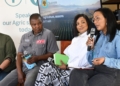
With the MEC’s words still resonating in the room, the Soul to Soil brunch transitioned into its next act: the panel discussion. Guiding the conversation with warmth and wit was Mmatsheko Mosito, presenter of “Planting the Seed” on Channel Africa.
She effortlessly moved the dialogue from reflection to insight, setting the tone for an intimate and powerful exploration of women in agriculture. “Let’s talk about the soul of agriculture,” she said early on, “the women who till the land, innovate, and hold our communities together.”
Leona Archary, CEO of Agda, set the tone with a powerful reflection on leadership and equity. “I was asking myself, is there still a glass ceiling in agriculture all these years on?” she mused. “And definitely there is. Great progress has been made, but a lot more needs to be done.”
She spoke of networks and solidarity among women, urging those in the room to “lift as you rise.” Her words drew murmurs of agreement, an affirmation that empowerment, in agriculture, remains both urgent and unfinished.
From policy to research, the conversation turned to Dr Konanani Liphadzi, deputy chair of the Agricultural Research Council. Her pride was palpable as she shared, “After more than seven years of getting qualified opinions, this year we got an unqualified audit!” The room erupted in cheers.
But beyond compliance, her focus was clear: inclusivity in innovation.
“No woman should be left behind,” Liphadzi said. “We must ensure that the technology we develop works for the single mother in a rural area, farming with a baby on her back.”
Next, Althea Discala, CEO of Discala Holdings, brought a sharp financial lens to the conversation.
“Finance and investment are critical in any sector, especially agriculture,” she said. “We empower women through ownership, through economic ownership.” She urged the audience to embrace financial literacy and readiness. “If you’re approaching a bank, know your numbers. Your story matters, but so do your statements.”
Mosito smiled knowingly before turning to Rebecca Phalatse, head of marketing and communications at Land Bank. “It was cute when you were 25 to want flowers and a decent pair of shoes,” Mosito quipped, “but the jig is up now. We want land!” The audience burst into laughter and applause.
Phalatse took it in stride. “Land Bank is here to fund farmers, and women are central to that vision,” she said. She explained products like blended finance – “part loan, part grant” – and new efforts to support energy efficiency and market access. Her message was clear: “Know your business, communicate your business, and tell your story. It is worth it.”


Roots, wisdom, and impact
The conversation deepened with Elna Schoeman of the Schoeman Group who captivated the audience with her story of generational wisdom and humility. “Leadership is shaped by wisdom, and wisdom is shaped by learning,” she began.
Painting vivid pictures of her childhood surrounded by chickens, compost heaps, and fruit trees, she reminded everyone of agriculture’s roots. “Urbanisation is teaching our children that milk comes from Checkers. We need to get them back to the soil,” she said, her voice soft but resolute.
Then came Patricia Tembo, specialist journalist at Food For Mzansi, whose perspective as a storyteller tied the threads together. “It doesn’t go over my head that I’m on a panel with such remarkable women,” she said, beaming. “In agricultural journalism, our role is to share these stories—but also to hold stakeholders accountable.”
Tembo spoke about the many women Food For Mzansi profiled who had turned grief and loss into purpose through farming. “Anything placed in a woman’s hand multiplies,” she said. “And in agriculture, we see that miracle every day.”


When the floor opened for questions, the first came from a young agritech entrepreneur seeking advice on partnerships. Archary responded: “The principle of our agency is built on public-private partnerships,” she said. “Bringing tech innovators together with experienced players creates powerful results.” Liphadzi added: “Approach the ARC. We’ll help you secure your intellectual property and scale your innovation.”
Phalatse added Land Bank’s commitment: “Whatever your tech is, as long as it adds value to farmers, we’ll talk. We’re partnering with companies like Heineken and Tiger Brands to ensure farmers have both funding and markets.”
Later, Galetlolwe Semenya, a passionate engineer and founder of the Matriarch Professional Association, stood to speak. Her voice carried conviction. “I dream of a railway that connects Africa’s landlocked countries,” she said. “Agriculture is the cornerstone of growth. How do we build the infrastructure to make Mama Africa rise again?”
Discala answered thoughtfully. “You’re right,” she said. “We need more collaboration between private investors, government, and development banks. Infrastructure is not just about movement. It’s about enabling trade and sustainability.”
And then, fittingly, Schoeman closed with the kind of grounded wisdom that had defined the morning. “You can only chew what you can bite,” she said. “Start small. Crawl, then walk, then run, then fly. Every household can be Food for Mzansi. Food For South Africa.”
As the audience rose for applause, Mosito returned to the microphone, her voice carrying a note of reverence. “This,” she said, “is what it means to speak to the soul of agriculture Women who build, nurture, and lead with courage.”
READ NEXT: Hustle pays: Lebogang’s R350 hatches 30 000-egg farm