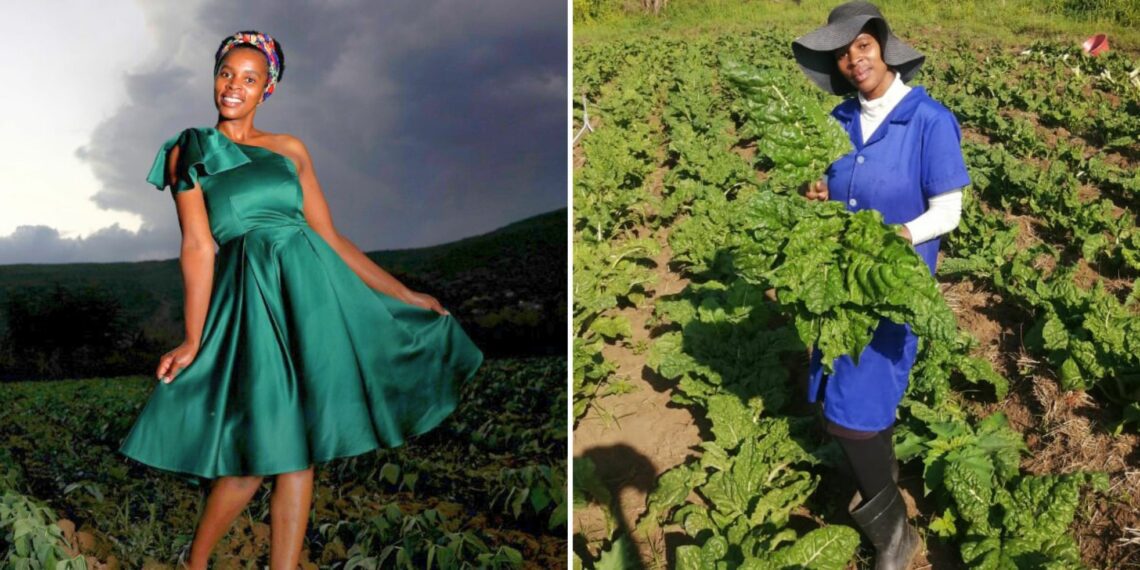
In KwaZulu-Natal, Aphiwe Mtshali stands as the heart and soul of Hlelakahle Farming Projects, a thriving agricultural venture she has nurtured alongside her father since 2018. Nestled in the fertile Greytown-Muden area, their 10-hectare farm bursts with a range of seasonal vegetables.
Mtshali’s farming philosophy is anchored in resilience and adaptability. She believes in starting small, taking risks, and exercising patience.
Her main crop is green peppers, yielding an impressive two tonnes every month. Diversification is key to her farming strategy, so she also has a few pecan nut trees and cultivates spinach, tomatoes, cucumbers, and cabbages. “The cabbages don’t do well because of monkeys,” she says.
Managing crop cycles efficiently
Mtshali’s daily routine is a testament to her dedication. She meticulously plans her crop cycles, often focusing on a few crops at a time to manage resources effectively.
“If I decide to plant green peppers, I will plant them together on the eight hectares so that I can manage my chemical use that is workable for both,” she explains.
This strategic approach enables her to address disease and pest control efficiently, promoting more sustainable farming practices.

How it all started
Reflecting on her journey, Mtshali credits her previous jobs for equipping her with essential business management skills.
Her journey began in 2010 when her father retired and bought a farm. At this time, her background in safety management and her role as an administrator for a construction company left her yearning for more. So, in 2018 she resigned and turned to farming like her father.
However, before fully immersing herself in her father’s farm, Mtshali was adamant about gaining knowledge and started working for a local farmer in Muden. She struck a deal to sell his cabbages in exchange for him teaching her the ropes.
Related stories
- Amaranth ambitions: Naidoo builds empire on KZN hilltop
- Smart financial moves drive Otukile’s farming and mining success
After a year of hands-on training, Mtshali was ready to return to her father’s farm.
In 2021, their life changed when she received a substantial R3.2 million boost from the Agri Business Development Agency. This funding allowed her to install ten tunnels, dig a borehole, build a storage facility, and acquire a tractor and other essential equipment.
“The funding helped me grow my business significantly. I was able to supply more shops and increase my production,” she notes.
Today, her market includes major retailers like Spar, Boxer, and Aheers.

Faith in farming
Hlelakahle, meaning “He prepares a way for me”, embodies Mtshali’s faith and determination.
“I prayed for a name that would speak a good word into the business and stand out. This name captures the essence of my journey, reflecting both my hard work and the divine grace of God which has guided my path,” she explains.
No matter the challenges she faces, Mtshali always reminds herself of the deeper meaning behind their farming enterprise.
One of Mtshali’s biggest challenges was managing salary wages.
“Handling salary wages was my biggest challenge. When you get funding, your business grows and you need more workers. It was challenging because I always had enough money to pay salaries.
“I once planted a lot of tomatoes and we experienced diseases and lost everything. From that experience, I learned not to give up and think about the workers because they earn a living by working on the farm.”
To address this, she focuses on quick-growing crops like spinach which provide regular income to cover wages. Diseases also pose a serious problem, prompting her to be selective about the crops she plants.

Plans for the future
Mtshali has ambitious plans for Hlelakahle Farming Projects. She envisions establishing a seedling nursery to create more jobs and reduce the distance her team travels to buy seedlings.
“Currently, we travel about an hour to buy our seedlings. If I can have my own seedling nursery, I can create more jobs,” she says.
On top of that, she aims to branch into processing to add value to her produce and expand into livestock farming with goats.
READ NEXT: Amaranth ambitions: Naidoo builds empire on KZN hilltop
Get Stories of Change: Inspirational stories from the people that feed Mzansi.