Growing up in rural Nkomazi, Mpumalanga, Asande Khumalo had limited access to career guidance, but his parents valued education and encouraged him to look beyond his immediate surroundings. That curiosity would eventually lead him to plant pathology.
Khumalo tells Food For Mzansi that plant pathology is like being a doctor, but for plants. Just as humans get sick, plants can also develop diseases caused by fungi, bacteria, viruses and other organisms.
“My job as a plant pathologist is to study why plants get sick, how the disease spreads, and how we can prevent or cure it,” he explains.
Protecting the harvest: Why plant pathology matters
According to Khumalo, plant diseases affect farmers across different scales of production, from smallholder farmers growing maize to commercial farmers producing sugarcane.
He explains that a disease outbreak can wipe out an entire harvest, affecting food production and the supply of agricultural products.
“For the bigger agricultural framework, plant pathology protects the country’s food system. Without healthy plants, there is no agriculture, no food security, and no jobs in the value chain.”
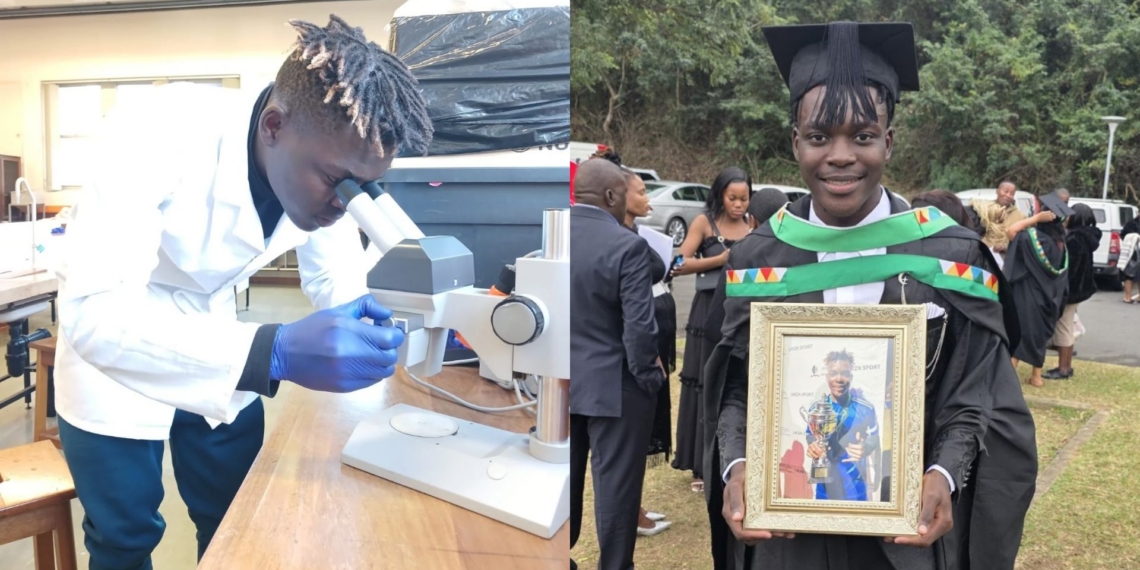
After matriculating in 2021, he enrolled for a BSc in agriculture at the University of KwaZulu-Natal, majoring in plant pathology. He went on to complete his honours in the same field in 2024 and is currently pursuing his master’s degree.
Related stories
- Sibongile’s plant passion: Healing crops and feeding Mzansi
- Updated plant health protocols open doors for SA citrus in China
- New plant health rules to fight pests and diseases
- From an apricot tree, a career in agronomy blooms
Turning waste into soil solutions
His master’s research focuses on spent mushroom substrate, the material left over after mushroom production. He is investigating whether it can be reused as a growing medium and help suppress soilborne diseases through beneficial biological control agents such as Trichoderma and Bacillus species.
“Normally, mushroom farms throw this waste away, and it can become a pollution problem,” he says.
Khumalo explains that the discarded material can still contain nutrients and beneficial microorganisms. His research examines whether these properties could support plant growth and help manage soilborne diseases, including through competition between beneficial microorganisms and disease-causing organisms.
Khumalo currently works at the university as a laboratory demonstrator, helping undergraduate students during practical sessions.
“That experience has helped me grow both as a scientist and as a mentor,” he says.
Growing up, Khumalo often heard people say that there was money in agriculture. With a growing population and food demand, he started thinking seriously about a career that could support him long term.
“I told myself, if you can’t get employed, you can employ yourself by being a farmer,” he notes.
At the time, however, he was unsure which path to follow in agriculture. The options included botany, soil science, agronomy and plant pathology, but he knew little about what each field involved.
Inspired by a teacher
A high school teacher, Given Khoza, helped him discover plant science. Khumalo recalls how the teacher used scientific terms that caught his attention and introduced him to careers he had never heard of.
“He did not just teach us from the textbook; he told me about the world of science, about careers I had never heard of, like botany and zoology, and he would give me websites to go and learn new things about plants and how they survive diseases.”
That was how Khumalo developed an interest in plant pathology.
His university experience also broadened his understanding of agriculture. He learned that the field extends beyond farming to include science, technology and innovation.
Khumalo also came to understand how microscopic organisms can cause serious damage to crops, while others can help protect plants from disease.
From plant science to solutions for farmers
Khumalo has not yet worked formally in the agricultural industry, but his studies have given him practical research experience.
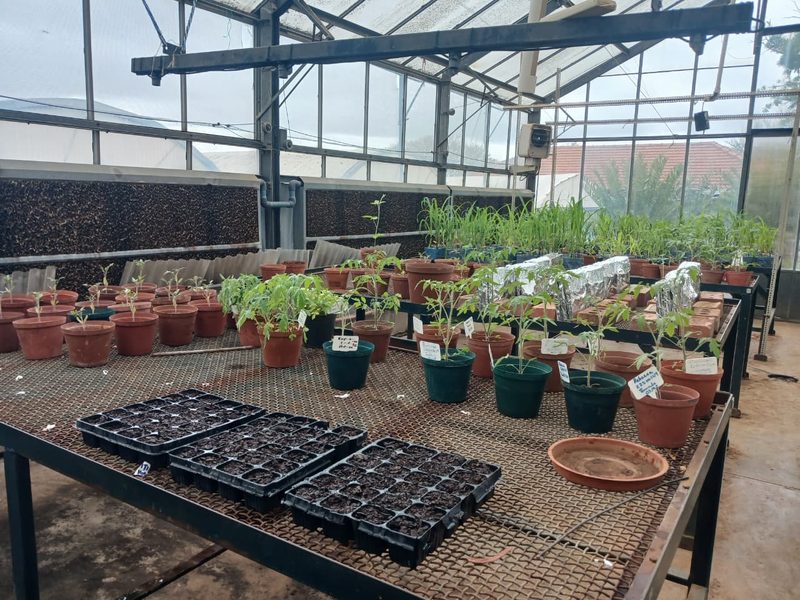
“Along the way, I have learned that agriculture is science. I have learned how to isolate pathogens, how to identify beneficial microorganisms, how to work in the lab and greenhouse, and how small organisms can either destroy or save a crop.”
He says this knowledge can also help researchers understand and manage plant disease outbreaks.
“We are currently experiencing extremely high temperatures because of global warming and climate change. Plant pathology provides knowledge that can help us protect plant health.”
Although he is still working towards his goals, the young researcher plans to officially establish Kun’s Enterprise. The company will focus on developing affordable, environmentally friendly growing media and biological control solutions for smallholder farmers, with plans to expand to commercial farmers in the future.
READ NEXT: Shongotelo Mashengete: Shielding SA crops from disease