Land Bank chief executive officer Themba Rikhotso said he was pleased that the state-owned lender is back on track, signalling a renewed push to grow and transform South Africa’s agricultural sector.
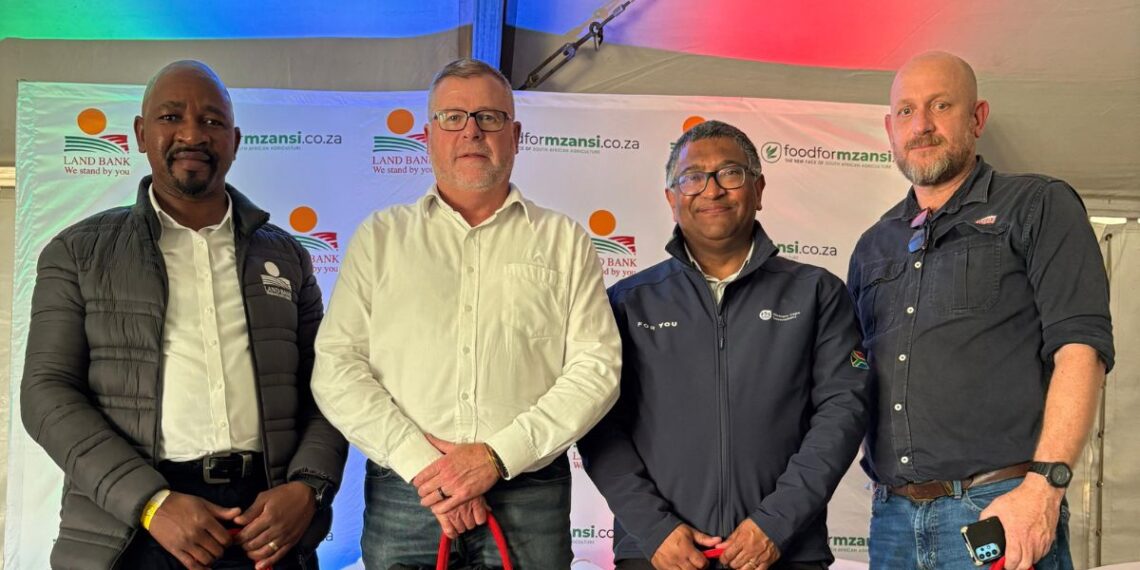
Rikhotso was speaking yesterday during a Nampo Cape lunchtime conversation hosted by the bank and Food For Mzansi in Bredasdorp, Western Cape. Organisers are expecting up to 50 000 people to attend the annual show by the weekend.
“We are now playing the role that we were formed to play. We are fully back in performing our mandate, which is developing the agricultural sector and also transforming the sector. We are now fully supporting our clients.
“We have fully capacitated all our regions and branches, and now we are starting to see the performance. We are overshooting our targets when it comes to blended finance, which is a good problem to have. We have used grants that we were supposed to use over the next three years; we have used them now,” he said.
Costly tariffs squeezing exporters
Rikhotso added that Land Bank was also pleased that many key clients who had left the bank during a troublesome period starting in April 2020, when it defaulted on its debts, had made a comeback and were now engaged in major transactions.
While acknowledging the work the bank has done, the CEO said tariffs were also a concern, not only from the United States but also from the Brics countries, which can make it more difficult and costly for South African exporters to access these markets.
“We need to have a conversation about why our Brics countries are not lowering their tariffs. We need those countries to lower their tariffs so that we can trade effectively with them.
“Locally, we need to form strong partnerships. Our biggest problem is that we do not know how to work together. I believe that local coordination can be done better,” he said.
In helping farmers, Rikhotso noted that only assisting them to acquire land without considering the entire agricultural value chain would not be sustainable. “So we have increased partnerships, and we will play a greater role in helping farmers,” he said.


Related stories
- Podcast: Land Bank’s asset insurance is the lifeline you need
- Free State prepares farmers for planting season
- Ramaphosa urges regional farming unity at Zimbabwe agri show
- New study unlocks rooibos power for fish farming
Finance and support key for farmers
Meanwhile, Jannie Strydom, chief executive officer of Agri Western Cape, highlighted the urgent need for finance to help farmers manage their day-to-day challenges.
“What is also important to note is that farmers need affordable financing. Agriculture is big, and therefore there is a huge need for funding. As farmers, we are happy to see that Land Bank is responding to what farmers need and what is relevant.”
Building on this, Darryl Jacobs, deputy director-general: Agricultural Development and Support Services in the Western Cape, said it was crucial for government to understand farmers’ needs and ensure that financial support reaches them effectively.
“From our side, we are happy to see that all the talk and theories are actually landing in the right direction, because there is a hunger for finance. We are looking into a commodity approach, which we believe can work better.
“The issue of partnership is really at the centre of what we are doing as the department. When it comes to funding, we have seen applications worth R800 million every year, and that is why partnership is extremely important. We need to secure finance to ensure economic growth, because the provincial economy is reliant on agriculture,” he said.
Echoing the need for strategic support, Chris Burgess, editor-in-chief of Landbouweekblad, said farmers face daily challenges, including biosecurity, and it is vital to manage the risks associated with these challenges.
“I think [that] as the country we need to pump more money into research, because in that way we will be able to deal with challenges in a more proactive way. We need to have an intelligent forum that helps farmers navigate all the challenges,” he said.
READ NEXT: Pipes and people: Water investment needs skills to flow