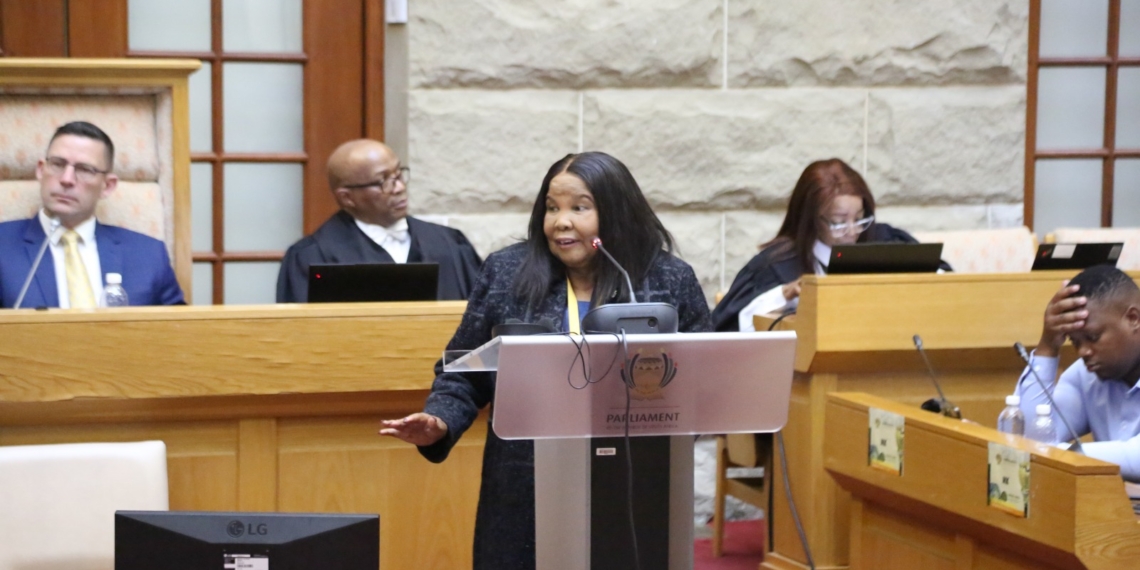
Mzansi’s agriculture sector was firmly in the spotlight during the 2026 budget vote speech delivered by deputy minister Nokuzola Capa.
From multi-billion Rand funding commitments to food gardens, farmer training and climate-smart farming, government painted a picture of the sector is expected to do much more than simply produce food. Agriculture, it seems, is now being positioned as a frontline weapon against unemployment, poverty and sluggish economic growth.
And yes, there were plenty of big numbers.
Here are 10 of the biggest takeaways.
1. Agriculture is no longer the side dish
Government says farming is becoming one of South Africa’s most important growth sectors.
The speech echoed President Cyril Ramaphosa’s State of the Nation Address, where agriculture was highlighted as a key economic driver. Officials pointed to booming exports in citrus, avocados, grapes, wine, maize and livestock.
South Africa also remains the world’s second-largest citrus exporter — not bad for a country constantly fighting droughts, logistics chaos and load shedding.
2. Nearly R10 billion has been approved for black farmers
One of the headline-grabbing announcements was the scale of blended finance support. Since 2021, government says R9.8 billion has been approved to support black commercial producers through grants and loans.
The breakdown:
- R3.5 billion in grants
- R6.3 billion in loans
The funding, channelled through partnerships with the IDC and financial institutions, has already supported 627 black commercial farmers.

3. Land Bank is putting serious money on the table
Government says Land Bank’s blended finance scheme has approved 610 applications since October 2022.
The value of that support now sits at R5.077 billion, including R2.2 billion in grants.
Even more importantly, officials believe the programme could help create more than 6 400 jobs — a reminder that agriculture remains one of the biggest employers in rural South Africa.
4. CASP is still government’s fave farming support tool
The Comprehensive Agricultural Support Programme, better known as CASP, remains one of government’s biggest bets for helping emerging farmers.
For the 2026/27 financial year:
- R2.3 billion will support around 33 000 black producers
- 58 000 vulnerable households will receive food garden support
- 40 000 hectares of land will be brought into production
The focus is largely on subsistence and smallholder farmers who struggle to access traditional bank finance.
5. Women and young people are no longer being treated as an afterthought
Government doubled down on inclusion targets under its Norms and Standards for the Inclusion of Designated Groups.
The targets are ambitious:
- 50% women participation
- 40% youth participation
- 10% participation by persons with disabilities
The message was clear: Agriculture’s future cannot look like its past.

6. Thousands of farmers are heading back to class
Farming today is about much more than planting and harvesting. It’s also about technology, climate resilience, financial management and market access.
Government says:
- 14 439 farmers will receive training this year
- 115 farmer projects will receive mentorship
- 3 651 young people are expected to benefit directly
A total of R92.2 million has been budgeted for farmer training and mentorship programmes.
The department also confirmed that 56 unemployed graduates were placed at PPECB stations for practical workplace experience.
7. Agricultural colleges are getting fresh attention
Government says agricultural colleges remain critical for producing the next generation of farmers, scientists and agri-professionals.
The external bursary scheme received R22.9 million and has already supported more than 2 500 students. More than 1 400 beneficiaries have completed their studies.
Another 151 participants also received international training opportunities across 12 countries during the past financial year.
8. Ancient farming wisdom is making a comeback
One of the more interesting moments in the speech was government’s strong push for indigenous knowledge systems and regenerative agriculture.
The deputy minister spoke about traditional farming methods such as:
- composting crop residues
- protecting soil with plant cover
- conserving water naturally
- preserving biodiversity
Government has allocated R98 million to the LandCare programme to strengthen regenerative conservation agriculture, veld care, soil care and water care initiatives.
In other words: Sometimes grandma’s farming methods were ahead of their time.
9. Government wants agriculture to look very different by 2030
Transformation remains a major priority under the Agriculture and Agro-processing Master Plan.
Government wants to dramatically increase black producer participation by 2030:
- grains: from 4% to 20%
- livestock: from 32% to 40%
- fruit: from 2% to 10%
- vegetables: from 15% to 29%
Officials say the sector cannot grow sustainably while ownership patterns remain deeply unequal.
10. Climate-smart farming is moving from buzzword to budget item
Government says irrigation upgrades, renewable energy and water-saving technology are receiving growing investment.
Projects are underway in provinces including:
- Eastern Cape
- KwaZulu-Natal
- Limpopo
- Northern Cape
- North West
Meanwhile, the Agro-Energy Fund, managed through Land Bank, has approved 70 transactions worth R160.2 million since 2023.
Government also highlighted:
- tower gardens
- rainwater harvesting systems
- water-efficient irrigation
- chameleon sensors
- wetting front detectors
The aim is simple: Help farmers survive a future shaped by climate shocks, water scarcity and rising costs.
The bigger picture
The budget vote carried plenty of optimism, but also a healthy dose of realism.
Government acknowledged that farmers remain under pressure from drought, climate change, rising input costs, electricity challenges and uncertain global markets.
Still, the overall message was unmistakable: Agriculture is no longer being treated as a small rural sector operating quietly in the background. Government increasingly sees it as a strategic sector capable of creating jobs, growing exports and feeding the nation at the same time.
READ NEXT: Farminist founder blends farming skills with smart business