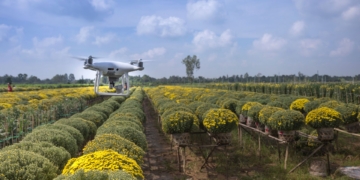
As South Africa experiences increasingly hot and dry conditions, local spinach farmers are adjusting daily field operations to safeguard their crops against severe heat stress, moisture loss and disease.
While conservation practices and microclimate management offer immediate relief on the ground, agricultural experts stress that long-term resilience will ultimately require substantial capital investment in irrigation infrastructure.
With atmospheric shifts and developing El Niño patterns bringing above-normal summer temperatures and severe heatwave risks across Southern Africa, these field-level pressures are intensifying. Meteorological forecasts indicate a drier, significantly hotter season, effectively turning climate adaptation from a future strategy into an urgent, daily operational reality for leafy vegetable growers.
Conservation farming and irrigation investments
Retaining soil moisture is a critical defence during high-temperature periods. Hamond Motsi, a PhD researcher at Stellenbosch University, notes that while organic soil management improves moisture retention, long-term water security requires dedicated infrastructure.
Related stories
- Practical water-saving strategies every SA farmer can use now
- Climate change: SA’s food processors are feeling the heat
- Drought and heatwaves force SA maize farmers to adapt or switch
- Powdery mildew: Watch out for this tomato disease
“The issue of water is a huge problem, particularly moisture. Conservation farming practices definitely help, but combining them with investment in irrigation is most important. Adding organic matter helps the soil retain available moisture and prevents rapid loss.
However, Motsi warned that soil management alone cannot offset severe dry spells, pointing to changing weather patterns in the Western Cape.
“In the long term, irrigation is going to be crucial. This year in the Western Cape was so dry it hardly rained or got cold. Farmers need to invest in irrigation as part of a long-term plan, but that requires major capital for dams, piping and associated technology,” he said.
On-the-ground impact: heat stress and disease
For vegetable producers, high daytime temperatures present immediate operational challenges. Extreme heat accelerates moisture loss and causes midday wilting, while stressed plants can become more vulnerable to disease.
Farmers in the Eastern Cape and Limpopo have reported powdery mildew developing on older leaves, particularly where airflow is poor.
Luyolo Mfenqa, a crop farmer in the Eastern Cape, observed that daytime heat takes a direct toll on crop health.
“The heat has just started here. Nighttime is better, but daytime heat causes the spinach to wilt severely. Powdery mildew starts on the older leaves and gradually spreads.”
To manage fungal outbreaks during heat spikes, Mfenqa applies a homemade foliar treatment before installing protective shade netting.
“When I noticed the mildew, I sprayed a mixture of bicarbonate of soda, dishwashing liquid and Epsom salt. It stopped the spread to other leaves. But as extreme heat continues, I’ve had to cover the plants with shade cloth to filter the heat,” Mfenqa said.
For growers dealing with similar heat stress, Mfenqa recommended adopting shade cloth, shifting irrigation to cooler night hours, and using targeted sprays to control early fungal outbreaks.
Farmers are advised to speak to a crop specialist before treating plant diseases themselves.
Adjusting watering schedules and planting windows
Producers in other regions also reported similar stress patterns, with crops wilting during peak sun hours despite adequate soil moisture.
Percy Moleka Komane, a crop farmer in Limpopo, noted that high temperatures coupled with restricted airflow heighten crop vulnerability.
“We saw wilting between 11:00 and 15:00 even when the soil was moist. Powdery mildew also started on older leaves where airflow was poor. Heat stresses the plant, making it far more susceptible to mildew,” Komane said.
To counter these conditions, Komane adjusted his irrigation timing, increased ground cover, and altered planting schedules.
“We increased mulching to keep the soil cool and retain moisture. We shifted irrigation to late afternoon at 16:00 to avoid leaf scorching and reduce overnight humidity that triggers mildew.
“We are also watering more frequently, planting new beds in afternoon shade, and starting crop cycles earlier before extreme heat peaks,” he said.
As heatwaves become more frequent across South Africa, spinach growers continue to balance immediate field-level adaptations with the broader need for long-term water storage and irrigation technology.
READ NEXT: Got an agribusiness ready to grow? Agda wants to hear your pitch