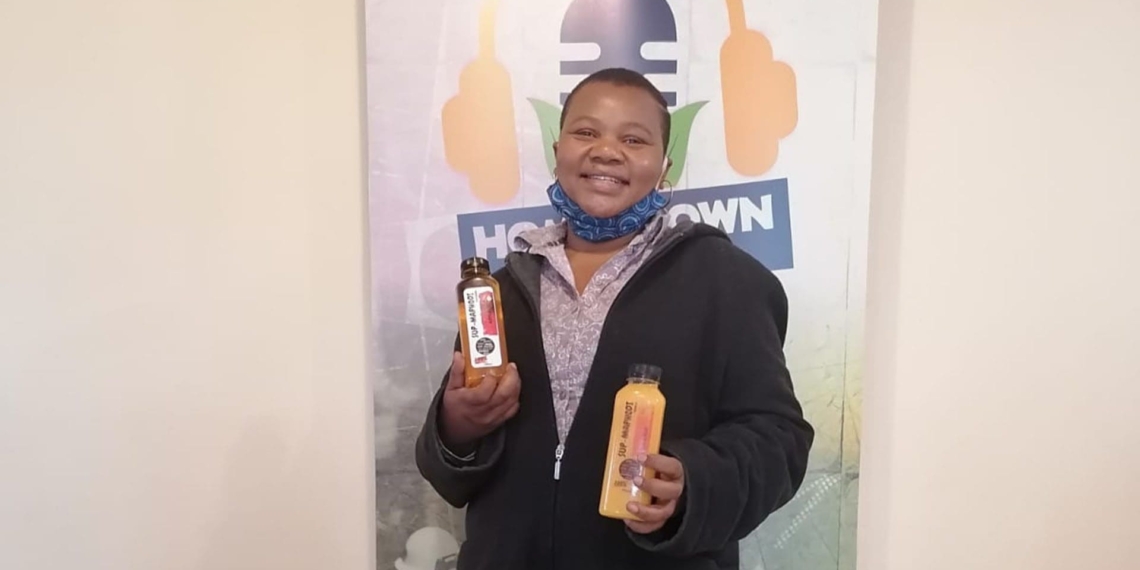
Despite having a passion for food from early on in her life, juice manufacturer Hope Matshepo Matlala, affectionately known as Chef Hope, only took up her passion in 2015.
She, along with her son, took part in Clover’s Little Big Cook Off in 2015. Their participation fired her up – enough to move into the hospitality industry full-time when she opened a restaurant in Gauteng in 2017.
“My restaurant was mostly focused on healthy living, you know. It was a takeaway, but mostly for healthy living. I was trying to shy away from using a lot of fat. I had so many customers then who appreciated what we were doing,” she recalls.

“People used to love our ingredients – our recipes, our menus – because I would change menus every day, especially when it came to salads. [Customers] were not getting bored. Whenever [customers came], they were not sure what they were going to get next, but whatever they’d get, they appreciated it.”
The restaurant was called Team Joy, after her Little Big Cook Off team name with her son. It was open for nearly two years, closing in early 2019. Matlala admits that she was doing too many things at the time, which was probably one of the reasons it had to close.
“I was going out and training, moderating and facilitating at hospitality events. I was also working for this other guy part-time. My mistake was that I didn’t give it 100%. And I was trusting the wrong people with taking care of my restaurant.”
In 2020, Matlala changed course. She became involved with another juice company, where she did the branding. As a chef, she was naturally drawn to the agro-processing aspect, and she soon headed out on her own venture in juice manufacturing.
After much research and time spent learning from others, she established Sup Maphodi. “Sup” was supposed to be spelt “sap”, like the Afrikaans word for juice, but ended up being “sup” due to a typo. Since every juice has a different South African greeting on it, the typo fit the brand, so she kept it.
ALSO READ: Meet a food-processing supervisor
Tips and tricks of the trade
Here is Matlala’s six tips to people who want to start juice manufacturing too:
Market matters: “First of all, you must understand your market and you must understand which juice you are going to do. [You must understand] if you’re going to do the nectar, which is less than 100% pure juice, or if you [are going to do] the 100% pure juice.”

Cleanliness: “You have to understand the hygiene part of it. When you do juice, everything that you do has to be sterilised. Everything has to be clean because that determines the shelf life of your juice. Also, you have to make sure to test the water because you don’t use tap water [for making juice]. You have to use purified water and your water, and your juice, after making or producing it, has to go to a lab and they will test if your product is consumable.”
The bottling: “You have to understand the type of bottles that you use for the juice, because you can’t use the same bottle that you are using for water, for example. Hence, we see the difference between the water bottles and the juice. The water bottle is slim on the top and the juice is wider because the juice is given that chance to breathe. If not, it becomes acidic.”
Understand your finances: “Have enough financing so that you can get the right equipment. For making juice, you can start small. That is not a problem. You can even start with any amount, as long as you know what you’re going to do, and you have the right processes.”
Be wary: “I’ve seen in this business world that there are vultures out there that will promise to do things. They will promise to invest, only to try and steal whatever you are doing, or to try to break you. Believe me, there are people out there who are made to break people, so be patient with yourself.
“Most of all, enjoy what you’re doing.”