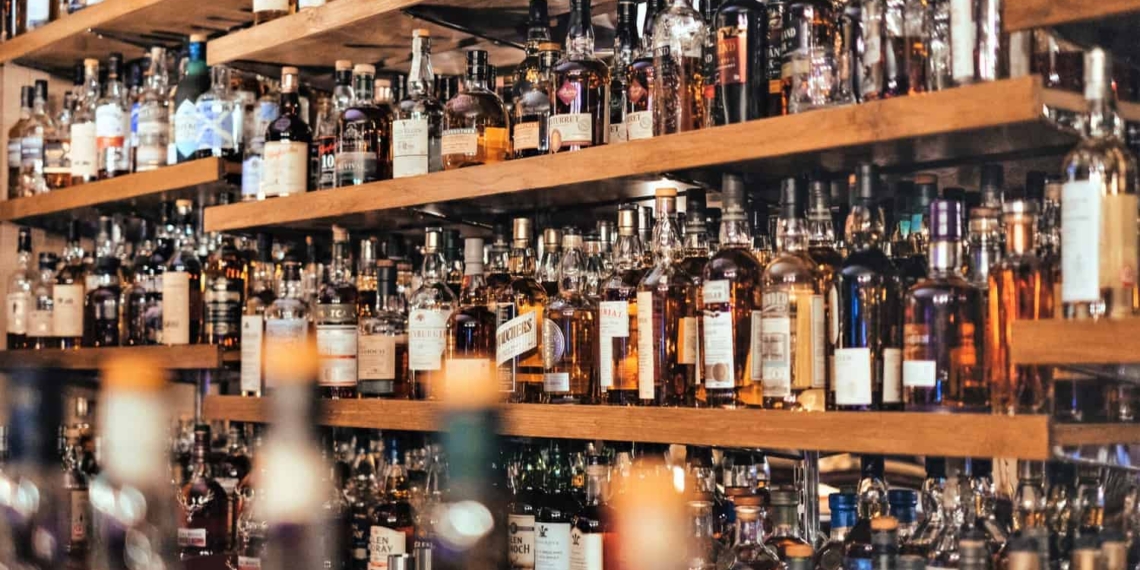

The alcohol industry has revealed the disastrous financial implications of government’s prohibition of alcohol sales during the Covid-19 lockdowns.
An assessment of the economic impact of the three alcohol bans in 2020 and 2021 shows that R36.3 billion has been lost in revenue, putting 200 200 jobs supported by the alcohol value chain at risk in the nation’s informal and formal economy.
The report, prepared by the South African Liquor Brandowners Association (SALBA), Beer Association of South Africa (BASA) and VinPro, shows the cumulative impact of the three alcohol bans, including the five-week ban between 29 December 2020 and 2 February 2021.
SALBA’s chief executive officer, Kurt Moore, says that not only is the industry and its people suffering, but the government itself is experiencing considerable losses to the fiscus.

“The tax revenue loss (excluding excise) to the fiscus from the value chain arising from the bans amounted to R29.3 billion (equivalent to 2.3% of tax revenue) and direct excise tax revenue lost across the nation was R8.7 billion (equivalent to 21.2% of excise revenue),” Moore says.
His statements are based on findings recorded in the assessment, which was completed on 12 February 2021.
According to data in the report, the country’s GDP loss due to the three bans was approximately R51.9 billion, 1.0% of the total GDP measured at market prices.
Moored adds, “If you factored in the loss of potential total capital formation (about R21.7 billion) then the prohibition measures could only be viewed as a national socio-economic disaster.”
The alcohol industry includes, but is not limited to businesses represented by SALBA, VinPro, the Beer Association of South Africa, the National Liquor Traders Council, and manufacturers.
Beer industry loses R18 billion in sales
Meanwhile, Patricia Pillay, CEO of BASA points out that her industry’s financial loss was considerable. This subsequently impacted the industry and the lives and livelihoods of hundreds of thousands of people in the sector’s value chain.

“The beer industry alone lost approximately R18 billion in sales throughout the three bans,” Pillay reports. “But the job losses are exceptionally damaging to society and the economy. More than 200 200 jobs, equivalent to 1.22% of national jobs in the informal and formal sectors, are under threat due to the bans.”
Detail in the report suggest that the sales volumes of around 1.1 billion litres lost during this period may result in a loss of more than R36.3 billion in sales revenue.
This is equivalent to 24.8% of total sales value for 2020 and projected sales value for 2021 year-to-date.
The numbers speak for themselves, Pillay remarks. However, “the destructive economic effects of prohibition cannot be ignored and should not be reinstated again in the future.”
Job losses and rural implications
Vinpro managing director, Rico Basson, says a valuable part of South Africa’s culture and economy has been damaged and the bans have jeopardised the future of the wine industry.
“The ban had significant socio-economic implications for our rural communities. There were significant job losses among the farming community where each worker often supports more than six dependents.”

The impact of travel restrictions on wine tourism, which represents significant value for South Africa’s tourism industry, coupled with the prohibition of alcohol sales, has crippled the wine industry, Basson confirms.
The wine industry is one of the country’s oldest agricultural industries and support 269 000 jobs throughout the wine value chain. It contributes approximately 1.1% of GDP (measured at market prices) within the South African economy.
As a direct result of the alcohol bans, domestic wine sales were down in volume by 20%, reports suggest.
Additionally, the five-week export ban resulted in 300 million litres of uncontracted wine within 640 million litres of stock. This, at a time when the industry had commenced with the 2021 harvest. This created a stock dilemma and placed huge pressure on storage capabilities.
Impassioned pleas from alcohol industry
Convenor of the National Liquor Traders Council, Lucky Ntimane, says that the impact of the bans has been devastating to the tavern industry and the entire alcohol value chain.
“The country cannot survive such losses. The Government should find viable and better alternatives, and the sector has continually sought ways of collaborating with the Government to re-examine better alternatives to prohibition,” Ntimane says.
‘There were significant job losses among the farming community where each worker often supports more than six dependents.’
The alcohol industry has repeatedly reaffirmed its position in support of President Cyril Ramaphosa’s economic growth plan. Pillay says they continue to stand behind their commitment.
“We again ask the government to consider viable alternative measures that address alcohol misuse while maintaining the livelihoods of a significant number of people whose jobs and access to income are dependent on the industry,” says Pillay.

Basson agrees, saying that the alcohol industry and its stakeholders do not support outright bans on wine sales while alternative, effective and targeted interventions are available.
“The alcohol industry remains committed to principles of mutual public accountability, evidence-based methods and transparency with data and reporting,” Basson says.
He reiterated that the alcohol industry continued to seek a social compact with Government, industry, and civil society.
This in order to preserve the sector’s vital economic activity, save businesses and jobs while ensuring its workers’ safety, promote responsible trading and the sensible consumption of alcohol.
“The social compact aims to reduce the harmful use of alcohol and promote a culture of responsible drinking through a new compact with all affected social partners and stakeholders,” Basson says.
The social compact focusses on binge drinking, drinking and driving and underage drinking, for which stringent targets over the next ten years will be set. This will be done in addition to suggested areas to collaborate with government and civil society.
Read the full report here: Measuring the economic impact of the alcohol bans