Climate change, biosecurity, and cross-sector collaboration were at the centre of discussions about South Africa’s agricultural future at the 2025 Atlas AgriSA Congress in Pretoria yesterday.
The Atlas AgriSA Congress 2025 brings together the entire agricultural value chain to address critical challenges and opportunities facing South African farmers.
Leaders from government, business, and organised agriculture highlighted the urgent need to safeguard productivity, enhance resilience, and expand markets amid rising environmental and economic challenges.
Minister of agriculture John Steenhuisen stressed the importance of partnership between AgriSA and the department of agriculture to drive sector-wide progress.
“The reality is that government alone cannot achieve the objectives that we wish to see for the agriculture sector in South Africa. Export diversification is fundamentally important as a strategy in order to improve the viability, sustainability and profitability of the South African agricultural sector,” he said.
Related stories
- Agri SA boss: ‘Unite for a greener, sustainable future’
- Agri SA unveils Women in Farming 3.0: Scaling up, sharing skills
- Daybreak Foods hatches recovery with new rescue plan
- ACAC reports uneven but hopeful recovery for SA agriculture
Attracting investment
Busisiwe Mavuso, CEO of Business Leadership South Africa, focused on economic reforms as the foundation for agricultural growth and stability.
“We are trying to de-risk the economy from politics. If you’ve got the wrong politics, your economy is going to fail,” she said.
Mavuso highlighted the liberalisation of rail logistics as an example of reform-driven resilience. “The private sector has now been allowed to operate locomotives. If Transnet falls over, you will still have other private sector companies that can take your goods to market. And that is important because it creates competition.”
She stressed that reforms in logistics, visas, and energy are essential to attract investment and ensure that agriculture operates in a conducive trading environment.
Climate resilience and market adaptation
AgriSA president Jaco Minnaar reaffirmed agriculture’s resilience despite climate pressures, droughts, and disease outbreaks. “Over the past two seasons, our sectors have weathered droughts and a rise in animal disease outbreaks and escalating input costs,” he said.
He noted that the Bureau for Food and Agricultural Policy (BFAP) projects a 5% rebound in 2025, driven by strong performance in horticultural exports such as citrus, grapes, and berries. Yet, he cautioned that tightening markets and climate risks demand innovation and investment in logistics, water efficiency, and biosecurity systems.
Reflecting on the livestock sector as the largest contributor to agricultural GDP, it faces mounting pressure from recurring disease outbreaks and restricted market access. Minnaar stressed that restoring trust and capacity within South Africa’s veterinary and biosecurity systems is essential to unlock the sector’s full potential.
“With a functional and trusted national animal health system, South Africa can expand its meat exports significantly. Without it, growth will stall,” he said.
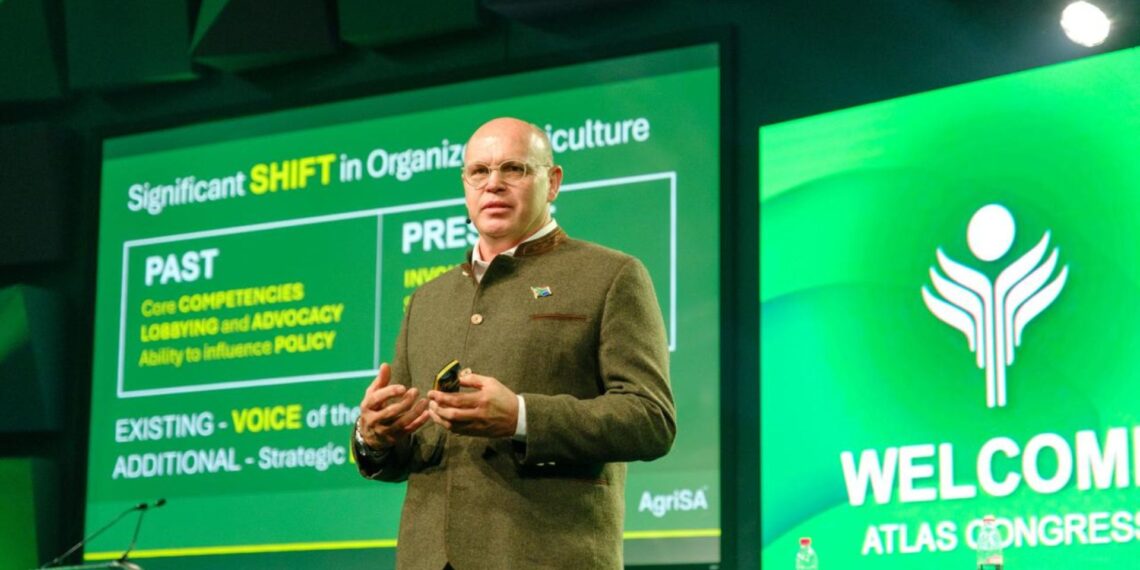
AgriSA CEO Johan Kotzé reflected on how the agricultural landscape has evolved into a fully integrated value chain.
“If we could take this back 30 years, my dad’s time, 40 years back, I think we would only have seen farmers here. Today, it’s a value chain; it’s people that are involved in this industry,” he said.
Kotzé described the growing collaboration across value chains as a key enabler of growth, resilience, and innovation. He urged deeper coordination and shared accountability to drive implementation of the Agriculture and Agro-Processing Master Plan (AAMP).
READ NEXT: Ten tips to establish grazing pasture and boost profits