Tuesday, July 21, 2026
SUBSCRIBE
22 GLOBAL MEDIA AWARDS
Food For Mzansi
  • News
  • Changemakers
  • Lifestyle
  • Farmer’s Inside Track
  • Food for Thought
No Result
View All Result
  • News
  • Changemakers
  • Lifestyle
  • Farmer’s Inside Track
  • Food for Thought
No Result
View All Result
Food For Mzansi
No Result
View All Result
in Inspiration

Backyard bounty: Soweto graduate grows smarter with hydroponics

When a tough job market left agricultural graduate Katiso Nkoanyane stranded, he looked to his own backyard. Today, his Soweto-based business, Green Life Farming, uses modern, water-saving hydroponics on just 500 square metres to produce high crop yields, proving that you don’t need sprawling land to make a big impact

by Vateka Halile
5th June 2026
Soweto's Katiso Nkoanyane turned to backyard hydroponics out of necessity after facing a tough job market following his graduation in agricultural management.
Photos: Supplied/Food For Mzansi

Soweto's Katiso Nkoanyane turned to backyard hydroponics out of necessity after facing a tough job market following his graduation in agricultural management. Photos: Supplied/Food For Mzansi

Share on FacebookShare on TwitterShare on WhatsApp

Katiso Nkoanyane might have started out wanting to work with cars, but his father’s agricultural background shaped his final direction into becoming a hydroponics farmer. 

He looked for a career that combined his drive with farming and agricultural management. That led to him later founding Green Life Farming in Emndeni, Soweto. 

Now, using modern agritech, he’s converted a small piece of land into a hydroponic system, working smarter to pull serious yields out of a limited area.

Making a tiny space pay off 

Following his graduation from the Central University of Technology in 2016 in agricultural management, majoring in crop production, Nkoanyane faced a tough job market. 

In 2023, he turned his focus inward and started a hydroponics project in his own backyard using a small space of about 500 square metres.

Nkoanyane explains that farming on such a small plot was born from necessity due to the limited space, and choosing hydroponics was a strategic move. 
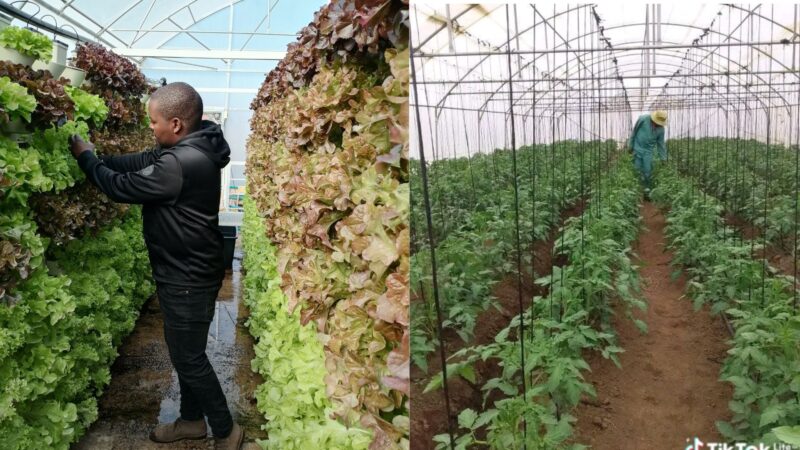
By using a soilless, vertical hydroponic system, Green Life Farming pulls serious yields out of a tiny 500-square-metre backyard plot. Photos: Supplied/Food For Mzansi

He inherited his love for farming from his father, who used to lease land for agricultural production. 

“I helped him on weekends and during school holidays, and that’s where I fell in love with farming,” Nkoanyane recalls. Following that experience, he researched careers within the agricultural sector.

“I always had a passion for cars and originally wanted to do mechanical engineering,” he says, but ultimately, agricultural studies won.

“The main reason I went for soilless production was to increase productivity, to get more produce out of the little space I have.”


Related stories
  • Sabelani Co-op gives Bongani Nkosi purpose and a future
  • Bongeka’s backyard business grows from 100 to 3000 broilers
  • Gqeberha agripreneur turns backyard into thriving medicinal hub
  • Backyard gardener discovers magic in growing vegetables

Taking the leap

Venturing into agritech wasn’t a daunting leap because he already had the technical knowledge from his tertiary education. He funded the start of his business using savings accumulated from internships and short-term work contracts.

Initially, he started with Swiss chard, buying 600 seedlings at R0.60 cents each. He also received a donation of three 25kg bags of calcium nitrate fertiliser from a neighbour, along with second-hand drip tapes for irrigation. For his water supply, he relied on municipal water. 

“The first proper hydroponics structure I worked on belonged to a friend who didn’t have the passion or technical knowledge to run production.”

He says, “I operated it for six months. It was a standard 10m x 30m tunnel with a vertical hydroponic setup. The terms of our agreement were that I would teach him the technical side and mentor him for a full 24 months.”

Nkoanyane further explains that hydroponics is incredibly water-efficient. “It doesn’t really use a lot of water because we use drip irrigation, and with the vertical hydroponic structure, we recycle and rotate the exact same water.”
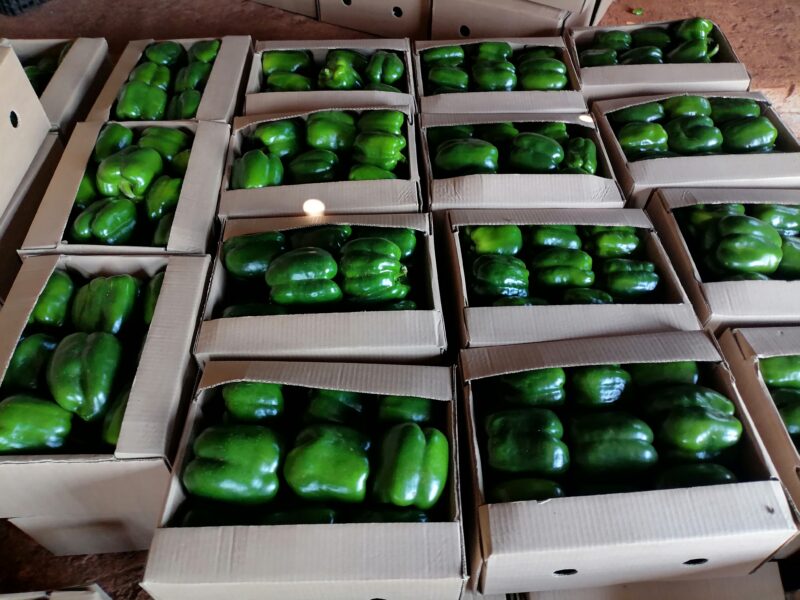
To beat the barriers of the formal market, Green Life Farming cuts out the middleman by growing fresh produce directly for local traders and street vendors. Photo: Supplied/Food For Mzansi

Learning and growing

He explains that hydroponics is a modern farming practice where vegetables are grown in a soilless medium rather than actual soil. It produces a high yield and requires far less space or land than traditional farming.

Right now, he grows Swiss chard and cabbage, though his signature vegetables are Swiss chard and tomatoes.

Not owning land makes it difficult to grow, and he hasn’t received any financial support to date. “My production is entirely self-funded,” he says. 

“Keeping the business sustainable is not easy; it takes a lot out of a person, so I do some freelance facilitating on the side to keep going.”

Looking ahead, he has big plans. “One of my goals is to secure land and build proper infrastructure so I can produce to my fullest capacity.”

He also wants to run skills development projects. “I want to conduct training and offer mentorship to other emerging farmers.”

Since starting, one of his biggest challenges has been breaking into the formal market, which demands large, consistent quantities that he simply cannot meet on his current plot. 
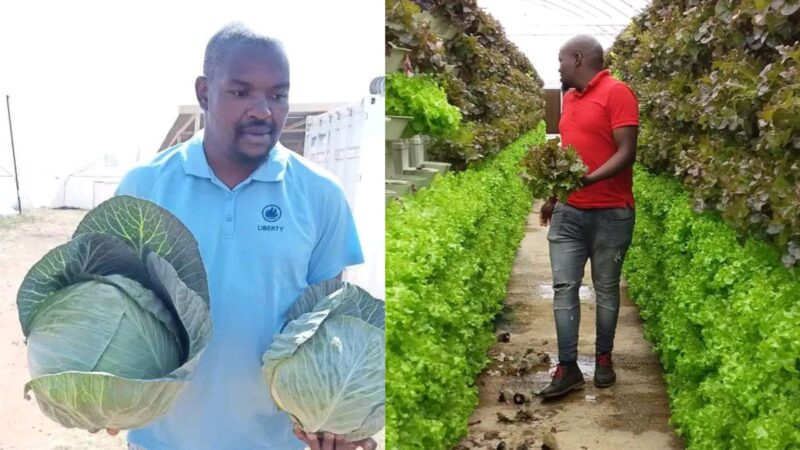
The vertical hydroponic structure relies on drip irrigation, allowing Katiso Nkoanyane to constantly recycle and rotate the same water. Photos: Supplied/Food For Mzansi

For now, Green Life Farming and Training Pty Ltd supplies the Emndeni community and surrounding areas, relying mostly on word of mouth.

Nkoanyane also applied for government farms advertised by the department of agriculture, land reform and rural development, and is still waiting for a response.

In the meantime, smart collaborations have helped him keep his cash flow steady. He approached local traders who supply street vendors and made a deal to grow for them directly, ensuring they get fresh vegetables right on their doorstep.

READ NEXT: Hydroponics beginner’s guide: Grow more crops in less space

Sign-up for the latest agricultural news delivered straight to your inbox every day with Mzansi Today!

Vateka Halile

Vateka Halile grew up in rural areas of Cofimvaba in the Eastern Cape. She was raised in a traditional family setting and found writing to be a source of comfort and escape. Vateka participated in an online citizen journalism course through Food For Mzansi, and her passion for health and medicine-related stories was born. Her dedication to community work and love for social justice and solidarity spaces is evident in her quality time with the community when she isn't working.

Tags: Crop farmingGautengHydroponicsInspire meUrban Farmer
Advertorial

Seriti Institute CEO wins prestigious Best Woman 2026 CSI award

by Staff Reporter
17th July 2026

PARTNER CONTENT: In a major boost for grassroots development, Seriti Institute CEO Juanita Pardesi has won the South African CSI...

Read moreDetails
Farmers and brewers call for budget that builds, not breaks

Minister details Land Bank’s success in boosting black farmers

17th July 2026
Wits students step up to fight campus hunger

Wits students step up to fight campus hunger

17th July 2026
Making the right choice between open-pollinated and hybrid maize seeds is key to maximising yields and ensuring sustainable crop production.

Drought and heatwaves force SA maize farmers to adapt or switch

17th July 2026
Early harvest and larger crops mark unusual 2026 lemon season

Early harvest and larger crops mark unusual 2026 lemon season

17th July 2026

Weekly stock theft reports pile pressure on farmers

Seriti Institute CEO wins prestigious Best Woman 2026 CSI award

Dune spinach: A climate-hardy green transforming coastal farming

Rustlers Valley offers a blueprint for South Africa’s renewal

Climate change: SA’s food processors are feeling the heat

Join Food For Mzansi's WhatsApp channel for the latest updates!

JOIN NOW!
Next Post
South Africa Wine wins top award for climate intelligence tech

South Africa Wine wins top award for climate intelligence tech

THE NEW FACE OF SOUTH AFRICAN AGRICULTURE

With 21 global awards in the first six years of its existence, Food For Mzansi is much more than an agriculture publication. It is a movement, unashamedly saluting the unsung heroes of South African agriculture. We believe in the power of agriculture to promote nation building and social cohesion by telling stories that are often overlooked by broader society.

SA poultry industry calls for urgent bird flu vaccine rollout

Mother’s legacy, neighbour’s grace: Venessa Simelane’s farm story

Deadline looms: Register water use by 23 July or risk penalties

This week’s agri events: 20 – 24 July

Climate change: SA’s food processors are feeling the heat

Rustlers Valley offers a blueprint for South Africa’s renewal

  • Awards & Global Impact
  • Our Story
  • Contact Us
  • Cookie Policy
  • Privacy Policy
  • Copyright

Contact us
Office: +27 21 879 1824
News: info@foodformzansi.co.za
Advertising: sales@foodformzansi.co.za

Contact us
Office: +27 21 879 1824
News: info@foodformzansi.co.za
Advertising: sales@foodformzansi.co.za

  • Awards & Global Impact
  • Our Story
  • Contact Us
  • Cookie Policy
  • Privacy Policy
  • Copyright

Chat Options

I'm Lerato, your AI assistant!
No Result
View All Result
  • News
  • Changemakers
  • Lifestyle
  • Farmer’s Inside Track
  • Food for Thought

Copyright © 2024 Food for Mzansi

This website uses cookies. By continuing to use this website you are giving consent to cookies being used. Visit our Privacy and Cookie Policy.