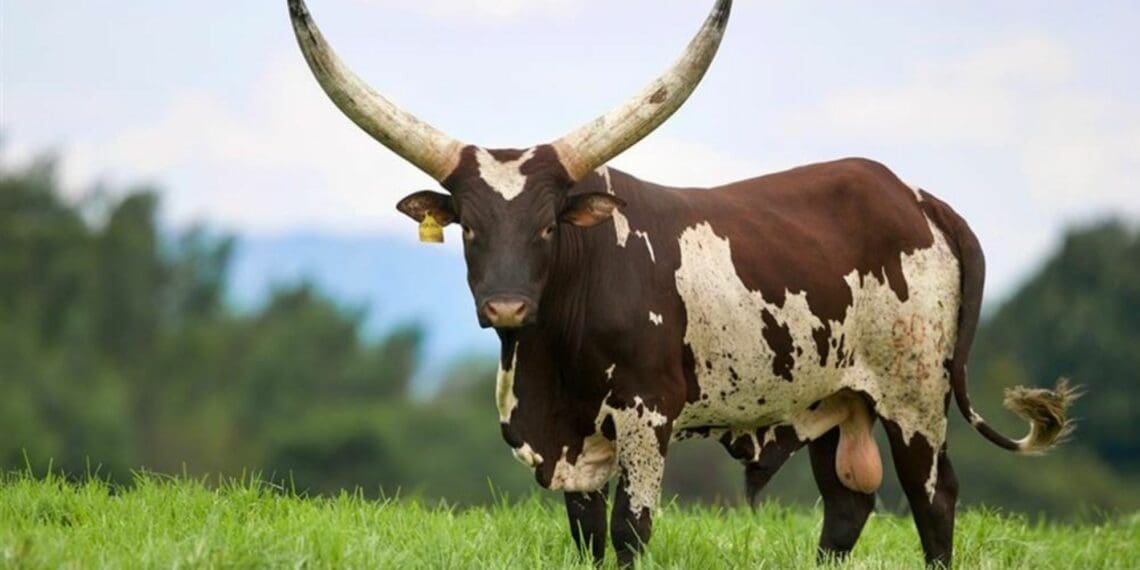
Male genitals have been a subject of discussion for the longest time with one question being top of mind: does size matter? Well, in farming it does – and if you’re a bull, you are pretty much useless if you weren’t blessed with a big scrotum.
A good reproductive bull must have a bigger scrotum because that generally indicates a good measure of sperm production. So, the more sperm, the bigger the offspring is for the farmer.
According to professor Stephen Boyles, an American beef specialist, the purpose of the scrotum is temperature control. Testicles, basically, have two functions: producing sperm and testosterone. The testicles are located outside of the body cavity in the scrotum. This is essential for normal sperm formation which occurs at a temperature several degrees below normal body temperature.
“A common cause of low fertility in the bull is abnormal testicle and scrotal sac development. The testicles should be symmetrical, nearly the same size and freely movable in the scrotum. Small size or degeneration often affects one testicle only and is a serious finding,” says Boyles in a research paper.
Looks can be deceiving
But be careful… Even though a bull might appear to have larger testicles and one might think this is an indication of fertility, looks can be deceiving.
The Western Producer’s Roy Lewis reported on research done by Drs John Kastelic and Jacob Thundathil from the University of Calgary’s faculty of veterinary medicine in Canada. They found that nutrition, both in the uterus and especially early in life, had a profound effect on testicular development.
They also found that bull calves on a poor nutritional diet might appear to have normal-size heads, horns (if horned) and testicles, but it is an optical illusion. If an animal is thin and stunted, those parts automatically seem bigger.
“So, bull calves and their mothers must receive good nutrition early, especially in the calf’s first four months of life. This should work well as this is the same time cows need to be on a rising plane of nutrition to rebreed,” the report states.
So, how can you tell with the naked eye that the bull you’re buying has the perfect size scrotum to make the investment worthwhile?

So, how do you measure testicles?
Well, you will have to pull down the bull’s testicles with your hands and place a measuring tape around the widest points. The measurements should be recorded in centimetres.
A beefmagazine.com article states for a bull to be classified as a good potential breeder, a yearling bull must be in good general health and exceed a threshold of greater than 30 cm scrotal circumference; greater than 50% sperm motility, and greater than 70% normal sperm.
According to the magazine scrotal circumference is also considered a better predictor of puberty than age or body weight, and a correlation has been found between a sire’s yearling scrotal circumference and the age at which his daughters reach puberty. Simply put, bulls with larger testicles sire daughters that begin cycling earlier.
Iowa State University in the US recommends a minimum scrotal circumference of 32 cm to 34 cm, but aim for 35 cm and above. That’s bigger than a ruler. #justsaying.
ALSO READ: A sneak peek inside Pope Francis’s holy farm
Sign up for Farmer’s Inside Track: Join our exclusive platform for new entrants into farming and agri-business, with newsletters and and podcasts.