Smallholder and emerging farmers in South Africa are particularly vulnerable to plant pests and diseases, leading to significant yield losses. However, the bio-economy strategy implemented by the Technology Innovation Agency (TIA) is aimed at addressing this issue.
South Africa’s bio-economy strategy was published in 2013 with a vision for the bio-economy to be a significant contributor to the country’s GDP and economy by 2030. The bio-economy strategy provides an economic engine for the new economy that will, in turn, provide a basis for future growth.
The Technology Innovation Agency (TIA), an entity of the Department of Science, Technology and Innovation (DSI), is the implementing agent of the bio-economy strategy.
TIA funds and supports technology innovations that can be commercialised to improve the competitiveness of the South African economy.
The bio-economy strategy’s objective for agriculture is to strengthen agricultural biosciences innovation to ensure food security, enhance nutrition and improve health, as well as enable job creation through the expansion and intensification of sustainable agricultural production and processing.
There has been growing recognition of the vital role that smallholder farmers play in Africa’s agricultural landscape. However, ensuring their meaningful inclusion in the value chain remains a challenge.
Through programmes such as the Agriculture Bioeconomy Innovation Partnership Programme (ABIPP), implemented by TIA on behalf of the DSI, TIA ensures that smallholder and emerging farmers have access to innovative technologies that will result in improved yields, access to markets and agro-processing technologies.
ABIPP was established to support the agricultural bio-economy. It facilitates, coordinates and funds multi-institutional, multi-stakeholder and co-funded agricultural bio-economy initiatives contributing to increased productivity, food security and rural economic development.
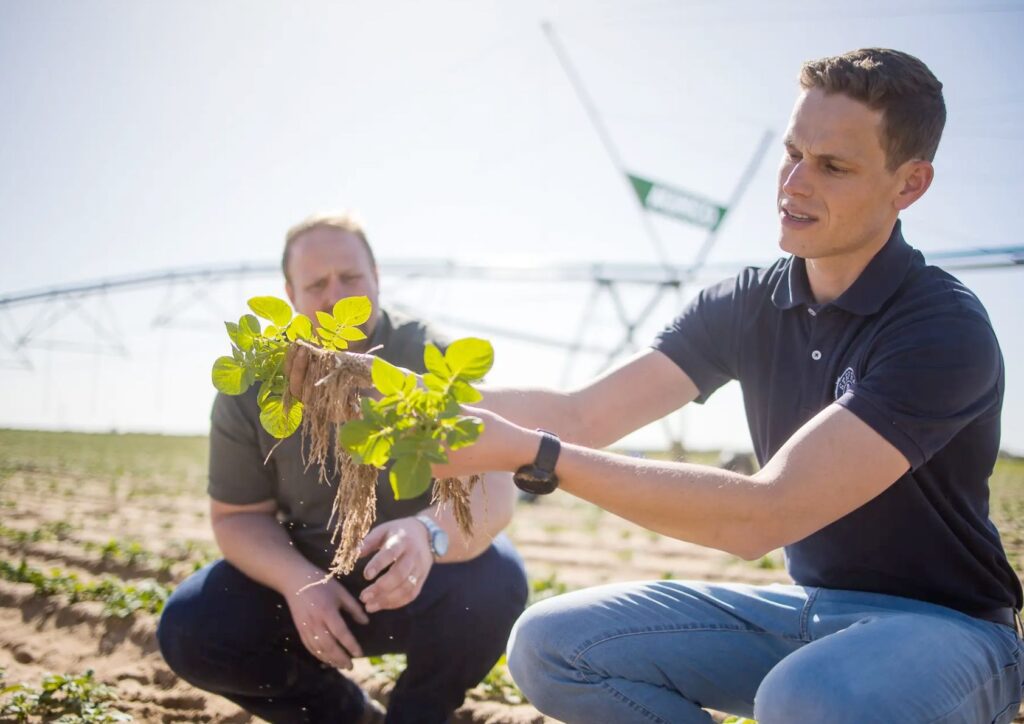
Biosecurity platform for change
Through ABIPP, TIA has funded the establishment of a biosecurity platform in Southern Africa for the development and implementation of National Biosecurity Surveillance.
The biosecurity platform stationed at the University of Pretoria’s Innovation Africa @UP is designed to assist stakeholders with surveillance and early warning systems for pests and diseases in crops and livestock.
Farmers are vulnerable to plant pests and diseases, which result in significant yield losses. This impact is often more detrimental to small-scale farmers.
Currently, limited specialist support exists to help reduce yield losses caused by pests and pathogens. Through this project, an information hub has been developed to support farmer decision-making using biosecurity data and to provide early warning services that alert farmers of possible pest invasions.
Before the implementation of the platform, the biosecurity space in South Africa lacked a coordinated response to old and new pests and diseases. This platform will enhance current systems.
The safety and health of crop and animal produce is essential to building a sustainable agriculture sector, thus ensuring national food and nutrition security while building confidence amongst South Africa’s trade partners.
The biosecurity platform project has created a technology for digital farming. The adoption of the technology will provide both smallholder and commercial farmers with access to specialist support and digital tools to help reduce vulnerability to pests and pathogens.
Leaving no one behind
To date, more than 100 farmers have been trained on the use of the web-based and mobile app biosecurity data. The biosecurity platform has also created user-friendly manuals in information pamphlets and associated animation videos on how to use the information hub app.
The manual and videos explain the importance of plant health, factors that can cause plant sickness, and how to package and send samples to the biosecurity platform.
The samples will be sent to the FABI Diagnostic Clinic support laboratory. Both the information pamphlets and animation videos have been created in five of the country’s official languages, namely English, Afrikaans, isiXhosa, isiZulu and Sepedi. The animation videos will be optimised for phone use and distribution via WhatsApp.
The establishment of the biosecurity hub and the current project in digital farming demonstrate that converting existing data into usable information and intelligence has the potential to stimulate growth in the agricultural industry. This growth will contribute to economic growth and ultimately poverty eradication.
The data generated from this platform will provide insights to support decision-making at the farm level and inform policy at a strategic level.
The rise of 4IR and the availability of technologies offer a range of opportunities that the agricultural industry can harness for growth and transformation, which is necessary for global competitiveness.
READ NEXT: NWU’s programme nurturing future animal health leaders
Sign up for Mzansi Today: Your daily take on the news and happenings from the agriculture value chain.