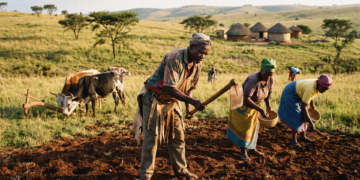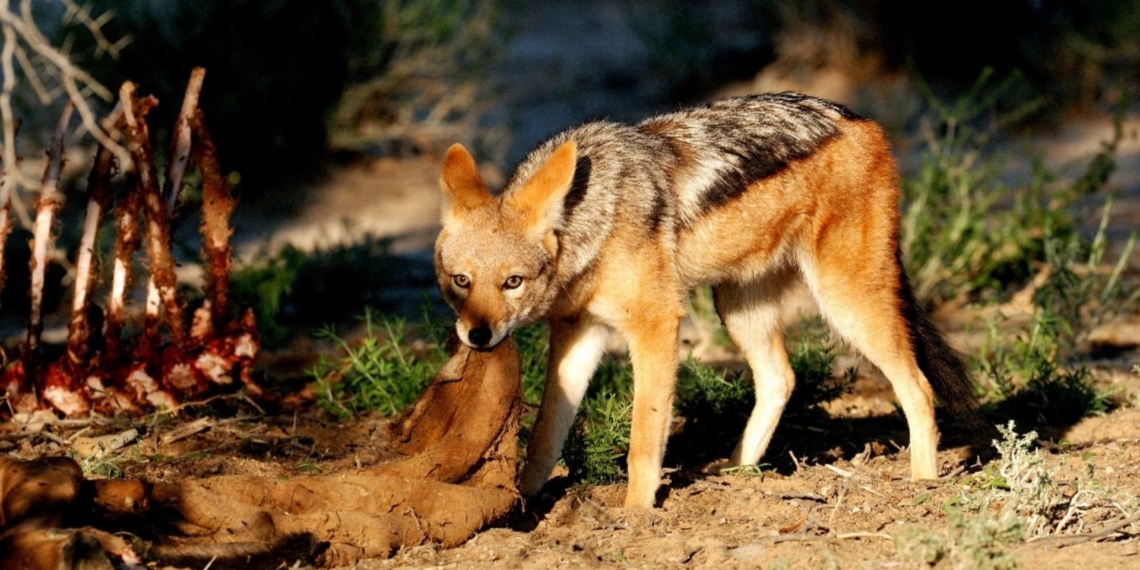
Black-backed jackals continue to pose a major challenge for small-scale subsistence and emerging farmers because they prey on sheep and cause significant livestock losses as well as financial and psychological stress.
Legal methods for controlling these mid-ranking predators in the food chain (mesopredators) do not appear to be having the desired effect.
Mounting threat of mesopredator attacks on livestock
Megan le Roux, a doctoral student in the digital signal processing (DSP) laboratory in the department of electrical and electronic engineering at Stellenbosch University (SU), said predation by black-backed jackals is a difficult problem for farmers, with few clear solutions.
“Even the widely used method of ‘calling and shooting at night’ using recorded jackal and prey distress calls to lure animals closer has not solved the problem
“Ecologists also believe that culling jackals disrupts their complex social system, often resulting in younger females breeding and other jackals moving in and claiming the territory. Evidence suggests that lethal control methods could lead to increased predation,” Le Roux said.
Professors Riaan Wolhuter and Thomas Niesler manage the DSP laboratory.
Related stories
- Predator control: Problem animals or ‘problem people’?
- How to use technology to fight farm security challenges
- Student wins big with tech solution for township farmers
- Farmer 101: Using tech to maximise safety
Le Roux points out that black-backed jackal numbers have increased significantly in South Africa’s livestock farming areas, most likely due to a loss of natural habitat and an associated decline in natural enemies.
Automated biotelemetry brings high-tech tracking to the field
As part of her recent master’s degree in electronic engineering at SU, Le Roux developed a biotelemetry system that remotely monitors wildlife in agricultural areas and collects video footage and environmental data about their behaviour.
“Since black-backed jackals are opportunistic and highly adaptable hunters whose breeding habits, timing, and litter sizes depend on the availability of food, this system could help farmers and environmental and wildlife biologists better understand their behavioural patterns,” she explained.
Le Roux used simulation software to first test the system, which was subsequently deployed on a rural farm and an equestrian farm. The wireless sensor nodes were deployed to fixed positions on the farms to gather video footage of jackals and monitor environmental conditions.
These nodes contained integrated Wi-Fi networking equipment for long-range communication, as well as various sensors.
She said field tests showed the system could reliably and automatically capture video material, both in daylight and at night, when movement is detected.
Gathering data for sustainable predator management
“Considering that black-backed jackals are predominantly active at night, each node was equipped with wireless cameras that can capture footage in extremely low-light conditions. The sensor nodes individually transmit the collected data to Google Drive via the internet access broadcast from the access point node.
“The system also collected environmental data, including temperature and humidity readings, at dedicated intervals. During a five-day test period (from the afternoon of 5 November to the early morning of 10 November 2025), the system successfully transmitted 709 video clips of 30 seconds each to Google Drive – a total of 1.3 gigabytes (1.318 MB) of data,” she said.
Le Roux says the biotelemetry system was able to do this without any human intervention.
“While most traditional camera trap systems require manual battery maintenance and physical SD card collection for data extraction, sensor nodes in my system are designed in such a way that environmental data capturing, movement detection and subsequent video recording, as well as data transfer, are all automated within the system.
“Movement is detected by a passive infrared sensor, which triggers the system to automatically begin recording 30-second video snippets. The video recording is then processed by the system and transmitted to Google Drive.”
Le Roux added that the system may potentially contribute large quantities of video data on the hunting, feeding and breeding patterns of black-backed jackals and other mesopredators in agricultural areas.
“This additional research material could, in the long term, support the development of more ethically acceptable and ecologically sustainable practices to manage problem animals,” she said.
READ NEXT: SA Olive Awards celebrate world-class quality and industry heroes