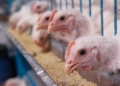
High feed costs are crippling poultry producers, but they could also become the trigger for a new generation of youth-led maize, soya and feed enterprises, says Ishmael Sunga, CEO of the Southern African Confederation of Agricultural Unions (Sacau).
Every time the price of poultry feed rises, the shock travels quickly from the farm gate to the dinner table. Producers cut back. Small businesses lose margin. Consumers pay more for eggs and chicken.
In many African markets, the problem is painfully simple: feed is the biggest cost in poultry production, often accounting for 60–70% of total production costs. When yellow maize and soya become expensive or scarce, poultry becomes expensive too.
The high cost of feed: An agribusiness opportunity
But perhaps the real failure is not that feed is expensive. The real failure is that Africa has allowed such an obvious market opportunity to remain underdeveloped for so long. Every spike in feed prices is shouting the same message: produce more yellow maize, grow more soya, organise better aggregation, build more storage, expand feed milling, improve formulation skills, tighten quality control, fix logistics and professionalise the entire feed system.
In other words, the poultry feed crisis is not just a cost problem. It is an enterprise gap, and one that a bold generation of young agripreneurs can help close.
This is where young people should come in – not as beneficiaries of another well-meaning youth project, but as serious commercial actors in one of the most important food value chains on the continent.
Poultry is one of Africa’s most accessible entry points into agribusiness. It can create jobs quickly, support women and young entrepreneurs, strengthen rural and peri-urban economies, and provide affordable protein to millions of households. Yet poultry cannot grow on weak feed systems.
Related stories
- The ‘missing middle’: Unlocking Southern Africa’s poultry potential
- Bold policy can turn poultry feed cost crisis into youth agribusiness
- Poultry value chains: Driving rural economic growth in SA
- Why SA’s poultry industry needs a new integration model now
The opportunity is therefore not to complain endlessly about feed prices. It is to build the businesses that bring those prices down. Africa should launch a deliberate, large-scale drive to support youth-led enterprises in yellow maize and soya production, feed ingredient aggregation, small-scale feed milling, oilseed processing, quality assurance, alternative feed ingredients and last-mile distribution.
However, young people should not be pushed into this opportunity alone. Too many youth agriculture programmes fail because they romanticise entrepreneurship while ignoring the brutal realities of land access, finance, mechanisation, irrigation, inputs, storage, quality standards and markets. If young producers are left to struggle as isolated entrants, most will remain trapped at subsistence scale.
Clustering youth with established commercial farmers
The smarter model is to cluster youth-led enterprises around established commercial farmers and existing backbone infrastructure. Commercial farmers can provide mentorship, mechanisation, irrigation support, production planning, input procurement, drying, storage, quality control and structured market access.
Young producers bring ambition, energy, innovation and the urgency of a generation looking for viable economic pathways. Together, they can turn a feed bottleneck into an enterprise pipeline.
This is not charity. It is smart economics:
- Commercial farmers benefit from expanded production footprints, better use of equipment and infrastructure, stronger local supplier networks and more reliable raw material supply.
- Youth enterprises benefit from access to capacity that would otherwise take years to build.
- Poultry producers benefit from better feed availability.
- Consumers benefit from more stable prices.
- Governments benefit from jobs, food security and stronger domestic value chains.
Practical policy: Tax relief and performance incentives
For this to work, policy must become much more practical. Governments and development partners should reduce the cost of entry for youth-led feed enterprises through targeted tax relief, VAT exemptions or rebates on critical inputs and equipment, accelerated depreciation for irrigation and storage assets, matching grants for aggregation centres and feed-milling infrastructure, and duty relief on specialised machinery that is not available locally.
These incentives must not become open-ended giveaways. They should be conditional, time-bound and performance-based. Support should go to youth-owned and youth-managed enterprises with credible business plans, real production or off-take agreements, participation in approved producer clusters, compliance with quality standards and measurable contributions to local feed ingredient supply. Public money should crowd in private investment, not replace it.
Rethinking finance: From cash flow to warehouse receipts
Finance must also change. Standard loan products rarely fit agriculture. A young maize or soya producer cannot repay a crop loan as if they were running a monthly salary business.
Financing windows for youth agribusiness should offer seasonal repayment schedules, concessional rates, grace periods aligned to crop cycles, working-capital facilities, equipment leasing and credit guarantees. Where there are credible off-take agreements, banks should finance the value chain, not just the collateral.
Warehouse receipt finance could be a game-changer. Instead of forcing young producers to sell grain immediately after harvest when prices are low, certified storage and electronic warehouse receipts would allow them to use stored maize or soya as collateral for short-term credit. That improves cash flow, reduces distress selling, strengthens price negotiation and makes the grain system more formal and bankable.
Anchor commercial farmers can also serve as wholesale financing conduits. Because they often have stronger balance sheets, credit histories and relationships with banks, they can access larger credit lines and channel inputs, mechanisation and working capital to youth outgrowers under transparent contracts.
Repayment can be linked to produce deliveries, reducing risk for lenders and improving discipline across the value chain.
Digital solutions for end-to-end scale
Digital tools should support the system from end to end:
- farmer registration
- input vouchers
- mobile payments
- crop verification
- production dashboards
- electronic warehouse receipts
- loan applications and alternative credit scoring based on delivery records and repayment behaviour.
This is how youth agribusiness moves from speeches to scale.
The stakes are high. If Africa does not fix its feed systems, poultry producers will remain vulnerable to grain price volatility, climate shocks, import dependence and weak local processing capacity. The result will be higher food prices, thinner business margins and missed opportunities for employment.
But if we act boldly, the same pressure can unlock a wave of youth-led businesses across production, processing, aggregation, logistics, advisory services and digital coordination.
The message is simple: stop treating high feed costs only as a poultry problem. Treat them as an enterprise challenge. Treat them as an industrialisation challenge. Treat them as a youth employment challenge. Treat them as a food security challenge. Then build the policy, finance and partnerships to match.
Africa’s young people do not need more slogans about agriculture being the future. They need structured opportunities inside real markets. The poultry feed market is one of them. It is large, urgent and commercially meaningful.
With the right support, youth-led maize, soya and feed enterprises can lower costs, strengthen poultry value chains, create jobs and make protein more affordable.
The feed crisis is already here. The question is whether we will continue to experience it as a constraint or whether we will use it as the trigger for a new generation of youth-owned agribusinesses that feed the poultry sector, feed the economy and help feed the continent.
- The views and opinions expressed in this article are those of the author and do not necessarily reflect the views or positions of Food For Mzansi.
READ NEXT: Dragon fruit thrives in KZN valley despite tough national season