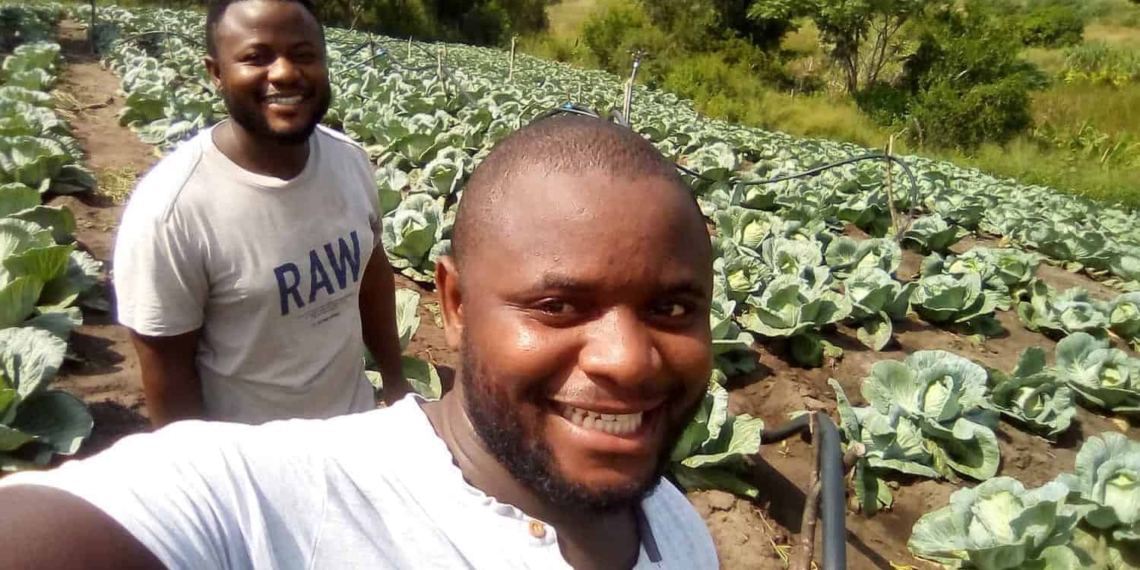

While it is true that you are going to need funding to get your farming enterprise off the ground, this does not mean you have to sit idle and wait for it to fall into your lap, say KwaZulu-Natal farming brothers Sakhile (26) and Absalom (30) Mtshali.
The brothers, who hail from the town of Mbazwana in the uMhlabuyalingana municipality in KwaZulu-Natal, grew tired of waiting for government agricultural funding. They used money received from the Unemployment Insurance Fund (UIF) to start their one-hectare poultry and cabbage business.
“We were unemployed and earning something small from our UIF. It just grew from there and we are proud of how far we have come,” says Absolom.
Started in 2018, the venture was inspired by the greater community who often must travel long distances to access healthy foods.

The youngest of the duo, Sakhile, says: “We are from a rural area and for some people it is not easy to get food here. When you must get to a grocery shop, food costs more so we started to farm here and sell to the informal market in our village.”
Absalom adds that the aim of the business is to also educate the town’s people on soil and its ability to break the shackles of poverty.
“Our people are not aware of the environment where we are staying. The soil is so rich here you can plant anything. We want to show them that it is possible; they can use this land when they are struggling to plant veggies and other things to empower themselves.”
Their mission has been received well, he adds.
“The members of our community are coming by the numbers. This is our first project; they are coming to seek out work and they are surprised to see that this soil can actually produce such veggies,” he says.
Caught the farming bug later in life
Growing up the duo say they never showed any particular interest in agriculture. Parents, Khetiwe Zikala and the late Jose Mabote were small-scale farmers and supported the family with produce grown on the family plot.
“It never crossed our minds when we grew up. Our parents did it, but it was never a thing for us until we got back home. We were focused on getting out of the village and getting jobs,” says the eldest Mtshali brother.
‘When we came back home and started learning and understanding the skills of farming, trying to make ends meet, then we realised that there is life in farming.’ – Sakhile Mtshali
The brothers matriculated from the Justice Nxumalo High School and later ventured into artisanal work trades.
Absalom is a boiler maker by trade and Sakhile trained as a diesel mechanic at Majuba College.
When Absalom graduated in 2013, he worked as an intern for a year. He was unable to secure permanent employment and instead returned home in 2018.
At an impasse, they remembered how their own parents would live off the land and decided to start their own farming business.
They figured they might as well use the skills that they have known their entire lives to their benefit and the benefit of their community at large.
“It comes from our parents. They were the ones who inspired us. They are always busy farming this and that, but on a small-scale. We realised if we could learn from what they were doing we could do something bigger and actually change lives and also create a living for ourselves,” says Absalom.
‘Solutions to your problems do not come while you are idling on the couch.’ – Absalom Mtshali
Sakhile echoes his sentiments, saying: “When we came back home and started learning and understanding the skills of farming, trying to make ends meet, then we realised that there is life in farming. We started educating ourselves on how things work and realised that it was so broad, if you do it properly you can make a living out of it.”
But where are the markets?
In January, the duo planted 7000 cabbages which are now ready for the market. However, funding has hampered their progress. “You can only sell so many cabbages on the informal market, the dream is to get people to buy our product in bulk,” the youngest Mtshali brother says.
Funding opportunities for farmers are like hens’ teeth, the duo says.
“We struggle to get funding from government or any available farm funding initiatives.

“Currently there are no funds or there is no one to help you with the funds. Whatever you have to do you have to make sure it comes from your own pockets, which is difficult for us since we are unemployed. We have to try to generate an income,” says Absalom.
However, this does not deter them from their dream to see their community thrive. “We want to make a change and show people it is possible to live sustainably on the land where we were born.”
The older Mtshali brother advises fellow starter farmers to break free from the limitations of expectations. Only you can bail yourself out.
“Just start, just do it. You cannot just sit and idle. You do not even have to start with everything at once, just take on small step. Solutions to your struggles do not come when you are just sitting and doing nothing, you need to get up and fix them yourself. You need to put in the hard work,” he says.