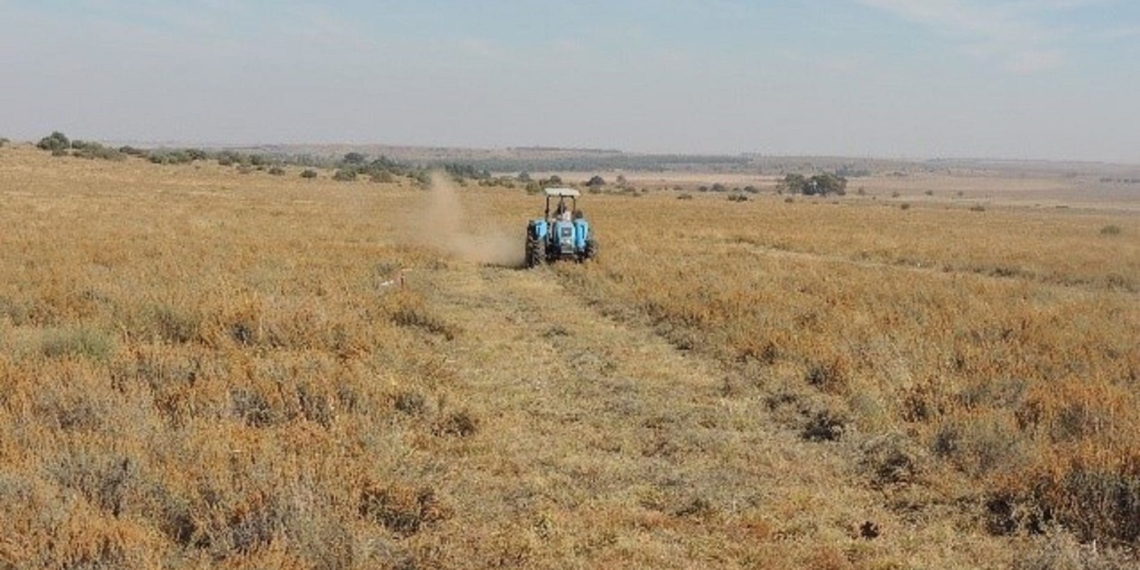

Research conducted by the Agricultural Research Council (ARC) indicates that woody trees and shrubs that encroach on neglected rangelands could be valuable as fodder, writes Prof. Julius Tjelele. He is a research team manager in range and forage sciences at the ARC. His research interest is in rangeland ecology and management with special focus on herbivores and their interaction with vegetation.
For more than 60 years, research evidence showed that savannas and grasslands are altered by bush encroachment. Bush encroachment is where trees and shrubs invade grasslands and/or increase in density at the expense of grasses, forbs and herbs. The drivers for the invasion are largely man-made, due to the restriction of fires or overgrazing, for example. However, climate change contributes as well.
Bush encroachment contributes to, among others, soil erosion and a decline in forage productivity, grazing capacity and biodiversity. This has dire consequences for the growing population of the world, particularly for livestock farmers interested in grasses that provide a substantial proportion of forage for livestock production. However, there is good in every bad situation and woody plant expansion is no exception.
Although there has been numerous studies on bush encroachment, the rate and extent at which it is still increasing raises more questions. A bold statement made by Professor David Ward in a paper published in 2005, titled “Do we understand the causes of bush encroachment?” is still relevant today.
The gist of this popular paper is how the farming community can create opportunities from bush encroachment; how they can make the best of a bad situation.

ALSO READ: GPS tracking of grazing livestock could improve their condition
There has also been a number of brush management strategies, which are aimed at improving forage quantity and quality as well as improving the economic viability of rangelands encroached by woody plants. These methods vary from mechanical to chemical and a fire-browsing combination, to the use of the encroaching woody trees and shrubs as fodder for livestock.
Using a bad situation to your advantage
The discussion around making the best of a bad situation, emanates from millions of hectares of former valuable grazing lands in South Africa being encroached by woody trees and shrubs. This is likely to increase in the future.
Researchers from the ARC’s animal production, range and forage sciences department conducted studies exploring the potential use of woody or shrubby plants as fodder for livestock. It included the formulation of diet for ruminants using bankrupt bush.
The results from ARC researcher Dr Gilbert Pule showed a relatively high crude protein content (7%) in the wet season after fire (unpublished data). In the same study, condensed tannins were 0.1% and 0.16% during the dry and wet season respectively. This suggests that this woody encroacher plant has the potential to be used as a forage resource by farmers.
Body weight maintained on bankrupt bush
Preliminary results from researcher and PhD candidate Motswapo Phoko, from the same department at the ARC, are very promising. She formulated diets for Nguni steers using various inclusion levels of bankrupt bush. The results indicate no significant differences in body weight and body condition score for the feeds including various levels of bankrupt bush and the control (commercial diet). On average, the experimental animals (Nguni steers) gained 0.96 kg/day for the duration of the trial, which took place over 90 days. This shows the potential use of bankrupt bush as feed for ruminants.
There has also been other research work on the use of Vachellia species (formerly known as Acacia) as a non-conventional feed resource to improve meat quality traits, growth rate and body weight. A study by Idamokoro et al. (2016), for instance, showed that a V. karroo supplementation improved growth and meat quality in goats.
Effective management
A number of interacting brush control methods are required to deal with the increasing rate and extent of bush encroachment.
The choice of a particular method will depend on a number of factors, including labour, cost and return on investment.
To this end, I suggest that farmers and landowners consider methods that are environmentally friendly and, most importantly, contribute in closing the feed gaps.
The potential is also there to use encroaching woody species for additional fodder, particularly in resource-poor farming areas and during the drier months of the year when forage availability is limited.
- For further details and collaboration with the ARC’s animal production, range and forage sciences department, contact Dr Tlou Julius Tjelele at jtjelele@arc.agric.za
ALSO READ: Fire: Farmers’ regenerative tool for livestock grazing
Sign up for Farmer’s Inside Track: Join our exclusive platform for new entrants into farming and agri-business, with newsletters and podcasts.