Wednesday, September 16, 2026
SUBSCRIBE
22 GLOBAL MEDIA AWARDS
Food For Mzansi
  • News
  • Changemakers
  • Lifestyle
  • Farmer’s Inside Track
  • Food for Thought
No Result
View All Result
  • News
  • Changemakers
  • Lifestyle
  • Farmer’s Inside Track
  • Food for Thought
No Result
View All Result
Food For Mzansi
No Result
View All Result
in News

Concern as Stats SA reveals a drop in agricultural households

Soaring input costs and a lack of support on the ground have been identified as the main contributing factors to the decline in food gardens across South Africa

by Tiisetso Manoko
23rd October 2023
Concern as Stats SA reveals a drop in agricultural households

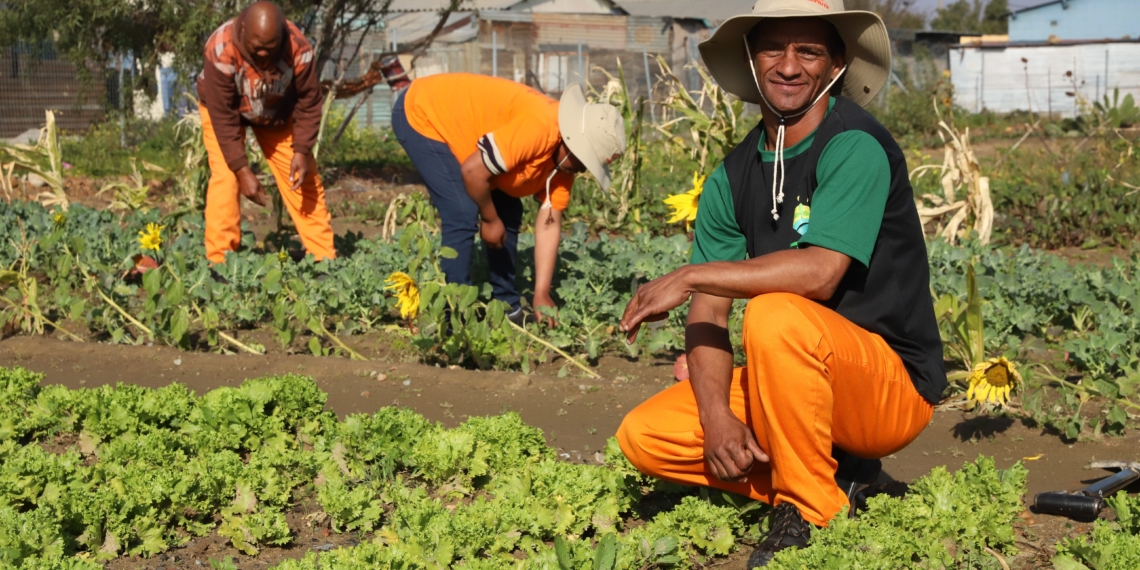
According to the Stats SA Census 2022 report, agricultural households have decreased in a few provinces. Photo: Supplied/Food For Mzansi

Share on FacebookShare on TwitterShare on WhatsApp

While calls have been made for South Africans to start being food secure by establishing food gardens and planting their own food amid the growing tough economic climate in the country, the Stats SA Census 2022 report has revealed the opposite. The number of agricultural households is sitting at 13.8% which is equivalent to over 2.4 million houses, compared to 19.9% in 2011 which was over 2.8 million households.

A decrease in food gardens

According to Stats SA, KwaZulu-Natal, the Eastern Cape and Free State were the three top provinces contributing to the decline.

In unpacking the stats, the director responsible for data analysis and output Tshepo Pekane said the numbers were drawn from questions posed to households regarding the source of their agricultural activity.

“We posed three questions: What was the main agricultural activity and the number of livestock? In most cases, it was poultry. We also asked what was the main purpose of their agricultural activities. This excluded commercial farmers or big entities,” he said.

Pekane said although the data was preliminary, it gave an indication of the scale of agriculture at the household level which was mainly food gardens.

“We mainly focused on livestock and poultry. When it comes to crop farming, no quantities were captured for crops,” he said.

Pekane said it was the first time that they had collected data on livestock, something they’d been considering for some time.

READ NEXT: Banks could ignite smallholder farming transformation

Own consumption dominates

According to the report, most of the households were involved in agriculture to produce for their own consumption only.

“Approximately 4.3% or 107 112 of agricultural households were producing only for sale. Most black African agricultural households were involved to produce only for own consumption (1 854 308 or 83%) compared with 55 787 or 43.9% of white agricultural households,” he said.

The report stated that most of the agricultural households were in KwaZulu-Natal (24.9%), Eastern Cape (20.7%) and Limpopo(16.3%) in 2011.

In 2022, KwaZulu-Natal (22.3%) still reported the highest percentage of agricultural households. However, Limpopo (21.1%) overtook Eastern Cape (19.6%). Northern Cape and Western Cape reported the lowest percentage of agricultural households in both 2011 and 2022.

ALSO READ: Funding got you in your feelings? Here are the dos and don’ts

No support given

Commenting on the report, Saamtrek Saamwerk coordinator Sehularo Sehularo said it was not surprising that the number of households who are practising agriculture had gone down.

“It really does not come as a surprise simply because there was a lack of support and the price of inputs was unbearable. It is really difficult to keep up with agriculture at any scale whether small or large scale.

“With the high rate of unemployment, starting a backyard farm seems to be easy on paper, but the reality is that it is not. And with the lack of training and support, such agricultural households will not make it,” he said.

Sehularo said for food gardens to work, municipalities through local economic development offices needed to play a crucial role in ensuring that communities are food secure.

Action required

“If we are genuine about food gardens and making sure that households are food secure, we need action and not only words.

“We cannot leave sustainability of food in our communities only to non-profit organisations; the local sphere of government needs to come to the table. They can’t just give inputs and leave. Proper training is needed for women and the youth, ” he said.

ALSO READ: Census 2022: Farmers cry out for help as pressures intensify

Enjoy reading? Tell us why!

Sign up for Mzansi Today: Your daily take on the news and happenings from the agriculture value chain.


Tiisetso Manoko

Tiisetso Manoko is a seasoned journalist with vast experience in community media. He possesses diploma in media studies majoring in journalism, certificate in civic leadership. He loves news from all angles with particular interest in local government, agriculture and politics. He is a staunch Mamelodi Sundowns Football club supporter.

Tags: Food GardenHelp me understandKwaZulu-NatalSaamtrek SaamwerkStats SA
Turning soil, turning tides: New era of sustainable farming
News

SA’s canola boom sparks investment and processing opportunities

by Staff Reporter
15th September 2026

Canola has evolved from a rotational crop into a core economic driver for South African farming, hitting a record 192...

Read moreDetails
Protecting what matters: Smart insurance keeps farmers bankable

Protecting what matters: Smart insurance keeps farmers bankable

14th September 2026

World Health Expo 2026: How AI is redefining patient care in SA

14th September 2026

Sinalo ditched his engineering degree to farm, and it paid off

14th September 2026
Red tape exposes broken system behind SA’s FMD crisis

Red tape exposes broken system behind SA’s FMD crisis

14th September 2026

South African cherry exports gain access to China

Sustainable livestock solutions take centre stage in Lesotho

Degree meets dirt: Lerato turns a love for the outdoors into purpose

FNB launches funding boost for women in agriculture

New weapon: SA soil fungus offers hope against African armyworm

Join Food For Mzansi's WhatsApp channel for the latest updates!

JOIN NOW!
Next Post
Rooted passion: #SoilSista Malope feeds off her gogo's wisdom

Rooted passion: #SoilSista Malope feeds off her gogo's wisdom

THE NEW FACE OF SOUTH AFRICAN AGRICULTURE

With 21 global awards in the first six years of its existence, Food For Mzansi is much more than an agriculture publication. It is a movement, unashamedly saluting the unsung heroes of South African agriculture. We believe in the power of agriculture to promote nation building and social cohesion by telling stories that are often overlooked by broader society.

The ‘missing middle’: Unlocking Southern Africa’s poultry potential

Scaling to success: Moleke Maphila’s path from student to farmer

New initiative aims to tackle fertiliser costs via wastewater recycling

Heritage and quality shine at Chenin Blanc Top 10 Challenge

African swine fever: Why early reporting protects pig farmers

Onions hit record highs while general fresh produce prices ease

  • Awards & Global Impact
  • Our Story
  • Contact Us
  • Cookie Policy
  • Privacy Policy
  • Copyright

Contact us
Office: +27 21 879 1824
News: info@foodformzansi.co.za
Advertising: sales@foodformzansi.co.za

Contact us
Office: +27 21 879 1824
News: info@foodformzansi.co.za
Advertising: sales@foodformzansi.co.za

  • Awards & Global Impact
  • Our Story
  • Contact Us
  • Cookie Policy
  • Privacy Policy
  • Copyright

Chat Options

I'm Lerato, your AI assistant!
No Result
View All Result
  • News
  • Changemakers
  • Lifestyle
  • Farmer’s Inside Track
  • Food for Thought

Copyright © 2024 Food for Mzansi

This website uses cookies. By continuing to use this website you are giving consent to cookies being used. Visit our Privacy and Cookie Policy.