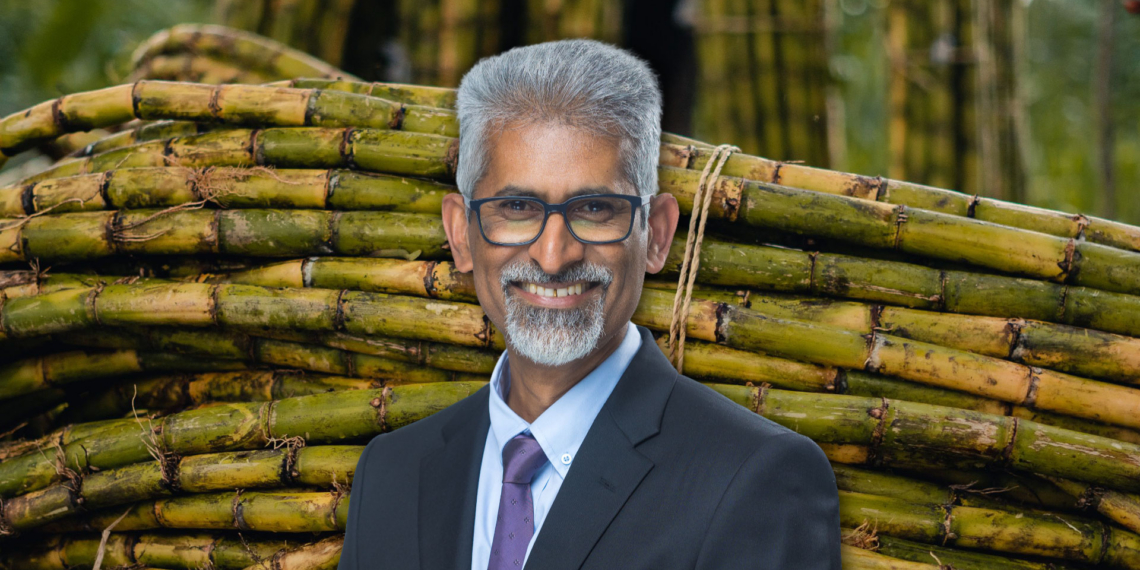
Is sugarcane a sunset industry or an untapped energy powerhouse? Illovo Sugar SA’s Ricky Govender explains how clear biofuel policy and a 3.5% ethanol blending requirement can turn surplus sugar into clean fuel and attract billions in rural investments.
For many South Africans, the sugar industry is increasingly seen through the lens of distress: company restructurings, pressure on growers, shrinking margins and uncertainty about the future. That concern is understandable. But it is not the whole story.
Around the world, sugarcane is increasingly being used as a feedstock for biofuels, renewable energy, sustainable aviation fuels and a growing range of bio-based products that support the transition to lower-carbon economies.
We have an opportunity – if South Africa has the vision and urgency – to move the sector from dependence on traditional sugar markets into a diversified bioeconomy that can support agriculture, manufacturing, energy security and rural development at the same time.
The structural crisis threatening 330 000 jobs
Today, the industry faces a structural imbalance. South Africa produces around 1.9 million tons of sugar a year, while the domestic market absorbs roughly 1.5 million tons.
The remaining production is exposed to export markets where prices are often below the cost of production. This weakens the economics of the entire value chain and places pressure on growers, millers and the rural communities that depend on cane.
The stakes are not abstract. The South African sugar industry supports about 65 000 direct jobs, a further 270 000 indirect jobs and close to one million livelihoods. Much of this economic activity is located in rural areas where alternative sources of employment and investment are limited. If the industry contracts the consequences will be felt far beyond balance sheets and factory gates.
Related stories
- Diversification is the future for survival of sugarcane farmers
- Sweet revolution: Unleashing sugar’s circular economy
- Government hikes sugar import price, but industry warns of gap
- SA sugar industry in crisis as cheap imports nearly double in 2026
Three pathways: Decline, contraction, or diversification
There are broadly three pathways ahead:
- The first is unmanaged decline: weakening industry protection, continued exposure to low-return exports, mill closures, grower exits and job losses.
- The second is regulated, managed contraction reducing production to fit local sugar demand, which may improve financial stability for those who remain but would carry deep social and economic costs.
- The third, and most compelling, is diversification for growth.
Diversification would change the picture completely.
Instead of treating surplus sugar as a problem to be exported at poor returns, South Africa can convert this surplus into a strategic domestic energy product. In this future, the sugar mill is no longer only a sugar factory. It becomes a rural industrial hub attracting investment and creating much needed jobs.
Bioethanol: A solution for energy and economic security
The most immediate opportunity is sugarcane-based bioethanol. At current production levels, surplus sugar can already support a 3.5% ethanol blend in South Africa’s petrol pool. This is not a distant or speculative opportunity. The feedstock exists, the milling infrastructure exists, the agricultural base exists, and the policy foundations for biofuels blending already exist.
The benefits of a phased bioethanol programme are huge for the country and extend far beyond the sugar sector itself. Diversifying sugarcane would stimulate new investments into rural economies, creating jobs and opportunities. Growers would benefit from increased demand for sugarcane, and communities would benefit from greater economic activity.
It would also reduce South Africa’s costly fuel import bill and support lower-carbon transport fuels. As South Africa seeks practical pathways towards its climate commitments, biofuels can play an important role in reducing emissions from transport while supporting a just transition that does not leave rural communities behind.
Few interventions can advance agricultural sustainability, energy security, industrialisation and rural livelihoods through one integrated value chain.
The positive future is easy to imagine. Growers have a more stable market for cane. Mills invest in more efficient and diversified production platforms. Rural communities see new jobs, new infrastructure and new confidence. South Africa imports less fuel and produces more of its own renewable energy products. Over time, the country builds a bioeconomy around an agricultural crop it already grows at commercial scale.
Policy certainty: The final barrier to biofuel investment
So why has this not happened already? We have the capacity, technical knowledge, and infrastructure base. What we need now is policy certainty.
The biggest barrier is uncertainty. Building ethanol plants, storage facilities and blending infrastructure requires billions of rand in long-term investment. Businesses will only commit this funding if the government provides clear regulation of ethanol pricing, sets a firm blending requirement and gives investors confidence that the policy will last. Without these guarantees, investment will remain on hold.
Government can unlock this opportunity through three practical steps. It should introduce an initial 3.5% ethanol blending requirement, provide clear pricing laws and fiscal incentives to support investment, and establish a dedicated team across the energy, agriculture, trade, finance, environment and rural development departments.
This transition can happen in stages. A 3.5% blend is a practical starting point: it would use a meaningful share of surplus sugar, allow South Africa to test supplies and blending systems, and give investors the confidence to build new capacity. Once the pricing and allocation rules are agreed, the first projects could be developed within about 30 months. The blend could then increase gradually towards 15%, opening the market to ethanol made from other crops and creating new growth opportunities across agriculture.
South Africa does not have to choose between protecting the sugar industry as it is and watching it decline. There is a better choice: reposition sugarcane as a strategic national asset capable of supporting the next generation of rural industrial growth.
This is not a sunset industry. It is an industry waiting for the policy signal that will allow it to reinvent itself. With regulatory certainty, strategic investment and collaborative leadership, sugarcane can help power a more secure, inclusive and resilient South African economy. Decline is not inevitable. The future can still be grown.
- Ricky Govender is the managing director at Illovo Sugar (South Africa). The views and opinions expressed in this article are those of the author and do not necessarily reflect the views or positions of Food For Mzansi.
READ NEXT: Fixing SA’s agricultural visa system to protect seasonal harvests