Faced with land and water scarcity, emerging farmers are turning to hydroponic innovation. In this Farmer Mentor episode, mechanical engineer-turned-agripreneur Mogale Maleke shares practical advice on starting small, mastering technical skills, and securing market access.
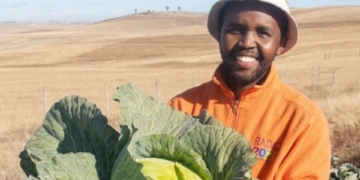
AB Farms founder Mogale Maleke uses engineering and hydroponic technology to help farmers maximise limited resources, improve production, and explore new markets.
For farmers facing limited access to land, water and reliable electricity, hydroponics could offer an alternative way to grow fresh produce. However, adopting the technology requires careful planning, patience and a willingness to learn, Maleke says.
Connecting agriculture and technology
Maleke, a master’s graduate in mechanical engineering from the University of Johannesburg, became interested in agriculture while researching urban farming in Gauteng in 2016. His research highlighted the challenges urban farmers faced, particularly limited growing space and water availability.
Recognising an opportunity to address these constraints through technology, he began exploring hydroponics, a method of growing plants without soil by using water-based nutrient solutions.
“I thought there must be some sort of technological solution around this problem of having less space available to yourself, as well as less water,” he adds.
After researching existing systems, Maleke designed a hydroponic solution that could be adapted to South African conditions, including areas where electricity supply is unreliable.
Today, AB Farms designs, manufactures and installs hydroponic systems for small- and medium-scale farmers, while also producing and selling vegetables using its own technology.
It is therefore no surprise that Maleke was a runner-up in this year’s Gauteng Young Farmer of the Year competition.
Making limited resources go further
Hydroponics can help farmers produce more food in smaller spaces while using water more efficiently through recycling. The systems can also be installed in areas where conventional crop production may be difficult, including rooftops and portions of farmland with less productive soil.
Related stories
- Backyard bounty: Soweto graduate grows smarter with hydroponics
- Cape Town’s urban farmers turn to hydroponics for hope
- Smart soil and strong networks drive Kopana Holdings’ success
- How Tebogo beat post-harvest losses with smart agro-processing
Maleke believes this makes the technology particularly relevant to farmers who cannot easily expand their landholdings.
“If you think about Gauteng, we’re already a small province in general, so we’re not going to get more land,” he says.
Leafy vegetables such as spinach, Swiss chard and lettuce are among the crops farmers can consider, while herbs and microgreens are also being grown using hydroponic systems. Tomatoes, peppers and cucumbers are other options that can perform well under hydroponic production.
Growing under infrastructure can also help farmers manage some weather-related risks and maintain yields amid climate variability.
However, hydroponics is not a shortcut to profitability. Maleke advises farmers to understand the technology and its financial implications before making substantial investments.
Start small before expanding
For farmers interested in adopting hydroponics, Maleke recommends starting with a small system, gaining practical experience and expanding as their knowledge and confidence grow.
He acknowledges that hydroponics is more technical than conventional soil-based farming and requires an open mind, patience and a willingness to experiment.
Farmers should also have realistic expectations about returns on investment. The benefits may take time to materialise, and production alone does not guarantee a viable business.
“It’s important for farmers to have that exploring mentality where you’re able to set up a small system, sort of get your fingers dirty, try it out, see what happens and then expand from there.”
Market access is another important consideration. AB Farms supplies processing companies that serve restaurants and hotels, independent retailers and the Johannesburg fresh produce market.
Maleke encourages farmers to engage with potential buyers in their local markets and establish whether there is demand for their produce before scaling up production.
Collaboration can strengthen farming businesses
Beyond supplying technology and growing produce, AB Farms uses its farm as a demonstration, research and training site. This allows farmers to see the systems in operation, learn how to use them and gain practical experience.
Maleke believes collaboration and skills development are essential to strengthening the agricultural sector, particularly among smaller producers who may struggle to access resources and markets independently.
“We’re better as farmers when we collaborate,” he says, adding that sharing knowledge across different farming sectors, markets and provinces could help reduce risks and improve outcomes.
For young and emerging farmers, his message is to prepare for a demanding journey. Building an agricultural business takes time, and challenges such as weather, production and market access can delay progress.
“Perseverance and patience, those two things are going to go a long way,” he says.
READ NEXT: Becoming bankable: How to get your farm ready for finance