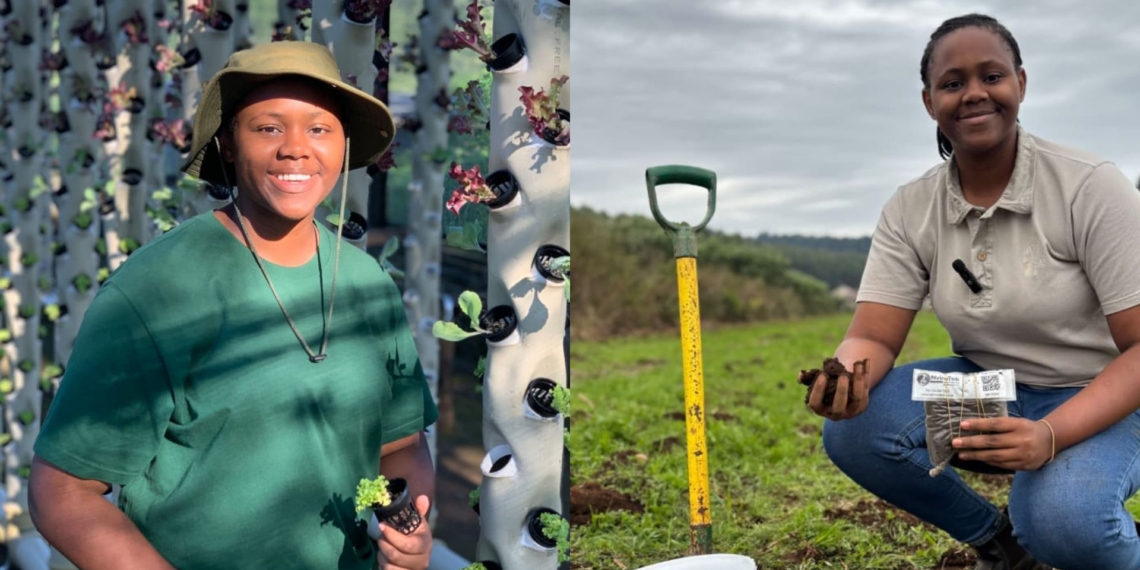
When Lerato Moeli took a gap year after school, she did not know what to do with her life. She knew she loved the outdoors, constantly learning and having the freedom to explore different areas. That’s when a light went off: agriculture could offer her this opportunity and more.
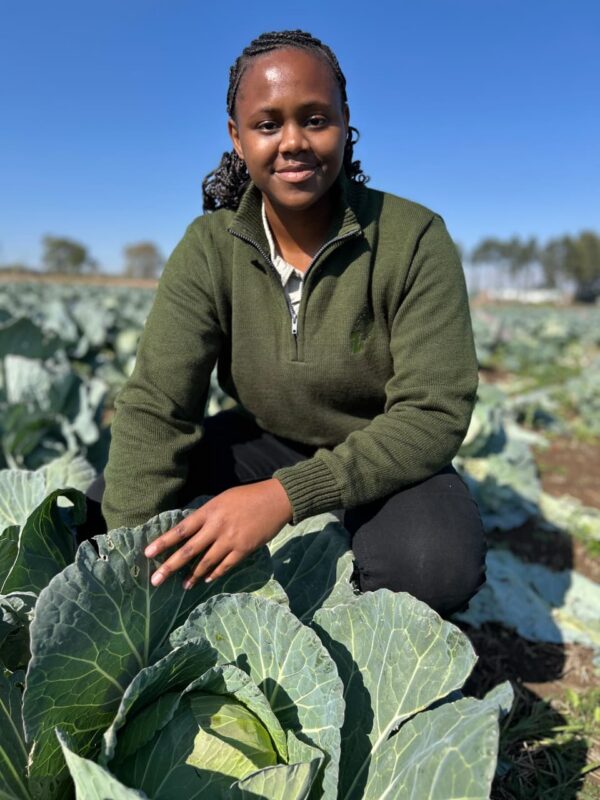
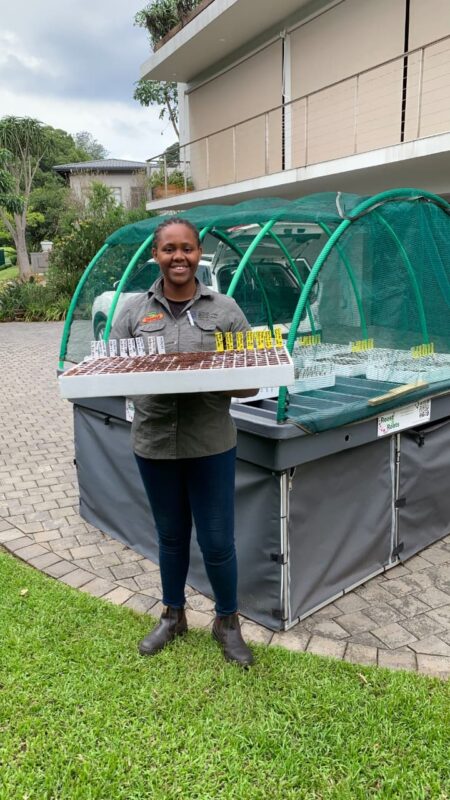
Today, with a bachelor of agriculture in crop production management and as a junior technical manager at Zylem & RegenZ, she specialises in soil health and regenerative agriculture.
Growing up in Westville, Durban, Moeli developed a passion for sports. However, things did not go as she wished, and left her with an unknown career path to pursue.
“After high school, I took a gap year because I wanted to explore what I actually wanted to do with my life. Agriculture eventually stood out to me because it gave me the combination I was looking for: being outdoors, constantly learning and having the freedom to explore different areas.”

Navigating life after university
Moeli’s farming career began when she earned her degree in crop production management at the University of the Free State. Right after graduation, she decided to work on a farm as a general worker.
“I had the qualification, and I understood the theory, but I had never actually stepped onto a commercial farm before. I didn’t know what the day-to-day operations looked like. I could understand something from a textbook, but I couldn’t necessarily tell you what it looked like physically.’’
Related stories
- Graduate to grower: Mashau fertilises farm dream on one hectare
- NW soil scientist-turned-farmer: Plants speak, he listens
- Schooled by the soil: Zondi’s passion for indigenous plant science
- What we’re missing in regenerative farming: A new way to learn
Starting as a general worker opened doors for her; she learnt more practical ways of how farms operate, which helped her to understand beyond what theory provides.
“So, starting as a general farm worker allowed me to build that foundation. I had to learn what plant spacing actually looks like, what harvesting involves, what a crop looks like two weeks after planting, what top-dressing physically looks like and how operations actually happen on a farm. There is a big difference between knowing a term and actually doing it,’’ she explains.
Theory meets practical experience
She also highlights the difference between what you learn in university and what she learned by working in the field despite having a relevant qualification.
“For example, if I hadn’t gone to university, I might not have understood what an aphid was, why it was a problem or how you would approach managing it. But when you actually work on a farm, those concepts become real.”
Moeli notes that she faced few challenges when she started working in the fields and highlights the importance of admitting when you have no knowledge of what you have been assigned to.
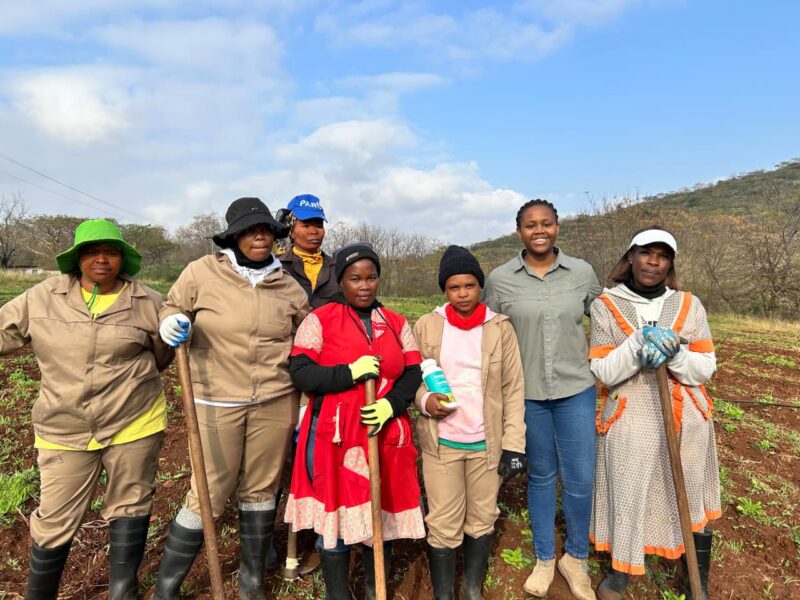
“Having a qualification can sometimes give you the impression that you are ready for the industry, but agriculture quickly humbles you. You realise how much you don’t know once you actually start working. That has been one of the biggest lessons of my career: don’t be afraid to admit that you don’t know something,” she says.
Another challenge for her was learning that agriculture is not one-size-fits-all.
“What works for one farmer or one soil doesn’t necessarily work somewhere else. That has forced me to become more open-minded and to listen to people with different experiences. I learn every day from the people around me, including people who have been in the industry for much longer than I have.”
She spent two years trying to find her niche and what interests her in different roles on the farm.
“What I love about agriculture is that it isn’t one-dimensional. You can go into crop production, horticulture, forestry, fisheries, soil science, research, technology, development and so much more.”
She got an opportunity to specialise in soil health and regenerative agriculture.
“I was fortunate to receive an opportunity at Zylem and RegenZ, a soil health company focused on biological solutions, biostimulants and regenerative agricultural practices. I immediately connected with the principles the company stands for, particularly the focus on taking care of the soil and improving the health of the entire farming system,” she says.
For her, it is important to understand the difference between regenerative agriculture and sustainability.
“Sustainability generally focuses on maintaining a system and ensuring that we do not deplete resources. Regenerative agriculture goes a step further by focusing on restoring, improving and rebuilding the health of the soil and the wider ecosystem over time.
“I’m particularly interested in how we can improve soil health, reduce unnecessary disturbance, make better use of cover crops and understand the biology of the soil while still producing viable crops,” she explains.
Advice to agricultural graduates
Moeli advises young agricultural graduates not to be afraid to volunteer during university holidays to gain practical work experience and learn communication skills.
“I would also encourage graduates to learn different languages and expose themselves to different people and communities. Agriculture is a people-driven industry, and communication is incredibly important,” she says.
“And above all, never stop learning.”
READ NEXT: Carbon credits 101: A guide to regenerative farming & income