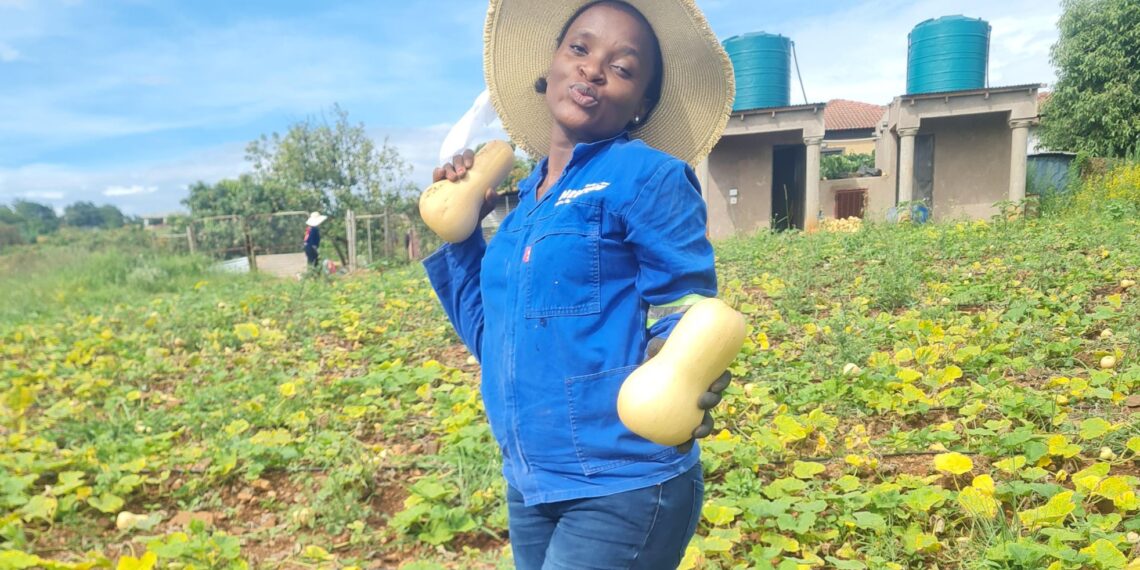
Muelelwa Mashau is no stranger to the challenges facing young agricultural graduates in South Africa. She knows all too well how limited access to land, funding, and support often pushes them away from the fields they once studied so passionately. However, she did not let this stand in her way.
After initially aspiring to become an engineer, Mashau’s path took a turn towards agriculture, a field she now says “chose her.” She went on to complete a diploma in crop production in 2019, followed by an advanced diploma in crop science with a focus on plant-based technology in 2021, both at Tshwane University of Technology.
After completing her studies, Mashau briefly took up a non-agricultural job. However, with encouragement and support from her family, she found herself back home.
“My family, they said, ‘we can help you financially. We have land. If you don’t mind going back home’,” Mashau shares.
That was the turning point. In October 2021, she began clearing the land back home in Limpopo. “In 2022, that’s when I started with my production,” she shares.
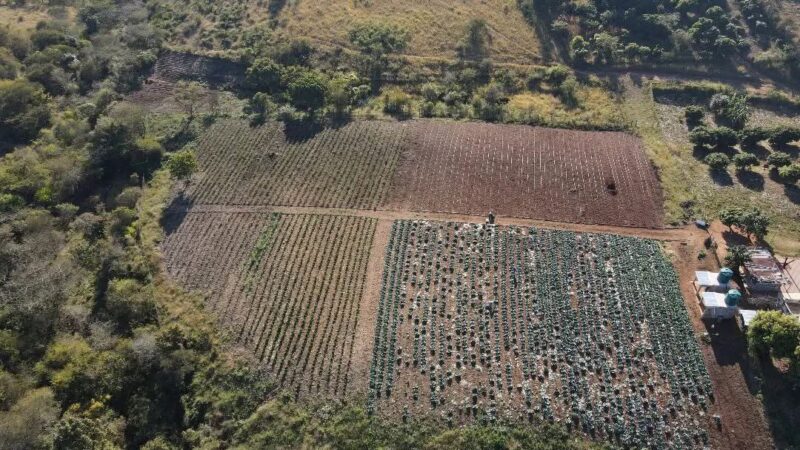
A one-woman enterprise
Today, Mashau farms on a one and half hectare piece of land, split into four sections. She grows a variety of crops, including cabbage, spinach, butternut, chillies, and green peppers.
Running a farm is no easy feat, especially when you’re the sole owner and operator. Mashau does not have any business partners, although she does have a team of workers who assist with harvesting and maintenance. She manages the business end of things herself, including transporting produce.
“It’s challenging because sometimes I must supply two shops at the same time,” she says.
Gaining access to formal markets can be a tough challenge for small-scale farmers, but Mashau didn’t hesitate to approach retailers directly.
“I went straight to the manager. I came with samples as well of my spinach and cabbage, and chillies. He liked the quality of my product.”
Her confidence and commitment to quality soon yielded results. A buyer requested that she deliver 100 bunches the following day.
While Mashau is the sole owner and decision-maker in her business, she does receive support, especially during peak seasons. “I’m alone in running the business, but I do have workers that are helping me.” These are mostly seasonal workers whom she brings on board during intense planting or harvesting periods.
Related stories
- Farming in the fast lane: Tshilidzi races ahead in dairy
- Accidental farmer: Chumani’s pumpkin seeds sprout fertile dreams
Employing seasonal labour not only helps her keep up with market demands but also contributes to the local economy. “They assist with everything from planting to harvesting. It makes a big difference during busy times.”
Everyday challenges
Mashau quickly learned that farming is far from easy. She recalls one of her early setbacks, losing an entire cabbage crop. “It was the diamond back moth that left worms on top of the leaves. The quality was bad, quality is very important.”
Since then, she’s learned to spray twice a week using different pesticides and has adjusted her planting schedule to better align with weather conditions.
The challenges didn’t end there. Lately, she’s had to contend with monkeys. “If you produce green peppers, tomatoes, butternuts, even cabbage, they just take the produce,” she says.

Without shade nets or protective structures, her crops remain exposed and at risk. In the early mornings, animals often enter the fields, searching for something to feed on.
While Mashau’s practical experience grows daily, she strongly believes that her academic background gives her a valuable edge.
“It helps me with the background knowledge. I did my training as well on the farm on a hydroponics system. The experience has helped me a lot.”
She applies what she’s learned in crop production, pest management, and hydroponics to strengthen her farm operations. This training has equipped her to make informed decisions and adapt quickly, even when nature throws curveballs.
Managing costs in a tight economy
Like many farmers, she struggles with high input costs, especially fuel. “It’s a very challenging thing since they don’t take orders every day, so there isn’t income every day.”
Though she doesn’t benefit from any formal funding, her family remains her biggest support. “Only the assistance I got from my family is what is helping me. I’m still supported by it now.”
Despite the setbacks, Mashau is unwavering in her determination. “Sometimes, you lose some production, but with the support I get from my family, they keep me pushing and being focused on my main goal.”
Her message to other young women, especially those studying or considering agriculture, is clear: don’t hold back.
“If farming is something you love and you’re passionate about, just go for it,” she says. “You’ll never regret it. It’s something you learn from every day, and it can be rewarding in a very good way.”


She’s also quick to dismiss the myth that farming brings instant wealth. “It’s not something where you get rich overnight. Even me, I’m not rich. I’ve been farming for four years now. If it’s really in you, if you love it, it will fulfil you in ways money can’t.”
Mashau recognises that a lot of agricultural graduates don’t end up pursuing farming, often because they lack access to land, financial backing, or the right support systems. However, she believes that genuine passion can push you to begin with what you have and gradually build from there.
“Farming is a wonderful space for women as well,” she says. “It’s not just reserved for men. If it’s truly what you want, you’ll find a way to make it happen.”
So, what keeps her waking up early every morning, committed to growing her business and meeting market demands?
“I just love being on the farm. That’s what I can tell you. I love the nature of it. It’s something I look forward to every day. No one else wakes me up to go there, I do it willingly. It’s truly what I’m passionate about.”
READ NEXT: Winter gardening: Turn cold days into cropping gold
Sign up for Mzansi Today: Your daily take on the news and happenings from the agriculture value chain.