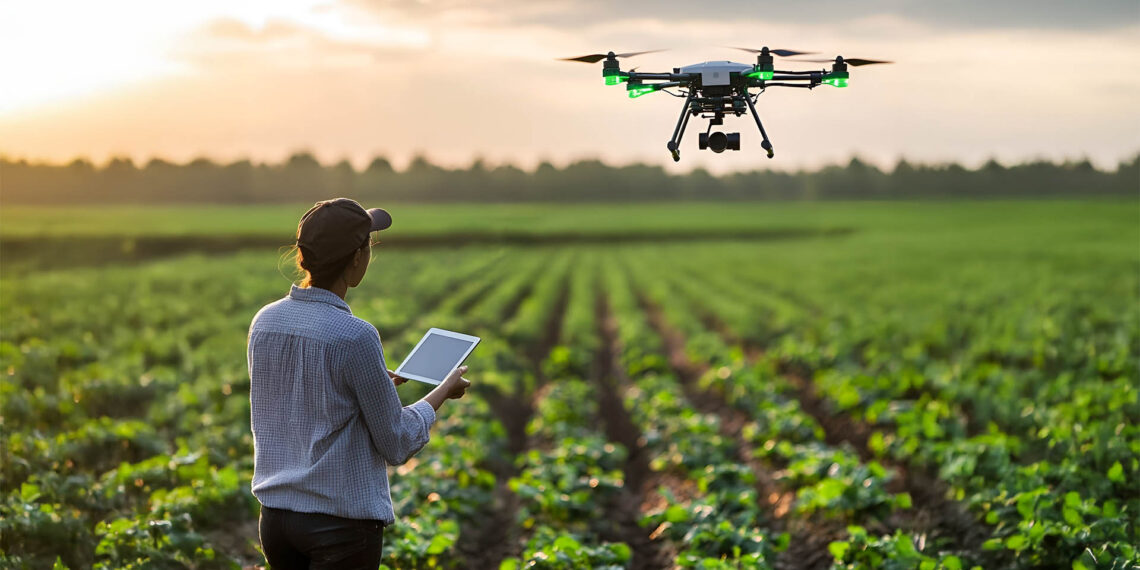
As the country battles with youth unemployment, the agriculture sector presents a growing yet often misunderstood opportunity. Far from the traditional image of farming, today’s agricultural labour market is increasingly diverse and technology-driven, according to Edna Laubscher, quality manager and laboratory specialist at Omnia.
She said the sector now offers career paths in agritech, data analytics, logistics, and laboratory research, which young people need to take advantage of.
“While primary production remains essential, these roles represent only a fraction of what modern agriculture actually involves. Our sector is continually evolving and offers a far wider range of career opportunities, many of which don’t require land ownership or a rural background,” Laubscher said.
Opportunities in smart farming
According to Laubscher, the shift opens the door for a new era of agricultural professionals:
- The soil analyst interprets nutrient profiles to inform better planting decisions.
- The software engineer developing irrigation scheduling apps,
- The logistics planner coordinating temperature-controlled exports,
- The laboratory scientist who develops products and ensures process optimisation, or
- The environmental scientist who is monitoring carbon impact across the supply chain.
“These are not distant opportunities; they are already here. The challenge is making them visible and accessible to young people.
“The employment landscape among South Africa’s youngest job seekers is particularly alarming as the unemployment among youth aged 15-24 has risen by more than 10%. In contrast, employment figures in the agriculture sector remain resilient, having increased in the first quarter of 2025.”
Related stories
- Partnerships key to cutting rising farming input costs, says Omnia
- Omnia’s R45m share scheme rewards over 2 500 employees
Laubscher said while agriculture’s growth is not uniform across the country, certain provinces offer clear entry points for youth participation. The Western Cape currently leads the way with 244 100 agricultural jobs, representing 26% of national agricultural employment, and Mpumalanga and KwaZulu-Natal follow with 138 124 (15%) and 131 515 (12%) jobs, respectively.
She noted that these regional hubs are ideal starting points for youth-focused skills development in post-harvest handling, environmental monitoring, agricultural logistics, and compliance.
Future-proofing agriculture
“Tailoring training and employment programmes to provincial strengths could fast-track more meaningful placements and align job creation efforts with local economic ecosystems.
“Yes, there is still a place for technical agricultural colleges and extension programmes, but there is also growing space for coding bootcamps, Stem mentorship, lab technician training, and digital literacy courses, all tailored to agri-sector application,” she said.
Laubscher believes that more internship programmes, work-integrated learning placements, and partnerships between industry and academia are needed to give young people a real entry point into the value chain.
“In our own experience in laboratory services, we’ve seen how exposure to agricultural research and quality testing opens students’ eyes to career possibilities they hadn’t considered or even heard of before.
“The onus is on all of us, government, industry, academia, and experienced professionals, to showcase these opportunities, open doors, and ensure that agriculture is positioned as a future-proof sector,” she said.
READ NEXT: Brazil cleared of bird flu, SA reopens poultry imports