Sunday, November 8, 2026
SUBSCRIBE
22 GLOBAL MEDIA AWARDS
Food For Mzansi
  • News
  • Changemakers
  • Lifestyle
  • Farmer’s Inside Track
  • Food for Thought
No Result
View All Result
  • News
  • Changemakers
  • Lifestyle
  • Farmer’s Inside Track
  • Food for Thought
No Result
View All Result
Food For Mzansi
No Result
View All Result
in News

Ending Agoa access deals new blow to SA wine industry

South Africa Wine has voiced strong concern after the US announced plans to end SA’s duty-free Agoa access from 1 January 2027. Combined duties could reach nearly 16%, squeezing margins in a key premium market

by Staff Reporter
7th November 2026
South Africa being excluded from AGOA in 2027

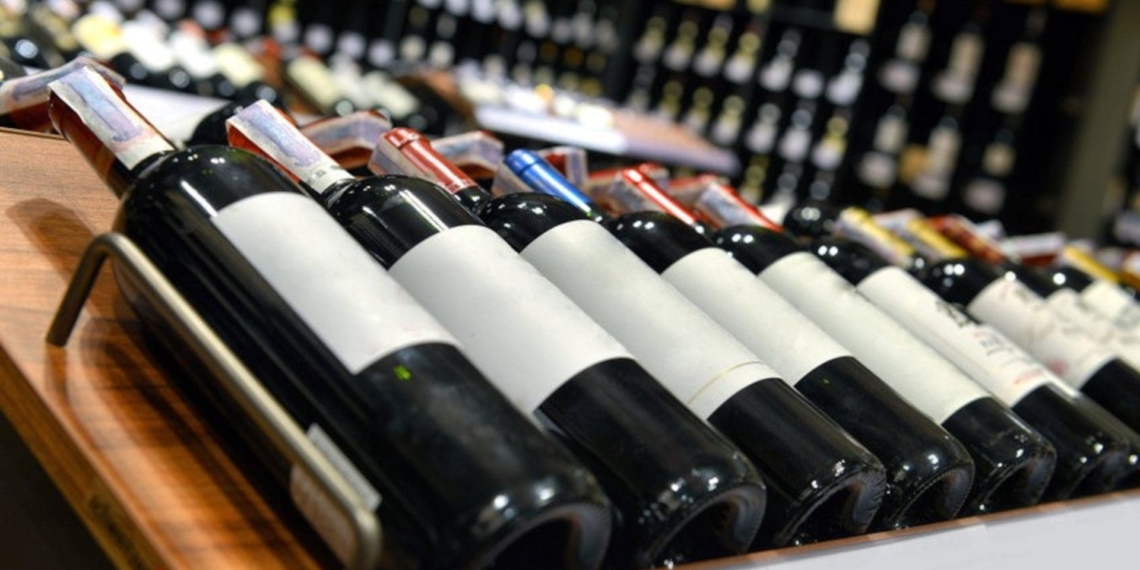
The wine industry is calling on the government to find a solution to the country's exclusion from Agoa in 2027. Photo: Pexels

Share on FacebookShare on TwitterShare on WhatsApp

South Africa Wine has raised concerns over the US government’s announcement that it intends to end South Africa’s preferential trade access under the African Growth and Opportunity Act (Agoa) from 1 January 2027.

In a statement, the wine body said this was another setback for the wine industry in an increasingly difficult market to compete in. Producers and exporters have already spent much of the past two years dealing with changing tariffs, rising costs and weaker demand. The prospect of losing Agoa preferences adds further uncertainty at a time when businesses need stability.

“That stability has been missing for some time. South African wine exporters previously enjoyed duty-free access under Agoa, with tariffs effectively starting at 0%. Since then, they have had to adjust to rates of 30%, followed by 10% and 12.5%, with the potential combined tariff now approaching 16% if Agoa preferences fall away.

“These repeated changes have already caused considerable commercial disruption. The concern is therefore not simply the additional duty of approximately three percentage points, but the cumulative effect of tariff increases and ongoing uncertainty on businesses trying to plan, price and compete in the US market,” South Africa Wine said.

Competing in a global market

According to South Africa Wine the United States remains an important market for South African wine, despite relatively modest export volumes.

“Historically, it has delivered higher average value per litre for packaged wine, reflecting its importance as a premium-value market. Prior to the introduction of tariffs, the USA was South Africa’s third-largest export market for packaged wine by value. While its position has since declined to seventh place, it remains firmly within our top ten markets.


Related stories
  • Wine industry leaders call for collaboration and skills development
  • SAWIPB launches opportunity to formalise wine industry skills
  • US-South Africa fallout: Local farmers brace for Agoa impact
  • Life after Agoa: ‘SA’s exclusion is not the end of US trade’

“Its strategic importance extends beyond the volumes we currently export. As the world’s largest wine market by value, the USA offers significant opportunities to strengthen South Africa’s reputation, build premium brand positioning and grow higher-value packaged wine exports.”

The body stated that maintaining a presence and investing in the market, therefore, remain important to their longer-term export growth ambitions.

“The impact has been especially severe for bulk wine. In 2025, the value of bulk wine exports to the US declined by 79% to just R13 million. With margins already under pressure, additional tariffs can make these exports commercially unviable. The question now is which South African wine brands, and at what price points, will still be able to compete profitably in the US market. 

“We are also concerned about South Africa’s position relative to competing wine-producing countries, particularly European suppliers. The wine market is extremely competitive internationally. If our products become more expensive because of tariffs, importers and consumers have other options. Once shelf space or distribution relationships are lost, winning them back is not easy,” South Africa Wine said.

The SA government responds

Meanwhile in responding to the announcement, the South African government through the department of trade, industry and competition said it recognises the concern that this decision may create for workers, exporters, businesses and communities linked to Agoa supported value chains.

“Government will undertake further engagements with social partners to optimise the support measures aimed at improving resilience and sustainability of the productive sectors whilst diversifying exports and protecting jobs.

“Agoa remains important to South Africa, but it does not constitute the totality of the economic relationship between South,” the department of trade, industry and competition (DTIC) said.

The department said in 2025, approximately 89% of South African exports to the United States entered under ordinary World Trade Organisation most favoured nation terms, while approximately 10% entered under Agoa, down from 28% in 2024.

“The United States remains an important trade and investment partner. South Africa remains committed to a balanced and mutually beneficial partnership with the US that enables preferential trade that supports beneficiation of critical minerals at source and promotes investment,” the DTIC stated.

READ NEXT:AgriSA backs Grain SA in fight over soybean pricing fairness

Sign-up for the latest agricultural news delivered straight to your inbox every day with Mzansi Today!

Staff Reporter

Researched and written by our team of writers and editors.

Tags: African Growth and Opportunity Act (Agoa)department of trade industry and competitionInform meSouth Africa WineWine industry
Commonwealth farming looks to partnerships for a stronger future
News

Commonwealth farming looks to partnerships for a stronger future

by Vateka Halile
5th November 2026

At the Commonwealth Agriculture Conference in Cape Town, agricultural leaders called for stronger partnerships, better farmer training, patient capital and...

Read moreDetails
Your Sunday lunch has a story: How red meat keeps rural SA moving

Your Sunday lunch has a story: How red meat keeps rural SA moving

5th November 2026
Fiscal gains won’t lift agriculture without logistics fixes

Life after Agoa: ‘SA’s exclusion is not the end of US trade’

5th November 2026

AgriSA backs Grain SA in fight over soybean pricing fairness

5th November 2026
Radio broadcaster and agricultural storyteller Mmatsheko Mosito, Food For Mzansi co-founder Ivor Price, and homestead food gardener and educator Natasha Van Zyl are the 2026 guest judges for Shoprite’s Act For Change Food Garden Competition. Photo: Supplied

Meet the judges: Shoprite’s Act For Change Food Garden Competition

4th November 2026

Fixing SA’s logistics is key to agricultural growth

SA wool and mohair take centre stage at Commonwealth gathering

80+ community gardens sell produce at Shoprite, Checkers

Your Sunday lunch has a story: How red meat keeps rural SA moving

Life after Agoa: ‘SA’s exclusion is not the end of US trade’

Join Food For Mzansi's WhatsApp channel for the latest updates!

JOIN NOW!
Next Post
SA wool and mohair take centre stage at Commonwealth gathering

SA wool and mohair take centre stage at Commonwealth gathering

THE NEW FACE OF SOUTH AFRICAN AGRICULTURE

With 21 global awards in the first six years of its existence, Food For Mzansi is much more than an agriculture publication. It is a movement, unashamedly saluting the unsung heroes of South African agriculture. We believe in the power of agriculture to promote nation building and social cohesion by telling stories that are often overlooked by broader society.

Kat River crisis threatens EC farming, food security, and livelihoods

SA wool and mohair take centre stage at Commonwealth gathering

Ending Agoa access deals new blow to SA wine industry

Family roots run deep: Mkhize turns family garden into agribusiness

CropLife SA urges farmers to close critical training gaps

Food For Mzansi celebrates 9 years with new #FFM magazine

  • Awards & Global Impact
  • Our Story
  • Contact Us
  • Cookie Policy
  • Privacy Policy
  • Copyright

Contact us
Office: +27 21 879 1824
News: info@foodformzansi.co.za
Advertising: sales@foodformzansi.co.za

Contact us
Office: +27 21 879 1824
News: info@foodformzansi.co.za
Advertising: sales@foodformzansi.co.za

  • Awards & Global Impact
  • Our Story
  • Contact Us
  • Cookie Policy
  • Privacy Policy
  • Copyright

Chat Options

About this assistant

This feature generates automated answers summarised from Food For Mzansi articles. By using it, you are interacting with an AI system (provided by Google), not a human. AI can make mistakes. Please refer to the source articles for verification and citation purposes.

Our staff do not check or moderate Lerato’s answers in advance, but may review some later. Our journalists continue to write and edit all the articles Lerato uses as sources.

To estimate unique and returning web users, we store a random browser ID in this browser. WhatsApp users are counted by phone number. The same person using both channels may be counted twice.

I'm Lerato, your AI assistant!
No Result
View All Result
  • News
  • Changemakers
  • Lifestyle
  • Farmer’s Inside Track
  • Food for Thought

Copyright © 2026 Food for Mzansi