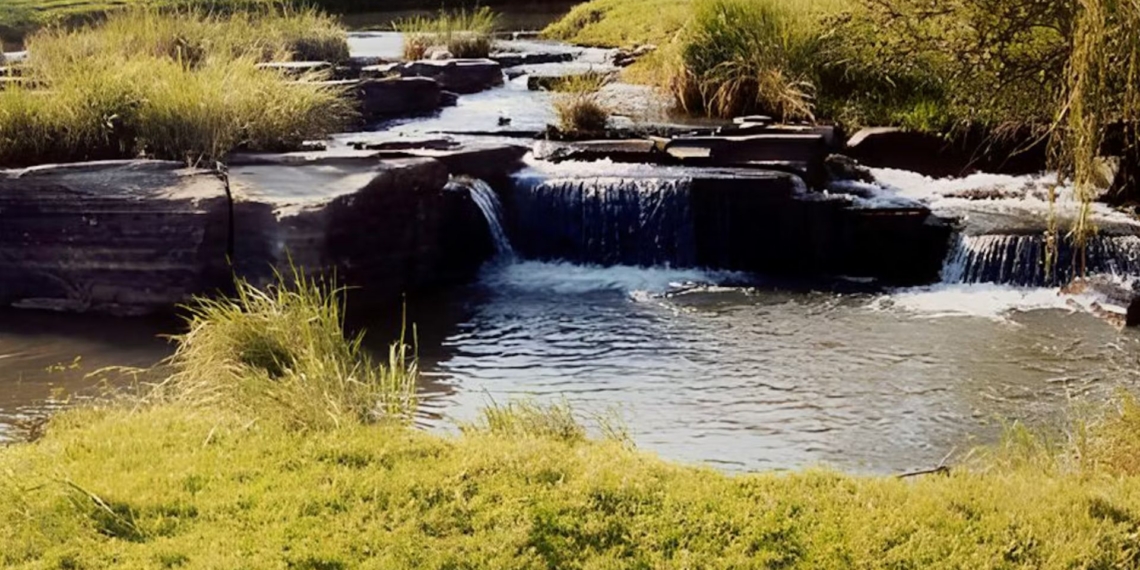
The Kat River begins in the Hogsback and Katberg mountain ranges of South Africa’s Eastern Cape, a province of farmland, rural villages and rugged mountains along the country’s south-eastern coast.
The 152-kilometre river flows through the province before joining the Great Fish River. It provides water for 13 villages with up to 2 500 people per village. Water from the river is used for drinking, cooking, livestock, and smallholder and citrus farming.
The Kat River also supplies the villages with fish, reeds, wood, sand and medicinal plants. The riverside is used for swimming, religious activities and spiritual practices. However, over the past two decades, it has become more and more degraded by the periodic discharge of sewage directly into the river.
A vital lifeline for Eastern Cape farmers and villages
We are water researchers who study the relationship between freshwater ecosystems and the people who depend on them. We set out to discover how important the Kat River is to local livelihoods and culture, and how people believe these benefits have changed since the year 2000 (a long enough time period, we believed, to study the decline of the river).
We worked with community members from the area to mark on large maps how they used the Kat River, which resources from the river were most important and how those benefits and the parts of the river that provided them had changed over time.
Related stories
- Water woes leave EC farmers high and dry
- Oakhill Farm: A land reform success story in Sunday’s River Valley
- Polluted rivers contaminate SA’s food chain, threaten exports
- EC villages ‘compete with animals for drinking water’
We also interviewed 54 commercial farmers, smallholder farmers and non-farming households that all used the river, as well as members of the Kat River Catchment Forum, a group that brings local people and organisations together to have a say in how water in the Kat River area is managed. We asked them to tell us what had changed over the years and what they believed was the cause of those changes.
The message was clear: people living along the Kat River said pollution and damage to the river had left them with poorer quality water and less of it. Residents reported fewer river reeds and almost no fish left. They said places they had once used for recreation and cultural practices were becoming harder to access.
Our research found that communities didn’t only experience the river’s decline as an environmental problem. It meant losing food, income, materials, opportunities for recreation and cultural connections, as well as harm to their health. Eighty percent of participants said the water, fish, reeds, wood, sand and medicinal plants the river provided were very important to their well-being.
This matters because communities everywhere depend on healthy rivers for water, food, livelihoods and cultural life, yet these benefits are increasingly threatened by environmental degradation.
Government agencies and municipalities need to improve water and wastewater infrastructure and pollution control, while farmers and communities must work together to protect the river and make sure that all users have a voice in its management.
What people told us about a changing river
Our first step was to listen to the people living alongside the river. This provided a detailed record of changes that affected everyday life. Changes to the water quality and disappearing reeds had been happening for 15 years, while the loss of fish, medicinal plants and sand was more recent:
Currently, we suspect that there are no more fishes in the river because fishermen and the youth no longer hunt for fish, like how they did in the past 5 years.
Water quality was at the centre of people’s concerns. Some residents said they’d been drinking untreated river water because they didn’t have regular water in their taps. When asked about the safety of the river water, one participant said:
No, the water is not safe, but we drink it like that.
Infrastructure failures and the human impact
Infrastructure failures compounded the problem. In Seymour village, there was only one communal tap, and it was broken. This forced residents to walk to the river and collect water in buckets. Others said they sometimes had to share the river with livestock.
Fish were another important benefit provided by the river, serving as a source of food, recreation and, for some people, income. However, many participants reported a decline in fishing over the past five to 15 years. One subsistence farmer said:
There were fishing activities before, but now they are not here anymore.
Reeds and medicinal plants that are valued for building, craft production and traditional healing were also in decline.
The Kat River had always provided sand used in construction, but because of prolonged low flows and frequent floods, the riverbank had eroded, moving the sand that the communities depended on.
Our study focused on villagers’ views of the Kat River and didn’t test the water quality. But the people we interviewed told us that the river’s water quality and availability had steadily worsened and gone into a long-term decline.
For centuries, local people used the Kat River as a place to communicate with ancestors, perform traditional healing and, more recently, baptise Christians. Swimming and relaxing on the river banks were important parts of residents’ wellbeing. Yet residents said that pollution, erosion and difficulty accessing the river had reduced the quality or usability of these places.
The Kat River’s story is about much more than a declining water supply. It is about what happens when a river begins to lose the things that make it useful, productive and meaningful to the people around it.
Restoring the Kat River: A call for shared governance
To fix the problems, government agencies and municipalities need to ensure that basic water infrastructure works. Broken pumps, reservoirs, communal taps and irrigation channels leave households vulnerable during drought.
From the interview and participatory mapping workshop data, we concluded that broken municipal infrastructure was a part of the cause of the problem. Therefore, maintaining wastewater and water-supply infrastructure should be treated as part of protecting river health, so that sewage is prevented from flowing into the river.
Pollution also needs stronger control. Participants pointed to litter, sewage, agricultural pressures and poor waste management as key problems for water quality. The government must strengthen monitoring and enforcement, while communities, farmers and businesses also have a responsibility to prevent waste and pollutants from entering the river.
Finally, water management needs to bring different users to the same table. Commercial farmers, subsistence farmers and non-farming households depend on the Kat River in different ways. For example, several participants called for fairer participation and better representation of small-scale farmers and communities in water management.
Protecting the river means protecting water, food, livelihoods, traditional practices and the everyday connections between people and the places on which they depend.
- This article was first published by The Conversation. It was written by Esther Ahuoiza Seriki, a doctoral student; Chika Felicitas Nnadozie, senior researcher and head of the Centre for Environmental Water Quality; and Nelson Odume, professor and director of the Institute for Water Research, all from Rhodes University.
READ NEXT: Climate change could force redesign of SA’s farming regions – ARC