Tuesday, October 20, 2026
SUBSCRIBE
22 GLOBAL MEDIA AWARDS
Food For Mzansi
  • News
  • Changemakers
  • Lifestyle
  • Farmer’s Inside Track
  • Food for Thought
No Result
View All Result
  • News
  • Changemakers
  • Lifestyle
  • Farmer’s Inside Track
  • Food for Thought
No Result
View All Result
Food For Mzansi
No Result
View All Result
in News

Drought insurance for smallholder farmers unveiled

Drought remains the biggest risk to South Africa’s smallholder farmers. Land Bank Insurance Company, in collaboration with CelsiusPro, is set to launch a pilot project offering drought-risk insurance across five provinces

by Staff Reporter
16th October 2024
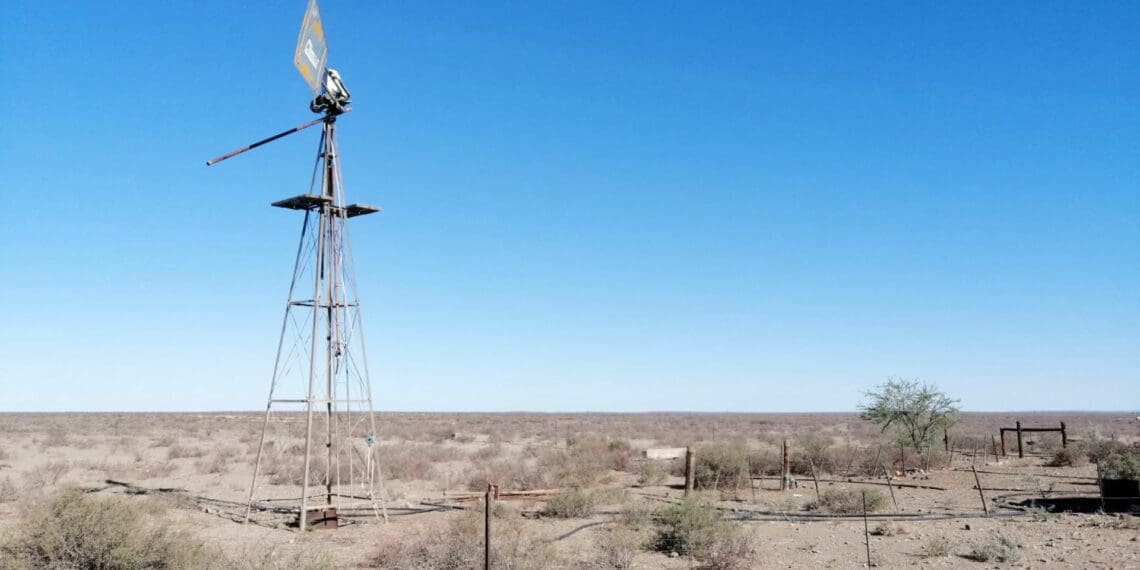
'Our animals are dying, please help' – Namakwa farmers

President Cyril Ramaphosa received the Presidential Climate Commission’s five-year report, outlining South Africa’s path to a just, low-carbon, and climate-resilient future. Photo: Supplied/Food For Mzansi

Share on FacebookShare on TwitterShare on WhatsApp

Land Bank Insurance Company (LBIC) is set to launch a pilot project aimed at providing affordable drought-risk insurance for smallholder farmers in South Africa. The initiative, in collaboration with CelsiusPro, will be rolled out across five provinces, targeting both crop and livestock producers in a bid to safeguard the livelihoods of vulnerable farming communities.

The pilot project, scheduled to start later this year, will be implemented in the provinces of Eastern Cape, Limpopo, North West, KwaZulu-Natal, and Mpumalanga – regions that collectively house 75% of South Africa’s smallholder farmers.

According to the bank, drought, exacerbated by climate change and the recurring El Niño phenomenon, is the primary risk facing these communities, many of whom are uninsured due to the high cost and complexity of traditional insurance products.

Mitigating drought impact

Pascal Siphugu, managing director of LBIC, said the insurance will be run in five provinces that were hit hard by the severe weather.

“Drought is the main risk affecting the vulnerable farming communities in South Africa, a semi-arid country. The country is also vulnerable to climate change and El Niño which can further exacerbate drought.

“As such, an insurance product of this nature is critically important for the sustainability of agriculture in South Africa, with approximately 250 000 smallholder farmers and a further 1.5 million subsistence farmers largely uninsured due to a lack of tailored agricultural insurance solutions for this market segment,” he said.


Related stories
  • Debt relief sets stage for Land Bank to transform agriculture
  • Land Bank boosts farmers with R980m support

The index insurance products have been developed in partnership with CelsiusPro, a global organisation dedicated to helping businesses and governments mitigate climate risk. CelsiusPro will deploy its proprietary White Label Platform to manage all aspects of the insurance process for LBIC – from pricing and policy management to monitoring and settlement.

Mark Rueegg, CEO of CelsiusPro, expressed enthusiasm about the collaboration. “We are delighted to partner with Land Bank Insurance Company to accelerate the role of index insurance in strengthening climate resilience and food security in South Africa,” he said.

He also highlighted the role of the project in demonstrating the power of catalytic grants from the Natural Disaster Fund, which is supporting this initiative.

“We look forward to deploying our platform technology to support LBIC in introducing innovative agricultural insurance products to the South African market. This project further highlights the scalable impact of the catalytic grants of the Natural Disaster Fund,” he said.

READ NEXT: Citrus farmers profit from juice market amid export challenges

Sign up for Mzansi Today: Your daily take on the news and happenings from the agriculture value chain
Staff Reporter

Researched and written by our team of writers and editors.

Tags: Climate changeCommercialising farmerDroughtInform meLand Bank
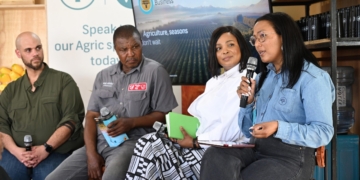
The panellists at FNB Business’s “Farming together” discussion at the Royal Show explored how market access, mentorship, financial discipline and strong commercial relationships can help farmers build sustainable businesses. Featured from the left are Bertram July (FNB’s distribution sales lead), commercial farmer Shakes Shabalala; Sandy Gumede (co-founder of Zulu Girl Wines), and Janis Robson (FNB’s head of development and SME business development). Photo: Food For Mzansi
News

FNB puts relationships at the heart of commercial farming

by Staff Reporter
17th October 2026

From buying a farm with cattle to building a wine brand from scratch, entrepreneurs shared how strong relationships, market access...

Read moreDetails
Agri Skills Transfer students gain hands-on experience at the institution’s Cullinan Farm Training Centre, where agricultural theory meets the realities of commercial production. Photo: Supplied/Food For Mzansi

Build your future in agriculture with Agri Skills Transfer

17th October 2026
Durbanville Hills tastes sweet success at Michelangelo Awards

Promising early conditions predicted for 2027 SA wine harvest

17th October 2026

Reclaiming the kraal: Cultural heritage sparks a farming dream

16th October 2026

How animal welfare and human rights shape food security

16th October 2026

Land Bank must step up support for farmers, says Aucamp

AgriSETA sets the stage for the SAAA’s big night

FNB puts relationships at the heart of commercial farming

Mpumalanga agripreneur bottles family wisdom one chilli at a time

Stronger rural policing needed to protect lives and livelihoods

Join Food For Mzansi's WhatsApp channel for the latest updates!

JOIN NOW!
Next Post
Empty plate, full struggle. Many South African households face daily challenges accessing enough food, despite national food security. Photo: Supplied/Food For Mzansi

A nation of plenty, yet many go hungry: SA’s food shame

THE NEW FACE OF SOUTH AFRICAN AGRICULTURE

With 21 global awards in the first six years of its existence, Food For Mzansi is much more than an agriculture publication. It is a movement, unashamedly saluting the unsung heroes of South African agriculture. We believe in the power of agriculture to promote nation building and social cohesion by telling stories that are often overlooked by broader society.

Fixing SA’s agricultural visa system to protect seasonal harvests

SA and Namibia reevaluate livestock trade after FMD outbreak

Agda conference to tackle finance, market access and agri growth

Reluctant farmer scales EC cabbage enterprise to supply Spar

Reality check: What SA agri interns really experience on the farm

This week’s agri events: 19 – 23 October

  • Awards & Global Impact
  • Our Story
  • Contact Us
  • Cookie Policy
  • Privacy Policy
  • Copyright

Contact us
Office: +27 21 879 1824
News: info@foodformzansi.co.za
Advertising: sales@foodformzansi.co.za

Contact us
Office: +27 21 879 1824
News: info@foodformzansi.co.za
Advertising: sales@foodformzansi.co.za

  • Awards & Global Impact
  • Our Story
  • Contact Us
  • Cookie Policy
  • Privacy Policy
  • Copyright

Chat Options

About this assistant

This feature generates automated answers summarised from Food For Mzansi articles. By using it, you are interacting with an AI system (provided by Google), not a human. AI can make mistakes. Please refer to the source articles for verification and citation purposes.

Our staff do not check or moderate Lerato’s answers in advance, but may review some later. Our journalists continue to write and edit all the articles Lerato uses as sources.

To estimate unique and returning web users, we store a random browser ID in this browser. WhatsApp users are counted by phone number. The same person using both channels may be counted twice.

I'm Lerato, your AI assistant!
No Result
View All Result
  • News
  • Changemakers
  • Lifestyle
  • Farmer’s Inside Track
  • Food for Thought

Copyright © 2026 Food for Mzansi