Saturday, April 11, 2026
SUBSCRIBE
21 GLOBAL MEDIA AWARDS
Food For Mzansi
  • News
  • Changemakers
  • Lifestyle
  • Farmer’s Inside Track
  • Food for Thought
No Result
View All Result
  • News
  • Changemakers
  • Lifestyle
  • Farmer’s Inside Track
  • Food for Thought
No Result
View All Result
Food For Mzansi
No Result
View All Result
in Agripreneur

EC agripreneur turns pineapple waste into sanitary products

From healthcare to agripreneurship, Candy Androuliakos saw an opportunity where others saw waste. By transforming pineapple fibre into affordable sanitary products, she’s helping restore dignity to those in need

by Vateka Halile
9th April 2026
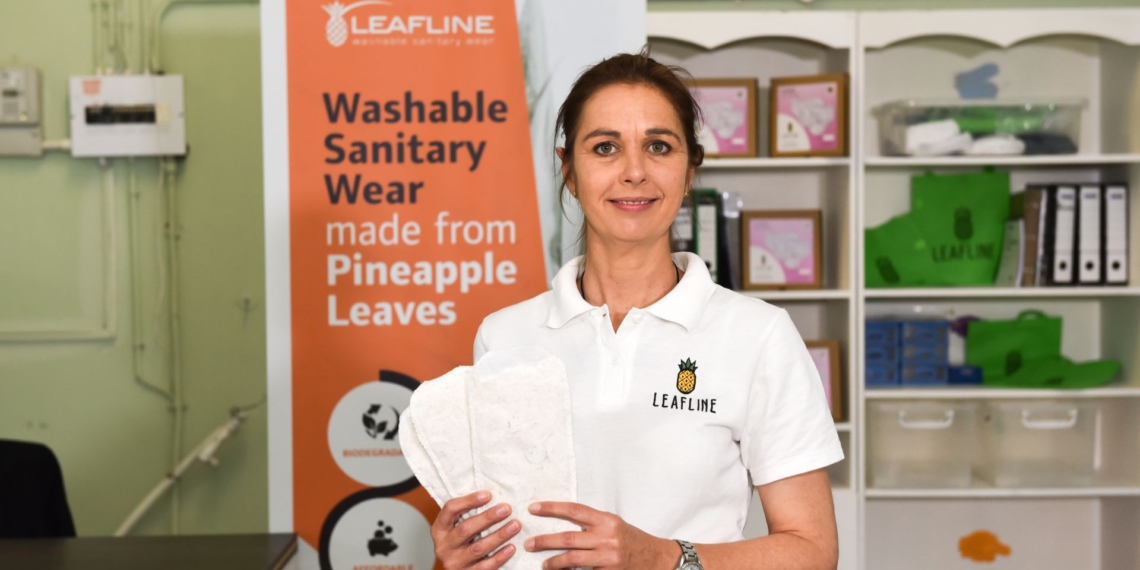
Candy Androuliakos is leading a movement that produces sanitary towels made from pineapple fibre, helping women facing period poverty with affordable, safe pads that are free from harmful chemicals and other risks.
Photo: Supplied/Food For Mzansi

Candy Androuliakos is leading a movement that produces sanitary towels made from pineapple fibre, helping women facing period poverty with affordable, safe pads that are free from harmful chemicals and other risks. Photo: Supplied/Food For Mzansi

Share on FacebookShare on TwitterShare on WhatsApp

When she saw a gap in the market for washable sanitary towels, Candy Androuliakos did not think twice. She took the opportunity to help those less fortunate who needed safe options. With a family background in the health space, it did not feel foreign to her. 

Through this business, she is simply doing what matters and serving a real need.

Androuliakos was born at Victoria Falls and grew up between Bulawayo and Gweru in Zimbabwe. She later moved to South Africa, where she studied beauty therapy at the South African Beauty School in 1991. 

She went on to work at the Royal Hotel in KwaZulu-Natal as a physiotherapist’s assistant, where she was later offered an opportunity in Botswana with the Khama family. 

Innovation in healthcare

In 2002, she moved to Gaborone and helped set up and run a health centre. When her contract ended, she returned to South Africa in 2015 and settled in Bathurst, inland from Port Alfred on the Sunshine Coast, Eastern Cape.

“In 2018, while working at a retirement home, one of the residents asked me to create a washable, more cost-effective alternative to disposable nappies,” she says. While she could sew the outer garment, finding a suitable absorbent material proved challenging.

A turning point came when she saw a billboard at the Big Pineapple in Bathurst, highlighting the uses of pineapple fibre. “I approached a local farmer, got a sample, and began experimenting until I found a way to incorporate the fibre into fabric,” she explains.
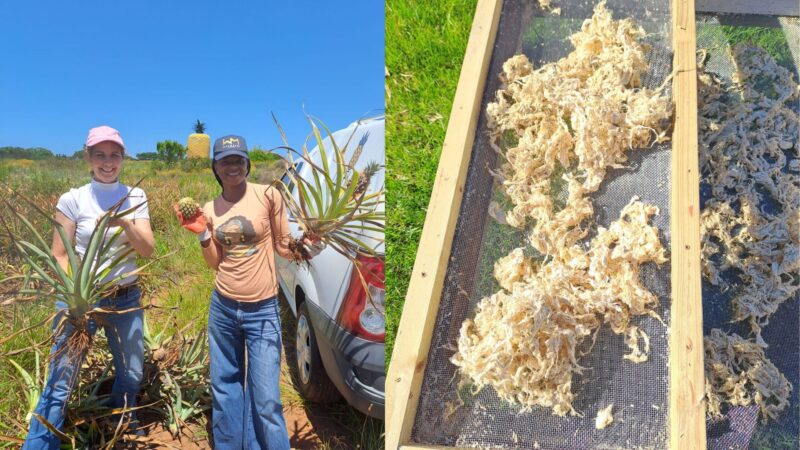
The process of turning pineapple into fibre and then into material for sanitary towels. Photos: Supplied/Food For Mzansi

She initially developed adult nappies, then children’s nappies, before demand shifted to sanitary towels. 

“We now focus mostly on sanitary towels, supported by corporate sponsorships. The pads last up to two years, helping to address period poverty.”

She describes 2018 as a year of experimentation, testing products with elderly residents and refining designs. That same year, she registered the business and won the Innovation Hub GAP Green Awards, marking the start of her business, Leafline Pty Ltd. 

In 2020, she won the SAB (South African Brewery) Foundation Disability Award, enabling her to open a factory and create jobs.


Related stories
  • Recipes: Fresh herbs and fruit bring homemade iced tea to life
  • Limpopo farmer finds peace, purpose in the harvest
  • He bana! Chilled soups in summer? It’s a thing!

Turning pineapple leaves into opportunity

When large orders come in, Androuliakos and her colleague, Mbali Chauke, work with a local farmer, who assists with transporting the harvested leaves. For smaller orders, the two collect the leaves themselves.

At the factory, the leaves are processed through a hammer mill, cleaned under high pressure, and dried in the sun to produce a white fibre. 

“The fibre is then milled into a soft cotton and sewn into products like sanitary towels and children’s diapers.”

Winning the SAB Foundation Disability Award allowed her to open a factory and employ staff, including people from the disabled community. Today, she employs four full-time and three part-time workers. 
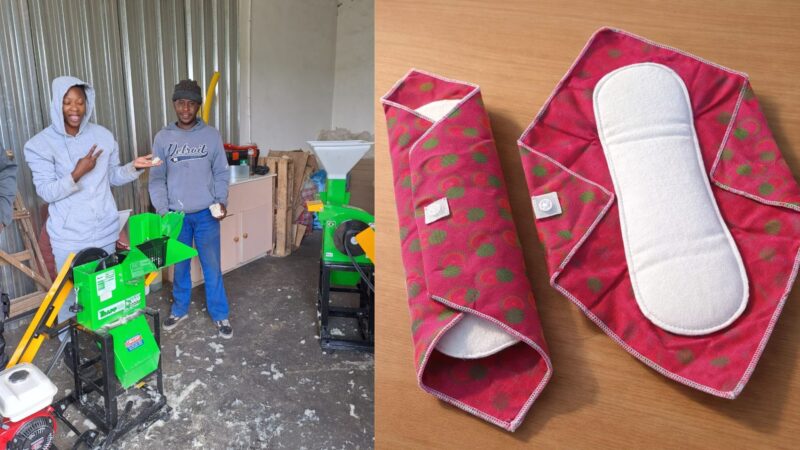
Candy Androuliakos says it took the support, mentorship, and dedicated workers behind the scenes to build Leafline Pty Ltd into what it is today. Photos: Supplied/Food For Mzansi

She also credits her mentor, Anton Russel from the SAB Foundation, for guiding her through both growth and quieter periods.

Despite this progress, challenges remain. Securing consistent orders to sustain operations is difficult, as the business relies heavily on bulk corporate purchases, which are not always reliable.

Leafline products are stocked in Spar stores across the Eastern Cape, although they compete with more popular disposable options. She hopes to grow demand, with interest from Spar to expand into up to 600 stores.

The mindset behind the mission

Looking ahead, Androuliakos is focused on building awareness around the use of reusable sanitary towels and diapers, as she continues to grow both her impact and her business.

“My dream is for every person to have access to clean and safe sanitary products through corporate support.”

“I also want to train and employ more people, build a fully sustainable business, and expand our production.” 

She has invested in developing her business skills, attending workshops through Fetola and the SAB Foundation, and completing a digital marketing course with the University of Cape Town.
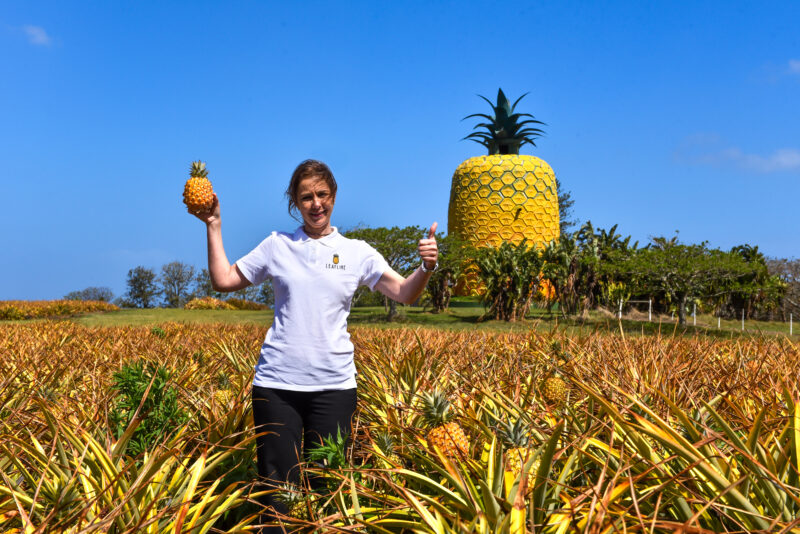
Candy Androuliakos says pineapples are more than just something to eat or juice; they are part of a solution that restores dignity and addresses period poverty. Photo: Supplied/Food For Mzansi

In April 2025, Leafline was sponsored by the Eastern Cape Development Corporation (ECDC) with two hammer mill machines valued at R50 000 each and a leaf shredder valued at R80 000. These additions to her production line ensure the business is ready to provide a steady supply of quality products to organisations such as Rotary and Do Ubuntu, which donate the products to the less fortunate.

She notes that Fetola helped the business set up the fibre room behind their factory, a dedicated space funded through Fetola’s support.

These experiences, she adds, have strengthened her understanding of how to run and grow the business.

Androuliakos shares a few lessons for aspiring agripreneurs: 
  • Be confident in your vision and direction.
  • Form partnerships that add real value. 
  • Seek strategic guidance from experienced mentors. 
  • Stay consistent, even when growth is gradual.

READ NEXT: Pineapples: The juicy, tropical superfruit your garden needs

Sign-up for the latest agricultural news delivered straight to your inbox every day with Mzansi Today!

Vateka Halile

Vateka Halile grew up in rural areas of Cofimvaba in the Eastern Cape. She was raised in a traditional family setting and found writing to be a source of comfort and escape. Vateka participated in an online citizen journalism course through Food For Mzansi, and her passion for health and medicine-related stories was born. Her dedication to community work and love for social justice and solidarity spaces is evident in her quality time with the community when she isn't working.

Tags: Eastern CapeInspire mePineapplesSustainable agricultureWomen in Agriculture

Related Posts

Crack-A-Mac: Siblings make macadamia magic in Ballito

Crack-A-Mac: Siblings make macadamia magic in Ballito

26th March 2026
How Refilwe brewed her mother’s gemere into a business

How Refilwe brewed her mother’s gemere into a business

12th March 2026

Never giving up: Nompilo’s recipe for sauce and success

Building a goat milk brand: The rise of Asante Saanen

Makoti Premium Rooibos: Zantsi brews heritage, love and wellness

Meet the EC duo changing the game in livestock care

Nanny Nelia bakes up success with Yaya’s Rusks

Herbal heritage: Eastern Cape agripreneur boosts livestock health

Trade restrictions from Botswana and Namibia are causing a stir, clashing with the regional cooperation goals of SACU. Graphic: Supplied/Food For Mzansi
News

Trade tensions rise as neighbours restrict SA farm goods

by Staff Reporter
9th April 2026

South Africa faces growing pressure to respond to regional trade barriers affecting its agricultural exports. While dialogue remains the preferred...

Read moreDetails

Young farmers tackle land tenure and market barriers

8th April 2026
Energy and innovation ignite 5th Mzansi Young Farmers Indaba

Energy and innovation ignite 5th Mzansi Young Farmers Indaba

8th April 2026
Poultry farming: Tips to manage unpredictable weather patterns

Poultry farming: Tips to manage unpredictable weather patterns

8th April 2026
Financial literacy: A gateway for farmers who dream big

Competition Commision report: Prices drop at farm, but not at tills

8th April 2026

Innovation drives resilience at Nampo Harvest Day 2026

This week’s agri events: 06 – 10 April

No market access, no future: The heavy cost of FMD

Competition Commision report: Prices drop at farm, but not at tills

Poultry industry on edge as winter bird flu threat looms

Join Food For Mzansi's WhatsApp channel for the latest updates!

JOIN NOW!
Next Post
No market access, no future: The heavy cost of FMD

No market access, no future: The heavy cost of FMD

THE NEW FACE OF SOUTH AFRICAN AGRICULTURE

With 21 global awards in the first six years of its existence, Food For Mzansi is much more than an agriculture publication. It is a movement, unashamedly saluting the unsung heroes of South African agriculture. We believe in the power of agriculture to promote nation building and social cohesion by telling stories that are often overlooked by broader society.

Rooibos cosmetics offer growth path for agripreneurs

Rainbow expert shares blueprint for poultry farming success

Poultry and potatoes power Fort Hare graduate’s farming vision

The business of farming: How to make your farm bankable

Western Cape pledges R22m for drought-hit livestock farmers

No market access, no future: The heavy cost of FMD

  • Awards & Global Impact
  • Our Story
  • Contact Us
  • Cookie Policy
  • Privacy Policy
  • Copyright

Contact us
Office: +27 21 879 1824
News: info@foodformzansi.co.za
Advertising: sales@foodformzansi.co.za

Contact us
Office: +27 21 879 1824
News: info@foodformzansi.co.za
Advertising: sales@foodformzansi.co.za

  • Awards & Global Impact
  • Our Story
  • Contact Us
  • Cookie Policy
  • Privacy Policy
  • Copyright
No Result
View All Result
  • News
  • Changemakers
  • Lifestyle
  • Farmer’s Inside Track
  • Food for Thought

Copyright © 2024 Food for Mzansi

This website uses cookies. By continuing to use this website you are giving consent to cookies being used. Visit our Privacy and Cookie Policy.