Wednesday, October 21, 2026
SUBSCRIBE
22 GLOBAL MEDIA AWARDS
Food For Mzansi
  • News
  • Changemakers
  • Lifestyle
  • Farmer’s Inside Track
  • Food for Thought
No Result
View All Result
  • News
  • Changemakers
  • Lifestyle
  • Farmer’s Inside Track
  • Food for Thought
No Result
View All Result
Food For Mzansi
No Result
View All Result
in News

Western Cape pledges R22m for drought-hit livestock farmers

With grazing conditions deteriorating due to prolonged dry weather, Western Cape livestock farmers are receiving critical relief support. The provincial government says farmers can apply for funding to help sustain livestock, safeguard rural livelihoods, and promote long-term resilience

by Staff Reporter
10th April 2026
The Western Cape Department of Agriculture has launched a R22 million fodder relief program to assist livestock farmers facing dry grazing conditions. Photo: Supplied/Food For Mzansi

The Western Cape Department of Agriculture has launched a R22 million fodder relief program to assist livestock farmers facing dry grazing conditions. Photo: Supplied/Food For Mzansi

Share on FacebookShare on TwitterShare on WhatsApp

The Western Cape department of agriculture has approved R22 million in risk reduction relief to provide fodder support to livestock farmers affected by ongoing dry grazing conditions linked to climate variability.

Extended periods of limited rainfall have placed significant pressure on grazing veld across several regions of the province, affecting livestock conditions and threatening farm sustainability.

Provincial minister of agriculture, economic development and tourism, Dr Ivan Meyer, said livestock farmers are under real pressure because of prolonged dry conditions.

“This intervention is about acting early to protect herds, livelihoods, and grazing resources. We cannot allow short‑term climate shocks to undermine the long‑term sustainability of agriculture in the Western Cape,” Meyer said.

The department is implementing the intervention to reduce immediate pressure on natural grazing resources and stabilise production systems as winter approaches.


Related stories
  • Western Cape fires destroy farmland and livelihoods
  • Western Cape wheatlands threaten blue crane breeding success
  • Biosecurity to breeds: Master the art of egg production
  • Competition Commision report: Prices drop at farm, but not at tills

“This fodder support forms part of our broader risk reduction strategy. By easing pressure on natural grazing now, we help farmers bridge difficult conditions while safeguarding the veld so that it can recover when rains return.

“Climate variability is no longer a future threat; it is already shaping farming conditions across our province. Government must respond decisively, but we must also work in partnership with farmers to build resilience into our production systems,” he said.

How farmers can apply for help

According to the department, during drought in the Western Cape, farmers face devastating losses as pastures fail and livestock go hungry. Providing feed support keeps animals alive, protects livelihoods, and sustains rural communities, especially in places where drought has hit hard in the past months.

Livestock farmers can apply for the department’s relief and to continue implementing sustainable grazing and veld management practices as part of long‑term climate resilience planning.

Application forms are available here. Alternatively, farmers can contact Leslie Marthinussen at 021 808 5360 or Leslie.Marthinussen@westerncape.gov.za.

The Western Cape department of agriculture said it remains committed to timely, coordinated interventions that support farmers, strengthen resilience, and protect food production in the province.

READ NEXT: Young farmers tackle land tenure and market barriers

Sign-up for the latest agricultural news delivered straight to your inbox every day with Mzansi Today!

Staff Reporter

Researched and written by our team of writers and editors.

Tags: Dr Ivan MeyerDroughtInform meLivestock farmersWestern Cape
Reality check: What SA agri interns really experience on the farm
News

Reality check: What SA agri interns really experience on the farm

by Lisakanya Venna
19th October 2026

Transitioning from agricultural theory to practical farming is proving to be a bittersweet journey for South African interns. From intense,...

Read moreDetails
This week’s agri events: 19 – 23 October

This week’s agri events: 19 – 23 October

19th October 2026

Stop the rot: Four steps to slash post-harvest losses

18th October 2026
A standing ovation for agriculture’s incredible talent! The Agri’s Got Talent 2026 top three celebrate their achievements: winner Honey Katoo of Endulini Fruit in Patensie, alongside runner-up Clareece Vlotman of Wolfpack in Wolseley and finalist Lwandile Nantsi of Laastedrift in Ceres. Photo: Supplied/Food For Mzansi

Patensie claims Agri’s Got Talent crown for second year running

17th October 2026
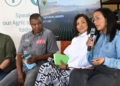
The panellists at FNB Business’s “Farming together” discussion at the Royal Show explored how market access, mentorship, financial discipline and strong commercial relationships can help farmers build sustainable businesses. Featured from the left are Bertram July (FNB’s distribution sales lead), commercial farmer Shakes Shabalala; Sandy Gumede (co-founder of Zulu Girl Wines), and Janis Robson (FNB’s head of development and SME business development). Photo: Food For Mzansi

FNB puts relationships at the heart of commercial farming

17th October 2026

Agda conference to tackle finance, market access and agri growth

Agda conference puts inclusive agricultural growth in focus

How animal welfare and human rights shape food security

Promising early conditions predicted for 2027 SA wine harvest

SA and Namibia reevaluate livestock trade after FMD outbreak

Join Food For Mzansi's WhatsApp channel for the latest updates!

JOIN NOW!
Next Post
The business of farming: How to make your farm bankable

The business of farming: How to make your farm bankable

THE NEW FACE OF SOUTH AFRICAN AGRICULTURE

With 21 global awards in the first six years of its existence, Food For Mzansi is much more than an agriculture publication. It is a movement, unashamedly saluting the unsung heroes of South African agriculture. We believe in the power of agriculture to promote nation building and social cohesion by telling stories that are often overlooked by broader society.

By-laws vs. livelihoods: Barriers facing WC smallholder farmers

CPAs urged to register for free governance support toolkits

Potatoes and tomatoes plunge while avocado prices soar

Becoming bankable: How to get your farm ready for finance

Fixing SA’s agricultural visa system to protect seasonal harvests

SA and Namibia reevaluate livestock trade after FMD outbreak

  • Awards & Global Impact
  • Our Story
  • Contact Us
  • Cookie Policy
  • Privacy Policy
  • Copyright

Contact us
Office: +27 21 879 1824
News: info@foodformzansi.co.za
Advertising: sales@foodformzansi.co.za

Contact us
Office: +27 21 879 1824
News: info@foodformzansi.co.za
Advertising: sales@foodformzansi.co.za

  • Awards & Global Impact
  • Our Story
  • Contact Us
  • Cookie Policy
  • Privacy Policy
  • Copyright

Chat Options

About this assistant

This feature generates automated answers summarised from Food For Mzansi articles. By using it, you are interacting with an AI system (provided by Google), not a human. AI can make mistakes. Please refer to the source articles for verification and citation purposes.

Our staff do not check or moderate Lerato’s answers in advance, but may review some later. Our journalists continue to write and edit all the articles Lerato uses as sources.

To estimate unique and returning web users, we store a random browser ID in this browser. WhatsApp users are counted by phone number. The same person using both channels may be counted twice.

I'm Lerato, your AI assistant!
No Result
View All Result
  • News
  • Changemakers
  • Lifestyle
  • Farmer’s Inside Track
  • Food for Thought

Copyright © 2026 Food for Mzansi