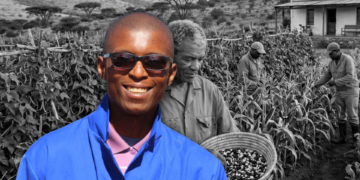
Recent financial woes faced by retail giant Pick n Pay have had a ripple effect on farmers and suppliers, prompting them to rethink their strategies to mitigate potential losses.
Tsholofelo Shabangu, a crop farmer from Hammanskraal in Gauteng, highlighted the operational challenges of supplying to Pick n Pay.
“We have not delivered for Pick n Pay for three weeks now, and the main issue was that it’s a bit far and the pricing was R9 per bunch for the spinach,” Shabangu said.
Creating new markets
Despite losing the Pick n Pay in Mamelodi, Shabangu’s farm continues to supply to Pick n Pay Jubilee Mall in Hammanskraal, and has also acquired Roots Butchery in Jubilee Crossing. “It’s a good backup because it’s not wise to have only one market to rely on,” Shabangu added.
He further observed that the farming sector’s rapid growth, combined with Pick n Pay’s financial woes, could force farmers to lower prices, leading to potential losses.
Related stories
- ‘Fix the basics, save fresh produce markets’
- Supplying retail stores: Basic standards farmers must meet
Meanwhile, Deon Mthombeni, a Limpopo-based crop farmer, emphasised the direct impact of Pick n Pay’s financial struggles on his operations. Mthombeni used to supply to the retailer and since they reduced supplies, he was also affected.
“If Pick n Pay was my main market and they happen to go through financial issues, it means they will buy less and no longer buy in larger volume. So the less they buy, the less a farmer will make in return,” he explained.
Mthombeni said following lower supplies to the retailer, he is considering a long-term plan to diversify his operations.
“A long-term plan would be to develop a production plan where you don’t only plant for retail but also street traders and create your own market or selling point where you sell directly to consumers,” he noted.
According to Businesstech, Pick n Pay reported a 373% decrease in net profit, dropping from a R1.17 billion profit to a R3.2 billion net loss for the year that ended 25 February 2024.
Pick n Pay’s plans
Pick n Pay CEO Sean Summers provided insights into the company’s strategic response to the financial losses it has suffered. “QualiSave stores will either revert to PnP or become Boxer, depending on where they are located,” Summers said.
He also mentioned an initial public offering (IPO) of Boxer and an R4 billion rights issue as part of their strategy to invest in the estate and settle debts.
Summers noted that Boxer and PnP Clothing stores performed well, and online sales grew. “Important parts of our turnaround plan have already been implemented, some in place since February, with encouraging early results.
“Employees are key not only in implementing the plan but also in strengthening our relationships with stakeholders,” Summers said.
Summers explained that newly appointed commercial executives for groceries, fresh, and general merchandise will meet regularly with key suppliers.
He said a “hearts and minds” campaign is critical to the company’s journey over the next three years, as well as ongoing dialogues with landlords to reset store estate opportunities, including closures and conversions to franchise or Boxer stores.
ALSO READ: Agriculture remembers Pick n Pay titan Raymond Ackerman
Sign up for Mzansi Today: Your daily take on the news and happenings from the agriculture value chain.