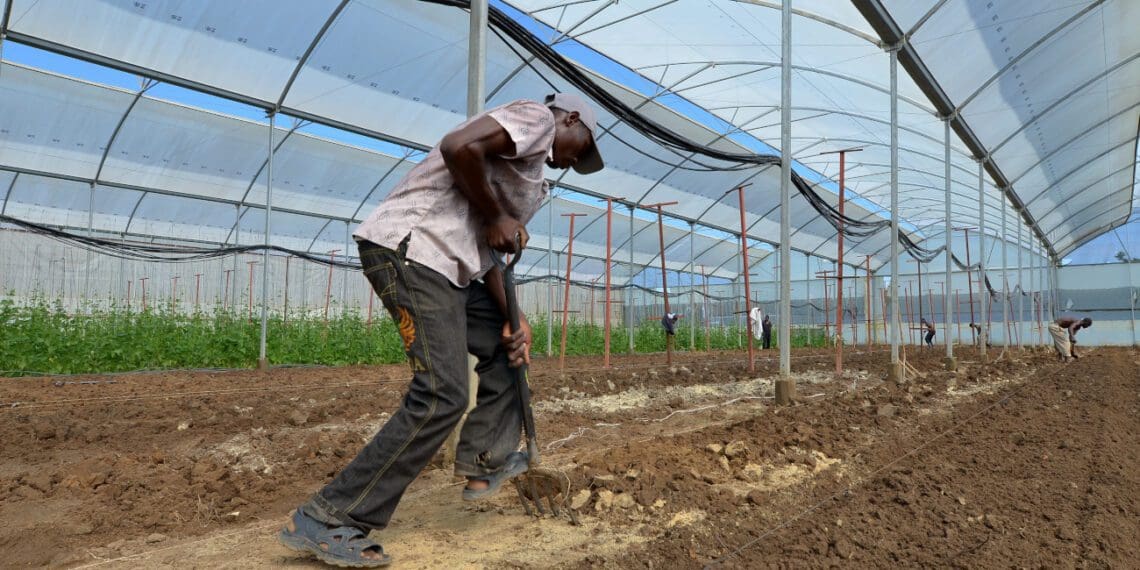
The working conditions of farmworkers came under the spotlight this weekend as members of a joint parliamentary oversight committee visited farms in North West and Gauteng.
The two joint delegations represented parliament’s oversight committees on employment and labour and agriculture, land reform and rural development.
Lindelwa Dunjwa, leader of the Gauteng delegation, said during the visit that it was conducted not only “to hear the cries of farmworkers but to act on them”.
This, while the leader of the North West delegation, Nkosi Zwelivelile Mandela, said they found that some farmworkers are still not being paid the national minimum wage.
“We have to right this wrong if we were to instil the human dignity of this vulnerable sector of our population and labour market,” said Dunjwa in a statement. “This nationwide oversight process, that has now been to six provinces, seeks to unveil the yoke of servitude that happens under the cloak of secrecy on farms.
“[It also seeks] to urge the departments and entities charged with the task of alleviating the plight of farmworkers to act in a concerted and well-coordinated effort to bring an end to their miseries.”
Dunjwa said that, apart from making farm owners aware of their lawful obligations towards employees, the oversight visits were also meant to identify weaknesses in existing policies and legislation that should be rectified to ensure better living and working conditions for farmworkers.
She said that parliament would do everything legally within its means to ensure that farmworkers enjoy the gains of the country’s hard-fought democracy.
Disregard for the law
In North West, Mandela said that the visits “must be seen in the light that we want better living and working conditions for farmworkers, farm dwellers and labour tenants”.
Committee members heard that some farmers in the province disregard legislation by not paying the national minimum wage, allegedly employing foreign nationals who accept payment below the minimum wage, dismissing women for being pregnant or denying them maternity leave.
The delegation heard that workers are allegedly unfairly dismissed and then rarely win their cases at the CCMA. It also received complaints of farmworkers living in poor conditions, of the department of employment and labour not conducting regular inspections and even of alleged child labour on one farm.
The delegation further found 52 families living in poor conditions on the farm Hartbeesfontein, which had been bought by the department of agriculture, land reform and rural development to accommodate evicted and relocated families.
The committee members found no homes on the farm, only temporary units and shacks with no water, electricity or sanitation. The committee asked the agri department to engage with the department of human settlements and the municipality to fast-track the building of houses and the delivery of services to the area.
It further asked the department to fast-track the approval of a business plan submitted by the 13 families of the farm Beatrix, a 642-hectare farm that had been acquired through the Proactive Land Acquisition Strategy (PLAS) in 2014.
Here, too, the committee found the families living in deplorable conditions in dilapidated mud and iron structures with no running water, electricity or sanitation. There were no agricultural activities on the farm and the families complained of the agri department dragging its feet with the approval of their business plan.
In response the department said that the project was earmarked for funding in the current financial year.
Mandela also urged labour officials to be readily available. “When officials do this job, they do it to serve the labourers and farmworkers. Therefore, officials must be available and contactable at all times to serve.”
ALSO READ: Farmworkers march for labour rights on wine farms
Sign up for Mzansi Today: Your daily take on the news and happenings from the agriculture value chain.