South Africa’s soybean industry is showing signs of recovery following the devastating 2024-2025 drought, but persistent climate-related challenges continue to test farmers’ resilience and production strategies. While the current season brings better yields, late rains and wet fields are hindering harvest progress and creating uncertainty around crop quality and long-term sustainability.
Dr Andre van der Vyver, executive director of the South African Cereals and Oilseeds Trade Association (Sacota), said the previous season’s drought severely impacted the soybean industry.
“The drought experienced in the 2024/25 marketing season caused significant effects on the production of soybeans. The production available for the 2024/25 marketing year declined by 930 000 tons (34%), dropping to 1.84 million tons. With ending stocks at just 141 000 tons, it was significantly lower than the 320 000 tons carried over from the previous year,” Van der Vyver said.
Despite facing a domestic shortage, South Africa still managed to export more than 330 000 tons of soybeans, primarily to neighbouring countries affected by drought. To meet local demand, the country had to import around 140 000 tons from the United States.
Related stories
- Soybean farmer turns challenges into 160 hectares of success
- Persistent rainfall threatens soybean harvest
A promising turnaround, but not without hurdles
This season’s harvest looks significantly better, though mixed reports are emerging from the fields. Van der Vyver noted that there is quality damage in some areas, but the extent thereof is not clear and may be limited. He added that many soybeans were planted late and had not dried by the time rain hit, sparing them from the worst quality losses.
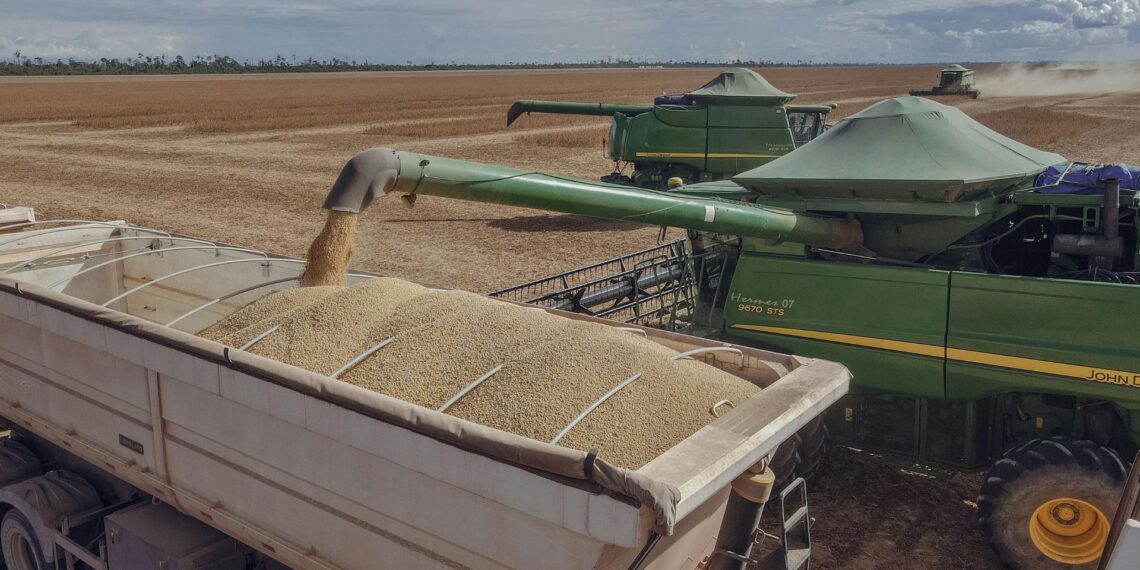
“Currently, the biggest challenge is still for combines to enter the fields, which have not yet dried off. Even if combines can enter, the moisture levels of the beans in many cases are still above 14.0%. Unless the storage operator has aeration, it is very risky to accept beans with high moisture levels; they will very quickly rot,” explained Van der Vyver.
Mpumalanga soybean farmer Motshidisi Modise knows the struggle all too well.
“This season has been the toughest. Late rains forced me to replant in December after heat ruined my first batch. It was a major financial blow.”
Motshidisi Modise
Still, recent rains have brought hope. Her fields now show promise, with yields expected around two tons per hectare. But like many farmers, Modise remains deeply worried about the long-term impact of climate unpredictability.
“Climate change has been a serious challenge, as I’ve specified above. It’s either there is no rain or there’s too much rain at one go. Now is harvest period, and it’s been raining extensively, making it difficult to get in the field. The longer harvesting is delayed, the bigger the loss because the pods dry up and pop,” she shared.
Trade and regional demand
Amid these challenges, Sacota sees opportunities in the improved production estimates, which are up by 29% from last year, totalling around 2.39 million tons.
Van der Vyver explained that given that the production outlook for soybeans has significantly increased this season, there is likely to be a resumption of deep-sea exports, although in limited quantities.
He added that export patterns are likely to change once more as neighbouring countries report improved harvests. With countries like Zimbabwe, Zambia, and Mozambique experiencing favourable production seasons, Sacota anticipates a temporary decline in their import demand before it potentially picks up again.
Long-term growth driven by innovation
Agricultural economist Wandile Sihlobo emphasised how local agribusinesses have responded to long-term demand trends. “To service the growing demand, South African agribusinesses, supported by the government, made investments to increase domestic soybean processing capacity from roughly 860 000 tonnes in 2012 to around 2.2 million tonnes now.”
Investments to reduce import reliance by boosting local soybean production have paid off. Sihlobo highlighted farmers’ positive response, leading to steady output growth. Innovation, including expanded planting areas and improved technology, has driven progress. Over the past 30 years, soybean cultivation has surged to 1.2 million hectares in the 2024/25 season, a 21-fold increase.
In the meantime, while this season’s recovery provides a much-needed reprieve, the realities of climate volatility and market fluctuations mean that producers, processors, and policymakers alike must continue adapting. As far as Modise is concerned, economically and globally, these challenges will create an increase in demand for livestock feed and consumer products that are manufactured from grains.
“It’s again up to us to supply that demand when we don’t have the necessary resources to tackle climate change,” Modise said.
READ NEXT: Drop in oil prices sparks hopes of cheaper fertiliser
Sign up for Mzansi Today: Your daily take on the news and happenings from the agriculture value chain.