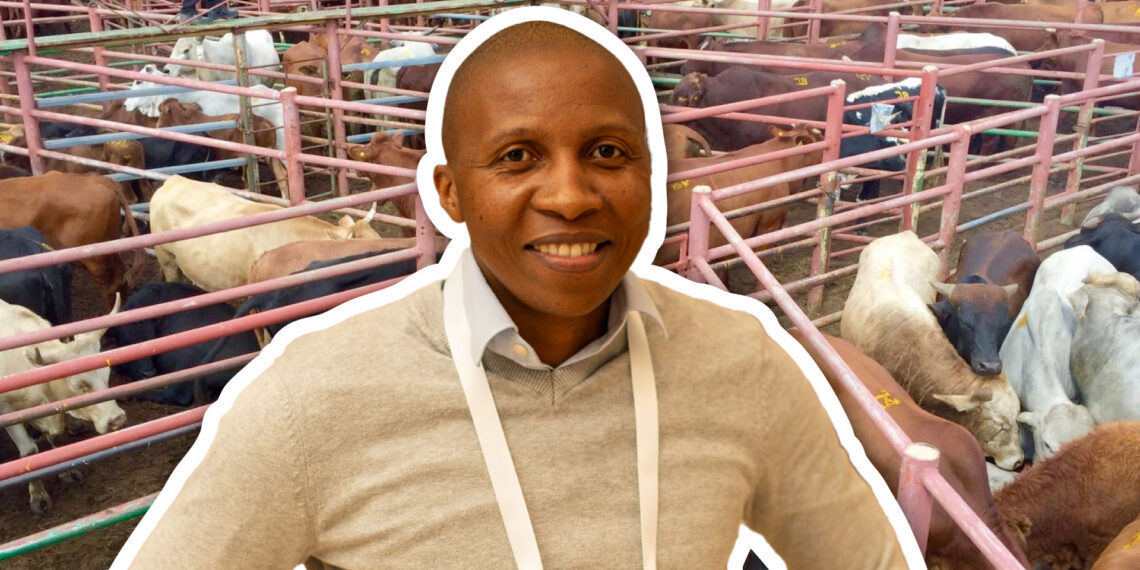
Many farmers in rural South Africa struggle to secure registered animal identification marks, leaving their livestock vulnerable to theft. The process is often unclear, with common errors and delays. To address this, Dr Siphe Zantsi, an agricultural economist in the economics analysis unit at the Agricultural Research Council (ARC), suggests several solutions to ensure better animal protection.
In South Africa, where rural life heavily depends on livestock, the Animal Identification Act No. 6 of 2002 plays a vital role in protecting farmers. With stock theft on the rise, the need for registered identification marks for cattle, sheep, goats, and pigs is more urgent than ever.
However, many communal farmers, especially in rural former homelands, struggle to navigate the process of securing these essential marks, leaving them vulnerable and unable to protect their livelihoods.
This issue was highlighted in recent workshops run by the Agricultural Research Council (ARC) through the Kaonofatso Yadi Kgomo programme, revealing a significant system gap. It’s crucial to ensure that all farmers, no matter where they are based, have access to the tools necessary to safeguard their animals and secure their future.
Adhering to the Animal Identification Act
The Animal Identification Act mandates that all livestock owners in South Africa must register identification marks for their animals, making it compulsory to permanently mark cattle, sheep, goats, and pigs. This measure is especially critical given the escalating rates of stock theft across the country.
Despite this, many communal farmers, particularly those in rural former homelands, are still without registered marks and unsure how to acquire them.
Although extension officers frequently advise farmers to apply for animal identification brand marks, confusion remains around the process.
The application process
To apply, a farmer must complete an application form, which can be downloaded online or obtained from local agricultural departments, stock-theft units of the South African Police Services, or directly from the registrar of animal identification in Pretoria.
After completing the form, the applicant must pay a once-off fee of R200 for the registration of a brand. Proof of payment, the completed form, and a copy of the applicant’s ID must then be sent to the department of agriculture via email, post, or fax. Walk-ins are also welcome.
Related stories
- EC stock theft sting: Police seize over R6m in livestock
- Combatting livestock theft with DNA technology
- Tech-based ear tags target livestock theft in Eastern Cape
Challenges in the process
After applying, the farmer will receive a unique identification mark generated by a computer. They are then expected to purchase branding irons from a nearby agricultural co-operative and mark their cattle, or tattoo their sheep, goats, and pigs with the same marks as shown on the certificate.
However, according to Lilly Qwabe who handles these applications regularly, many communal farmers still struggle with the process. She highlighted several common mistakes, such as farmers not printing their full names as they appear on their ID cards, only using initials, or failing to attach copies of their IDs.
These errors delay the application process, particularly when farmers fail to include their contact details, making it difficult for authorities to inform them of any issues with their applications.
Additionally, some applications take too long to reach the agriculture department, meaning by the time they are processed, the registration fee has increased. Fees rise annually by R10 or R20 from 1 April, which can cause problems for farmers who are unaware of this.
Another common mistake is farmers applying for separate certificates for each species of livestock they own – cattle, sheep, goats, and pigs – when only one certificate is needed for all species. There is also confusion around the branding marks themselves. Some farmers expect the marks to resemble their initials, as they are accustomed to painting or branding their animals differently.
Misunderstanding the process
Further confusion is evident in questions raised by farmers during workshops. For example, some asked whether they could use the brand marks of previous owners when applying for their own. Others questioned when extension officers would visit to brand their animals, not realising that it is their responsibility to do the branding, with extension officers only providing demonstrations.
Another common query is about the transfer of ownership of animal identification marks. In cases where an original owner has passed away, farmers are unsure about the process for transferring the marks.
Qwabe explained that issues arise in cases of polygamous marriages, where disputes over the ownership of animals often lead to legal challenges. A court ruling now requires people seeking to transfer ownership of animal identification marks after the original owner’s death to obtain a letter of authority from the magistrate’s court. If the original owner is still alive, a sworn declaration from both the original and new owners, along with their ID copies, is required.
The need for more communication
Farmers appreciated the detailed explanations provided in these workshops and expressed a desire for more frequent sessions. The high farmer-to-extension officer ratio – 1 extension officer for every 1 053 farmers – limits the opportunities for extension officers to visit farmers regularly, creating a wide gap in communication and understanding.
It would be beneficial to host these workshops more often and utilise other communication channels, such as radio shows in local languages, to reach a broader audience. This would ensure that farmers, particularly in rural areas, have the necessary knowledge to protect their livestock and livelihoods.
In conclusion, while the Animal Identification Act is essential for protecting farmers from stock theft, there is a pressing need for clearer communication and more accessible support for communal farmers to navigate the application process. With the right education and resources, these farmers can better safeguard their animals and secure their futures.
- Dr Siphe Zantsi is an agricultural economist at the Agricultural Research Council’s economic analysis unit. The views and opinions expressed in this article are those of the author and do not necessarily reflect the views or positions of Food For Mzansi.
READ NEXT: Farm extension services key to inclusive agricultural success
Sign up for Mzansi Today: Your daily take on the news and happenings from the agriculture value chain