Thursday, July 9, 2026
SUBSCRIBE
22 GLOBAL MEDIA AWARDS
Food For Mzansi
  • News
  • Changemakers
  • Lifestyle
  • Farmer’s Inside Track
  • Food for Thought
No Result
View All Result
  • News
  • Changemakers
  • Lifestyle
  • Farmer’s Inside Track
  • Food for Thought
No Result
View All Result
Food For Mzansi
No Result
View All Result
in Agripreneur

Barnard Mohair: Weaving EC agriculture into global fashion

Behind every luxury Barnard Mohair garment is a rich South African story. Deeply rooted in the Eastern Cape, which produces 48% of the world’s mohair, this family-owned brand champions ethical farming, eco-friendly dye processes, and local craftsmanship

by Vateka Halile
9th July 2026
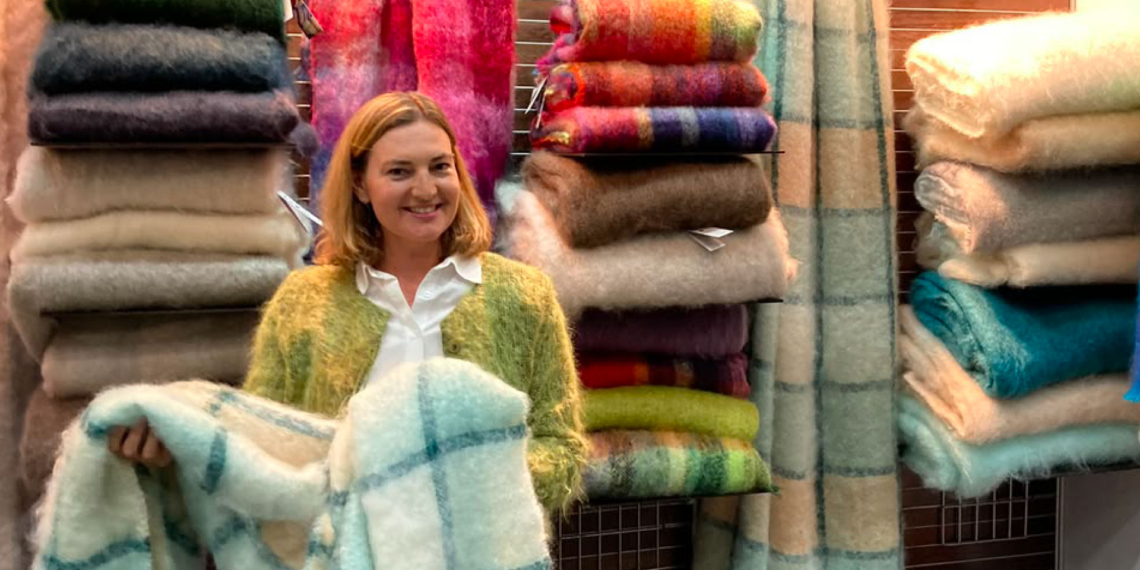
Barnard Mohair owner Louise Cameron grew up in the factory, learning the art of mohair from a young age. Photo: Supplied/Food For Mzansi

Barnard Mohair owner Louise Cameron grew up in the factory, learning the art of mohair from a young age. Photo: Supplied/Food For Mzansi

Share on FacebookShare on TwitterShare on WhatsApp

Behind every fine garment is a story of how it came to be. For Barnard Mohair, that journey began in 1967 in Alicedale, a quiet town in the Eastern Cape. 

It started with Jan Paul Barnard, who discovered the magic of raw Angora fibre while visiting a friend and began crafting hand-spun mohair curtains and carpets. A few years later, the brand found its fashion soul when Jan Paul married Elsa Barnard, a visionary designer from Munich. 

Together, they transformed a local craft into an iconic collection, expanding from home textiles to the luxurious mohair jerseys and jackets loved today.

Taking over the family business

As the daughter and now owner of Barnard Mohair clothing brand, Louise Cameron grew up around the factory and regularly helped out at trade shows and exhibitions from a young age.

“During school holidays, we would earn extra pocket money by helping at the factory,” Cameron says. “That’s how we learned how mohair is processed, dyed, and ultimately made into the final products.”

About four years ago, Cameron took over the business, introducing new product and design ideas while focusing on new markets and distribution.

Barnard Mohair owner Louise Cameron at the Bloem Show in 2025. Photo: Supplied/Food For Mzansi

“It’s been a major learning curve,” she admits. “But the staff have been incredibly supportive; some of them have worked for the business for more than 40 years.”

According to Cameron, the Eastern Cape is one of the largest producers of mohair in the world, supplying roughly 48% of the international market. The Angora goat farms are mostly situated in and around Cradock, KwaNojoli (formerly Somerset East), Jansenville, and Willowmore. 

Twice a year, the goats are shorn, and farmers bring the mohair to BKB for auction in Gqeberha. 

“We pride ourselves on only using Eastern Cape mohair that adheres to the Responsible Mohair Sourcing certification,” Cameron notes. “This ensures that animals and farmworkers are treated with the necessary care and ethical standards. Plus, the Eastern Cape is a wonderful province to live in.”


Related stories
  • Diamond fibre: How Angora farmers can crack the mohair market
  • Tech and transformation boost SA’s wool and mohair industries
  • Karoo Winter Wool Festival brings wool, food and big ideas
  • SA shearers honoured as wool sector rides global resurgence

Educating consumers on the merits of mohair

To bring their garments to life, Cameron tells Food For Mzansi that the business initially focused on attending as many markets, shows, and exhibitions as possible.

“This was a great way to see the reactions that clients had to our new designs and collections. It also gave us insight into what clients liked, what we could possibly change, and what colours were popular.”

Later, the business launched a website and turned to Instagram and Facebook to connect with their audience. 

“I made a point to try and see as many of our old customers who used to purchase from us as possible, to keep us front of mind.”

While she notes that shows are incredibly hard work, they remain an excellent way to showcase products and meet new customers.

Crafted from fine, soft mohair, the Barnard Mohair collection features King, Queen, Double, Single, Travel, and Knee blankets in a wide range of colours and designs. Photo: Supplied/Food For Mzansi

One of their biggest challenges has been educating clients on the unique qualities of mohair. She says, “It’s not a fibre that people generally know, so we continue to explain its fantastic qualities. 

“It’s a noble fibre; only five fibres in the world are classified as such. It is light, warm, and regulates temperature. 

“Mohair also dyes exceptionally well, so you get these bright, vibrant colours which make beautiful designs.” 

Cameron adds that lanolin, the natural grease in the wool, protects the fibre from dirt, meaning the final products do not need to be washed very often.

Sustainability and retail partnerships

When her father started the business in 1967, Cameron explains, one of his core focuses was social empowerment. 

“We have recently employed two additional staff members, and the majority of our team are women.”

She says sustainability is also very important, noting, “96% of our products are made with natural fibres, using materials that are good for the environment. Even our dyeing processes use vinegar and Lanaset dyes to ensure that the colours stay permanent without harming the environment.” 

Louise Cameron and her husband, Robert, team up to run the Barnard Mohair stand at the Organic & Natural Products Expo Africa 2026, held at the CTICC in Cape Town. Photo: Supplied/Food For Mzansi

Cameron believes in the power of a single customer who loves the brand, but strategic partnerships have helped the business scale.

“As the business has grown, we have started partnering with retailers such as Corricraft, who have been incredibly supportive of what we do,” Cameron says. “They understand our mission of creating a beautifully crafted, quality product in the heart of the Eastern Cape using only South African mohair.” 

She adds that luxury safari brand Singita has also been a major supporter over the years. “Singita truly believes in our business and has been regular customers of ours. We believe in partnerships; it’s a great way to pull together resources.”

Business tips from Barnard Mohair

  • Go the extra mile with personal customer service, like replacing a missing button or helping a client find the perfect colour match.
  • The standard of your raw materials directly dictates the quality of your finished product. 
  • Actively engage on social media and call clients for feedback to keep your brand front of mind.
  • Allow staff to experiment with new ideas and celebrate their wins; one of the brand’s best-selling designs came directly from their seamstress. 

READ NEXT: EC sheep farmers face rising climate risks to communal flocks

Sign-up for the latest agricultural news delivered straight to your inbox every day with Mzansi Today!

Vateka Halile

Vateka Halile grew up in rural areas of Cofimvaba in the Eastern Cape. She was raised in a traditional family setting and found writing to be a source of comfort and escape. Vateka participated in an online citizen journalism course through Food For Mzansi, and her passion for health and medicine-related stories was born. Her dedication to community work and love for social justice and solidarity spaces is evident in her quality time with the community when she isn't working.

Tags: Angora goatsBKBEastern CapeInspire meMohairWomen in Agriculture
Effective calf management starts before calving and continues long after birth, with healthy cows, quality colostrum, clean environments and close daily monitoring forming the foundation for stronger, more productive animals. Photo: Pexels
Farmer's Inside Track

How to improve calf survival with better colostrum management

by Patricia Tembo
7th July 2026

The first hours after calving can shape a calf’s survival, health and future productivity, making careful management of both the...

Read moreDetails
KZN agriculture shines at Premier’s Excellence Awards

KZN agriculture shines at Premier’s Excellence Awards

7th July 2026

Is your farm’s data safe? The hidden cyber risks in agriculture

7th July 2026
The countdown to Nampo Cape 2026 is on as Bredasdorp in the Western Cape prepares to welcome thousands of farmers, agribusinesses and visitors for four days of innovation, networking and knowledge sharing. Photo: Supplied/Food For Mzansi

The countdown is on for Nampo Cape 2026 in Bredasdorp

7th July 2026
Anesca Achilles, marketing co-ordinator of Visio Vintners, with the Decanter awarded wine. Photo: Supplied/Food For Mzansi

Visio Vintners wins gold at Decanter World Wine Awards

6th July 2026

Gauteng farmers urged to strengthen value-chain participation

Export growth hinges on animal health and market access

Unemployed EC graduate builds booming village poultry business

Global food prices ease as grain and sugar costs fall

Sabio BeeCon 2026 creates a buzz for North West beekeepers

Join Food For Mzansi's WhatsApp channel for the latest updates!

JOIN NOW!
Next Post
What started as a small backyard garden has become a source of food security and financial independence for Zandile Shinga. She waters her cabbages at her plot in ePlazini, where Thanda is helping families build resilience through regenerative gardening. Photo: Supplied/Food For Mzansi

How Thanda helped one KZN family beat the cost-of-living crisis

THE NEW FACE OF SOUTH AFRICAN AGRICULTURE

With 21 global awards in the first six years of its existence, Food For Mzansi is much more than an agriculture publication. It is a movement, unashamedly saluting the unsung heroes of South African agriculture. We believe in the power of agriculture to promote nation building and social cohesion by telling stories that are often overlooked by broader society.

What a rural chilli farm says about possibility and hope

How Thanda helped one KZN family beat the cost-of-living crisis

Barnard Mohair: Weaving EC agriculture into global fashion

Gauteng farmers urged to strengthen value-chain participation

Global food prices ease as grain and sugar costs fall

Simphiwe Hlubi: Why multi-stream income is the future of farming

  • Awards & Global Impact
  • Our Story
  • Contact Us
  • Cookie Policy
  • Privacy Policy
  • Copyright

Contact us
Office: +27 21 879 1824
News: info@foodformzansi.co.za
Advertising: sales@foodformzansi.co.za

Contact us
Office: +27 21 879 1824
News: info@foodformzansi.co.za
Advertising: sales@foodformzansi.co.za

  • Awards & Global Impact
  • Our Story
  • Contact Us
  • Cookie Policy
  • Privacy Policy
  • Copyright

Chat Options

I'm Lerato, your AI assistant!
No Result
View All Result
  • News
  • Changemakers
  • Lifestyle
  • Farmer’s Inside Track
  • Food for Thought

Copyright © 2024 Food for Mzansi

This website uses cookies. By continuing to use this website you are giving consent to cookies being used. Visit our Privacy and Cookie Policy.