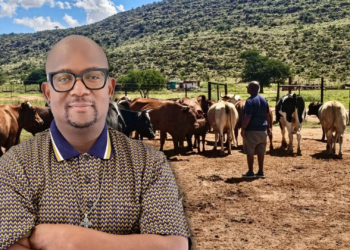
Livestock theft is crippling rural Eastern Cape communities. This article by Dr Siphe Zantsi, an agricultural economist at the Agricultural Research Council, explores the scale of the crime in Matheko village, its emotional and financial toll, and potential paths to resilience.
Stock theft is one of the most serious crimes affecting rural South Africa. In 2011, it was declared a priority crime in the National Rural Safety Strategy. According to the “Victims of crime: Rural safety” report, 0.77% of all South African households experienced losses due to livestock theft during the 2017/18 financial year.
The report further revealed that sheep were the most commonly stolen livestock, with around 270 000 sheep stolen from approximately 19% of affected households, followed by goats.
However, the scale of stock theft varies across the country, with certain regions identified as hotspot areas. This article zooms in at the village level within one such hotspot in the Eastern Cape to explore the scale of livestock theft and its devastating impact. Notable hotspot areas in the Eastern Cape include Qumbu, Tsolo, Ngcobo, and Mthatha, among others.
In April 2024, we conducted a survey among livestock farmers in the village of Matheko, located approximately 15 – 20 km outside Mthatha in the former Transkei. Matheko is known for its strong livestock farming tradition. A typical farmer in this village owns about 160 sheep, 20 goats, and 25 cattle. These animals are kept on communal land, where grazing areas and facilities like dip tanks and dams are shared.
A lifeline for rural farmers
Thanks to the National Wool Growers Association (NWGA), wool production has become a vital source of income for farmers here. The NWGA programme has supported rural communities by supplying high-quality rams, training farmers in wool sorting, and constructing communal shearing sheds.
FARMER POLL
📢 Which bank is powering your farming journey?
Tell us which bank you use so we can better advocate for the specialised financial tools and accessible capital needed to help South African farmers overcome growth barriers and thrive!
All submissions are kept strictly confidential.
A single farmer can earn up to R15 000 per season from wool sales. In addition to wool, farmers also sell live animals: a castrated adult sheep can fetch R2 300, a goat R2 700, and an ox up to R18 000.
Related stories
- GPS ear tags offer hope against livestock theft
- Red meat industry battles stock theft, disease, and high costs
Unfortunately, this modest but meaningful income is increasingly threatened by livestock theft. This is not a petty crime but a well-organised and brutal syndicate activity with far-reaching consequences for rural livelihoods. Two farmers shared their experiences of being victims of this crime.
Mqoma (58) and Mthembu (62), both full-time farmers who retired from wage employment, have a lot in common. Both lost livestock while working in the mines. In 2006, Mthembu lost his entire flock of 100 sheep in a single night.
Since that traumatic event, he has suffered from high blood pressure, diabetes, and even a heart attack. “The pain of losing my sheep was unbearable; it was the only thing I could think of at the time,” he recalled with visible sadness. He said the experience also affected his work performance. “Losing your treasures in one night is awful. I wouldn’t wish it on anyone.”
Driven by passion and an understanding of livestock’s importance in rural livelihoods, Mthembu rebuilt his flock and now owns 120 sheep. He retired in 2020. This pattern is common among rural residents – building up livestock assets and homesteads during wage employment in preparation for retirement.
Living in fear of livestock thieves
Mqoma, meanwhile, has suffered multiple incidents of stock theft. He lost 60 sheep in the first incident, 150 in the second, and 100 in the most recent one, which occurred after he had already retired. Fortunately, he never lost his entire flock. Today, he owns 260 sheep, 30 cattle, 60 goats, a mule, and three horses. Despite these setbacks, Mqoma remains committed to farming, which he considers his primary livelihood.
According to Mqoma, livestock theft in his village is typically carried out by armed gangs and occurs at night. “It’s more of a robbery than a sneak-and-steal crime,” he said. “If you resist or fight back, you could lose your life.”
He believes stock theft is something every livestock farmer in the area must be mentally and practically prepared for.
The big question remains: how do we address this problem? That discussion deserves its own space. What is clear, however, is that this multi-layered issue demands a coordinated response. The perpetrators often live within our communities and supply an illegal market with growing demand.
There is no single solution to this complex issue. Each layer of the problem likely requires multiple strategies. These could include branding livestock with registered marks or tattoos, forming and strengthening community policing forums, regularly monitoring livestock movement using GPS trackers – especially on national roads – screening market supplies more carefully, and tightening border controls.
- Dr Siphe Zantsi is an agricultural economist at the Agricultural Research Council. The views and opinions expressed in this article are those of the author and do not necessarily reflect the views or positions of Food For Mzansi.
READ NEXT: Vaal River floods devastate farmers and tourism sector
Sign up for Mzansi Today: Your daily take on the news and happenings from the agriculture value chain.