Born in Welkom in the Free State, Itumeleng Tsotetsi watched how her grandfather’s farming endeavours aided their community. His work inspired her dream to start her own farming business. Tsotetsi is one of the extraordinary women selected for Corteva Women Agripreneur 2022, a year-long blended development programme at the Gordon Institute of Business Science (GIBS) Entrepreneurship Development Academy (EDA).
Most people in the farming space highlight passion as the main ingredient for success, and Tsotetsi is no exception. Growing up, she has always wanted to start her own business, not just as a means to improve her own life, but also the lives of others.

“When I was in the Free State, I lived with my grandfather. He was a vegetable farmer, and he would sell his produce to the local market. He also donated food to the local orphanage. Seeing the passion that he had inspired me. I knew then that I wanted to start my own business. Not only for myself, but to help other people as well.”
The road to starting her poultry business was a winding one for Tsotetsi. After school, she studied towards a business degree at the University of the Free State but had to drop out because studying became unaffordable. She then started working in a call centre, selling insurance.
“After that, I entered the financial service sector. I started off as an intern with insurance company AON, and from there, I became a client service advisor. So, I worked in the sector for about three years before venturing into my own business.”
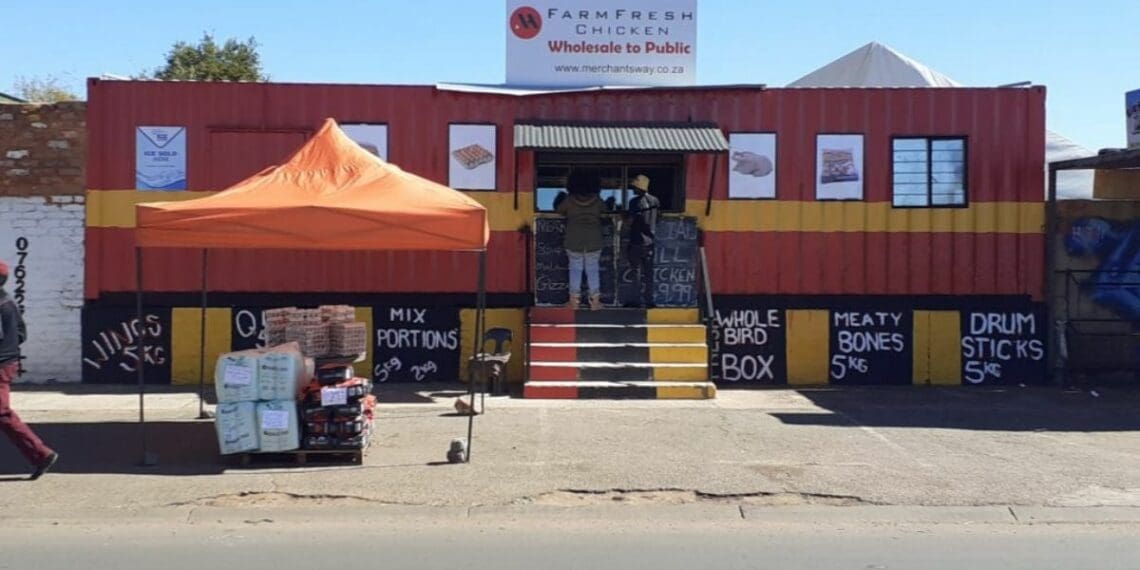
Tsotetsi’s company, Merchants Way, started off as a distribution business, where she sourced meat products for resale.
“Initially, I started this business as a distributor. I would source meat products and sell them to traders until the demand became too big. The demand showed me that I had to own the production aspect as well. That’s how l started farming.”
Building connections
Watching the way her grandfather gave back to others engendered a keen sense of community in Tsotetsi. This explains why the aim of her latest undertaking is to set up a co-operative other women can benefit from.
“I partnered with one of the other soil sisters, Masentle Lukhele, who I met during the Corteva Agriscience programme. We are in the process of managing one farm together because we both needed to grow. We are going into that venture together with the aim of forming a sort of a co-op with other women as well, to empower them within the agricultural sector. “
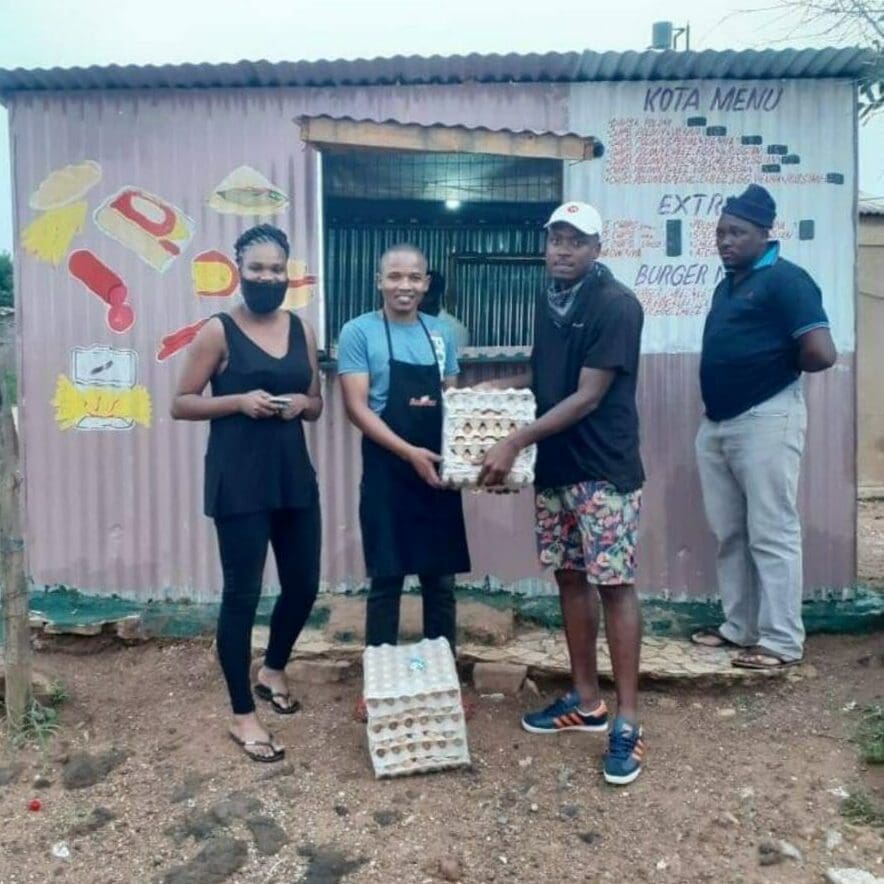
The partnership signifies one of the primary focuses of the Corteva Agriscience programme – building connections. This is also one of the aspects of the programme that appealed most to Tsotetsi.
“As a woman in agriculture, the job does get quite challenging and lonely. There’s not enough support for women in this space. So, when I saw that Corteva advertisement popping up on my phone, it occurred to me that this could really be a great opportunity. I decided to sign up and I believe that the programme came in the time where I really needed it the most.”
The rising costs of inputs had Tsotetsi fearing for her business and doubting her own competence, doubt that disappeared soon after she started the course.
“Even though it’s only been a few weeks, I have met wonderful people. I have gained confidence in my farming as well, and I actually believe more in myself and in what I do. The programme has not only helped me with necessary skills and with networking, but it has also developed me as a woman in agriculture. It’s been really wonderful.”
Staying motivated
As someone who farms on a smaller scale, Tsotetsi has really felt the brunt of the rising costs, especially in the last year. She says bigger corporate farms are more sheltered from these rising costs, as they are able to buy in bulk and save.
“But what keeps me motivated is simply being able to grow food. There’s a joy one gets when you are able to grow food for your community and for your country. It’s really an amazing feeling.”
Tsotetsi’s dreams for her business are not limited to South Africa. She explains that she recently applied for an export and import licence, as she has ambitions of expanding her operation into other African countries.
“I would like to move to a much bigger farm, with enough grow houses to supply some of our neighbouring countries, including Lesotho, Zimbabwe, Mozambique and Botswana. I notice that a lot of my customers come from those countries, so I would love to tackle those markets.”
Tsotetsi’s advice to women aspiring to be farmers is to start with what they have.
“In farming, it is the little movements that actually make a difference. I always say that, even if I make one rand a day, I’m truly grateful because that’s the one rand I did not have. So, start with the little that you have. If you don’t have land, be willing to source from other small farmers and distribute their products until you are able to get your own property.”
ALSO READ: This #SoilSista’s poultry farm puts quality first
Get Stories of Change: Inspirational stories from the people that feed Mzansi.