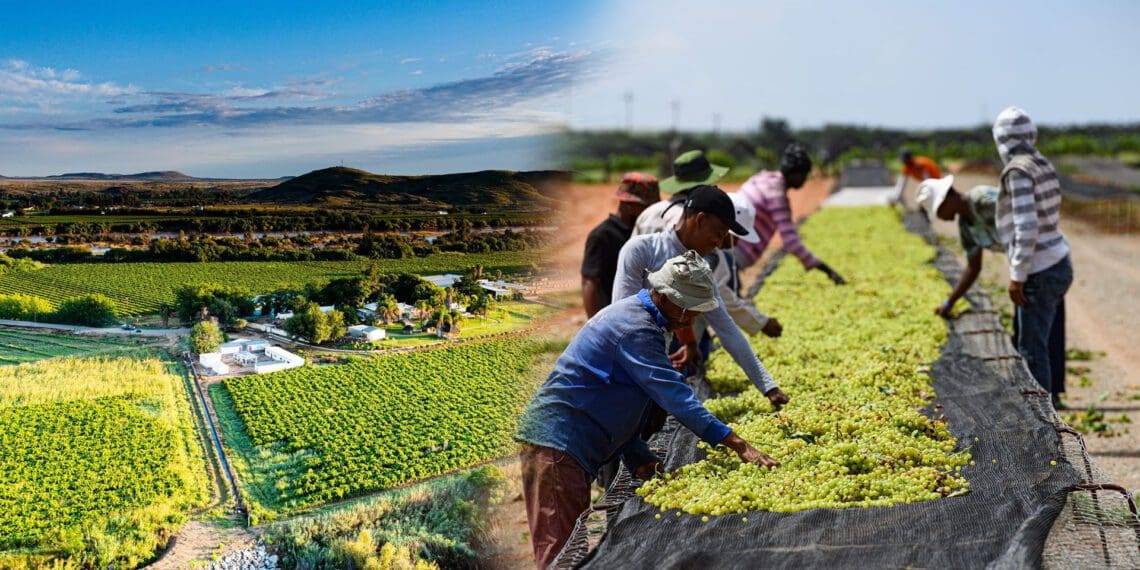
In parts of the country, the grape harvesting season is well underway. Usually, the season marks an exciting period on Mzansi’s wine calendar but this time around, it’s an uninspiring experience altogether.
Eskom’s unreliable energy supply has dampened enthusiasm for grapes farms across the country. Farmers who have already had to adjust production and vineyard management significantly, worry that they might not be able to handle the crisis for much longer.
When Paul Siguqa, owner of Klein Goederust Boutique Winery in Franschhoek, bought his grape farm in 2019, he could never have anticipated that electricity shortages would be his greatest challenge. Since November 2022, Siguqa has reported a loss of more than R200 000 as a direct result of load shedding.
Generators keep the show going
Klein Goederust Boutique Winery is a small boutique wine farm, which means that power cuts spell disaster for the young wine producer.
“It is devastating to operate any business in this load shedding. The costs of cooling and diesel are escalating and make it impossible to make a profit. We must rely on generators to keep the show going.”

To avoid production losses as much as possible, Siguqa and his team work extra hours to make up for the lost time.
“I am an emerging farmer and this I can tell you, has a significant impact on us. Having to make available money that was not meant for this emergency situation, is devastating,” Siguqa tells Food For Mzansi.
Furthermore, the power cuts are also a security risk for Siguqa’s business. “We have seen an increase in cable theft, which then means even when the power is back, there will be no electricity.”
‘We are not coping’
Although the process followed and equipment used vary widely among wineries, most electricity generally goes toward refrigeration for fermentation cooling, cold stabilisation, and cold storage.
According to Groote Post Wines’ communications manager, Peter Pentz, the load shedding threatens the cooling and production process of grape farming.
At the wine farm on the Cape West Coast, they are forced to constantly readjust their production and vineyard management.
“The costs of running a generator are extremely high, which significantly raises production costs. This, however, is not a cost that the wine estate can pass on to the end consumer, as it is a very competitive industry, and they need to keep costs low,” Pentz says.
Meanwhile, Martin van Rooi of Boerdery Onderbegin, a grape farm in Upington, worries about the weeks ahead.
“We are not yet harvesting but with the rate of power cuts we are having now, it is unavoidable to think of those challenges and having to come [up] with a plan,” he explains.
Even when they take their grapes to the wine cellars, the process takes longer due to load shedding, which affects the whole value chain, Van Rooi adds.
“As a wine grape farmer, I can tell you that we are not coping,” he says. “We decided to farm this season on a very small portion for both raisins and wine grapes because the costs of operating a huge portion [of land] with the problems the country is still facing, is huge and unbearable.”
Raisin production at risk
Meanwhile, Raisins South Africa CEO Ferdie Botha tells Food For Mzansi that for the past two seasons, they have seen losses at primary production worth R1 billion. This was mostly due to heavy rainfalls with power outages adding further pressure.
“At [a] processing level it’s a different story compared to on the farm. The process is very much energy-intensive, so there was a lot of capital expenditure at our six processing facilities to ensure there is enough power supply which comes with huge capital expenditure cost,” he explains.

In addition to primary production on the farm, Botha points out that load shedding is disruptive to the drying of fresh foods.
He adds that from a practical point of view, load shedding schedules create challenges for production planning and managing logistics.
“We are estimating a loss of R300 million because of the production side that suffered from the irrigation practices that cannot be performed without power, [and] general farm operations. At the factory level there is a significant cost of using generators,” says Botha.
Eskom must get its ducks in a row
While Eskom says it is unable to give a definitive date on when load shedding will end for South Africa, grape farmers who can afford it are looking at alternative energy.
“Alternative energy production, such as solar and wind energy, are viable options, but the initial investment is prohibitively expensive,” Pentz states. “ That is still not the final solution, and the onus is on the national energy supplier to sustainably supply us with power.”
Meanwhile, Vinpro’s managing director, Rico Basson, says bigger cellars may be able to handle the crisis a lot better as they had invested in generators and solar panels. However, for smaller farms and cellars, this is a costly exercise.
ALSO READ: SA’s wine industry looks forward to silver lining
Sign up for Mzansi Today: Your daily take on the news and happenings from the agriculture value chain.