In the Eastern Cape, Group 500 Africa is working to combine agriculture with enterprise development to support small-scale farmers and strengthen rural economies.
Founded by Loyiso Mbete in 2020, the organisation brings together a network of producers who share resources, training, and market access.
With operations across the Western Cape and Eastern Cape, Group 500 Africa aims to build a sustainable farming model rooted in collaboration, skills development, and broader participation in the agricultural value chain.
“I started Group 500 in 2020 with my background in farming,” Mbete shares.
He previously lived in Stellenbosch in the Western Cape, where he gained diverse experience in agriculture, having worked with organisations like Casidra and the department of agriculture. He has also been involved in greenhouse farming with Pioneer Foods and has experience in beekeeping.
Related stories
- Free State agriculture partners with Da Vinci Institute
- Women lead the way in climate adaptation in Africa
- Youth-led farming sparks hope and transformation
Built on ubuntu
At its core, Group 500 Africa operates as a networked group of farmers who share land, resources, and knowledge. The organisation’s mission is to bridge the gap between agriculture and enterprise by offering training, access to funding, and business support, particularly for farmers from previously disadvantaged communities.
“If farming is a project that you can’t do alone. We must organise ourselves, work together, and create systems that allow people to thrive.”
Although it operates in both the Western and Eastern Cape, its current emphasis is on the latter.
“We’ve got eight farms in the Eastern Cape with 130 farmers there, and our members are scattered throughout six regions of the Eastern Cape. We also have strategic partnerships in Johannesburg,” Mbete notes.

His leadership is anchored in the African philosophy of sharing. “As an African child, our culture teaches us that whatever you have, you must share. If you have food and someone else doesn’t, you don’t eat alone,” he says.
Mbete could have pursued personal success, but he chose a collective path instead.
“I’m an emerging farmer myself, but I don’t live in this world alone. We grew up in a time when communities would come together to work in each other’s fields. Now, as educated young people, we must build systems that uplift everyone.”
Crops, livestock, and a million heads of cabbage
Group 500 Africa supports a broad spectrum of commodities, from livestock to crops.
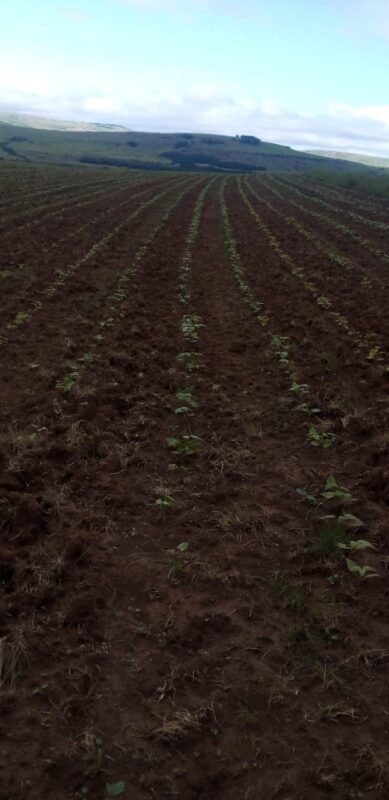
“Some of our farmers have cattle, pigs, sheep, and goats. Also, we are planting cabbages,” Mbete explains.
One of their most notable initiatives in 2021 was the “One million heads of cabbage” campaign. “We planted one million heads of cabbage, and we sold them out.”
Currently, the organisation operates on approximately 4 000 hectares, including a 700-hectare farm dedicated to grazing.
“We have land available. We just need resources to make the land more productive. In the long term, we’re looking at securing up to 20 000 hectares to support our members,” says Mbete.
A strategic farming model & market
Their farming approach is guided by a structured and strategic model.
“Our pillars are the production plan, marketing plan, security plan, animal plan, and standard operating procedures. That’s how we’ve crafted our model so that it is a viable model,” explains Mbete.
He adds, “We’re using the available markets, like the fresh produce markets that are available, especially in the Eastern Cape.”
They are in partnership with a government entity called Intinga Agencies, which has already facilitated a market for 2 000 cattle, with similar opportunities for sheep.
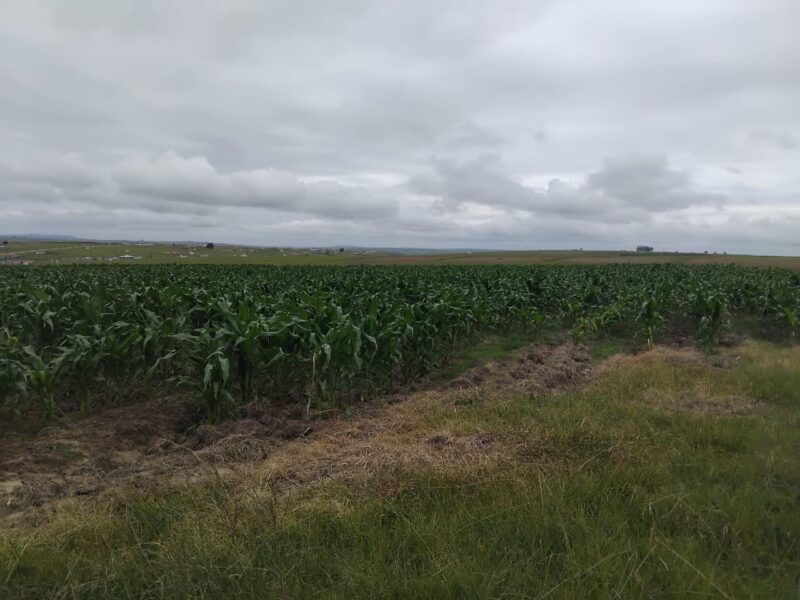
“Last year, one of our members was supplying Food Lovers with sweet corn,” he adds, illustrating how Group 500’s farmers are building to reach commercial scale.
Group 500 Africa is focusing on expanding its role within the agricultural value chain by developing agro-processing capabilities and establishing franchise models. Their goal is to grow produce that they can process internally and to set up franchises across the province.
Security remains a top priority, particularly given the persistent issue of livestock theft in rural communities.
Training and job creation
Mbete attributes his passion for farming to his upbringing and early exposure in Stellenbosch.
“I am a farmer. From my upbringing, I have been farming. My father was a farmer. When I got to the Western Cape, I was privileged enough to be in a farming environment.”
The impact of Group 500 Africa extends beyond agricultural production; it creates employment and learning opportunities.
“We’ve received a lot of training also from the Elsenburg College and the department of agriculture, Western Cape,” Mbete says.
Currently, the organisation employs about 300 people during peak periods, and estimates suggest it could eventually create up to 1 500 jobs for women, youth, and the elderly in rural areas.
“We have seasonal workers but also one or two workers that we employ permanently every time we’re planting.” Training remains central to their development strategy.
Group 500 Africa tailors its training to the real challenges faced by farmers, prioritising practical outcomes over generic programmes. This includes specialised training in drone technology, sheep farming, and an upcoming focus on wool production in partnership with the University of the Free State.
They also distinguish between formal agricultural training and essential soft skills. “The informal training deals more with life skills. You can have a farmer who is competent in irrigation, but also they must be trained how to deal with people, how to liaise, how to do business.”
Beyond primary production
Looking ahead, Group 500 Africa is determined to evolve from being just primary producers.
Mbete envisions a franchise model that includes butcheries and fresh produce stores run by local communities. The organisation is also exploring ways to integrate the skills of refugees into the agricultural value chain.
“It’s significantly important to us that we tap into the different skills that other people are coming with. We can create a harmonious playground for all of us to operate.”
The name Group 500 Africa reflects a vision of scale and collaboration. Mbete sees himself as part of the broader African continent, aiming to build a network of 500 companies across Africa that will contribute to the growth and success of the SMME sector.
Access to land remains a challenge, as it does for many new-era farmers.“Some of the land we operate we don’t own, but we have been given it by people willing to support us.”
Still, Mbete champions the idea that collaboration enhances productivity. “One hectare of nothing is nothing. But one hectare with five people working on it, it’s production.”
Group 500’s growth hinges on strategic partnerships. It is already in talks with institutions like the Land Bank and the University of the Free State. While his journey is still unfolding, Mbete remains steadfast in his call for support and collaboration.


READ NEXT: Getting started with sorghum farming