Small businesses are central to Africa’s economies but are highly exposed to climate shocks. This article by London-based academics, Kate Gannon and Shaikh Eskander, unpacks how research shows those led by women are more likely to adopt sustainable adaptation methods.
Women in Africa are often framed as especially vulnerable to climate change. Our earlier research suggested that women entrepreneurs often face a “triple differential vulnerability” to climate risk compared to men.
What we mean is that there are three possible reasons for their additional vulnerability. First, their livelihoods are often in climate-sensitive sectors. Second, they face additional barriers to accessing resources for adaptation in the business environment – such as finance, new adaptation technologies and markets for climate-smart goods and services. Last, they also hold primary responsibility for managing climate risk at the household level.
However, our new research also suggests a parallel, more overlooked reality. Women entrepreneurs may also be leading the way in action on climate resilience in Africa.
Through the Women Entrepreneurs in Climate Change Adaptation (WECCA) project, we are researching this role of women as strategic actors in inclusive adaptation action.
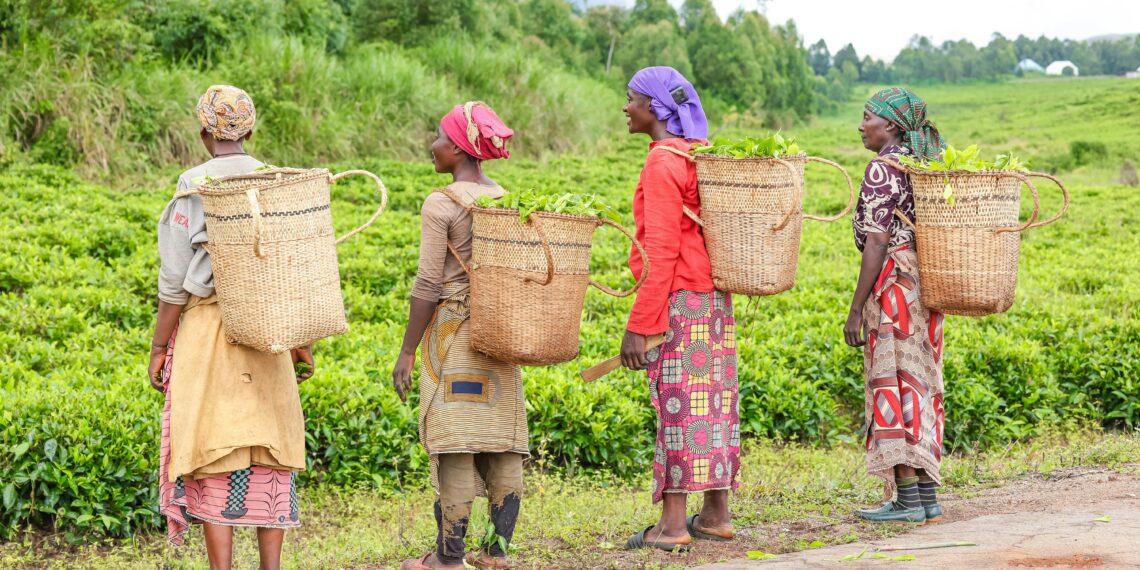
Women’s entrepreneurship is key to development outcomes in Africa. This is because their businesses make wide-ranging contributions to economic activity. They are active in critical agriculture and food processing value chains, which boosts export earnings. And through cooperatives and savings groups, at the local level, women create access points to finance and markets for others in underserved regions. Studies also suggest women are more likely to use their profits to address the most critical household needs.
Small businesses form the backbone of most African economies. They generate most employment opportunities and provide essential goods and services.
Yet, these businesses are on the frontline of climate impacts. Floods, droughts, and concurrent disruption to power, water and transport networks threaten supply chains, disrupt markets, interrupt livelihood activities and damage business assets.
Businesses must adapt to survive. But how they adapt can make the difference between building long-term resilience and deepening vulnerability.
Results from our study of small businesses in climate-vulnerable regions of Kenya and Senegal suggest that businesses with women leaders take a more sustainable approach to adaptation than those with only male leaders. This safeguards long-term business resilience. Our results also found adaptation assistance has a stronger impact on helping women-led small businesses adjust to climate change, compared to those led only by men.
These results suggest that supporting adaptation for women entrepreneurs isn’t just about fairness. It’s also a smart strategy for scaling up climate-resilient economies. Building an inclusive business environment for adaptation may deliver bigger returns on investments for governments and donors.
Related stories
- Trees: More than shade – a climate change ally
- KZN smallholder farmers battle drought, disease, and poverty
Women entrepreneurs as strategic actors
Our study analysed survey data of small businesses in semi-arid regions of Senegal and Kenya. The aim was to consider how having female owners and managers shaped a business’s adaptation to extreme events.
Our dataset covered the Senegalese regions of Louga, Saint Louis and Kaolack. In Kenya, it covered the county of Laikipia. The regions experience extreme drought and flooding that is expected to increase in the coming decades. Entrepreneurship in these regions is particularly concentrated in agricultural sectors. These are highly exposed to the impacts of these extremes.
We investigated how a business having female leaders impacted the number of sustainable and unsustainable adaptation strategies that they adopted.
Following earlier literature, we classified adaptation strategies as:
- “sustainable” when they maintain business operations at existing levels
- “unsustainable” if they help businesses “cope” in the short term but result in a temporary (or sometimes permanent) reduction in business activity. This could reduce the resources that they have to cope with future climate impacts.
We found that businesses which include women within their management and ownership teams adopted fewer unsustainable adaptation measures than those led solely by men. Unsustainable adaptation actions are typically reactive coping strategies that can help businesses address immediate needs to minimise the negative impacts of climate shocks in the short term. These might include selling off business assets or cutting staff.
But these actions often come at a cost. They reduce business activity, undermine future growth, and may limit a business’s ability to recover from subsequent climate impacts.
In contrast, we found that businesses with female leaders were more likely to adopt sustainable adaptation measures that protected the long-term health of the business. These included:
- diversifying income sources
- switching to different crops
- taking out loans or insurance.
Such strategies can help to reduce vulnerability to future climate shocks, and support income stability and recovery during periods of climate stress.
These findings are striking given the additional barriers that women face when trying to adapt.
It is well documented, for example, that women entrepreneurs in Africa face deeper constraints than men in accessing adaptation resources. This includes finance, training and technologies.
Similarly, gendered expectations around domestic responsibilities can limit women’s time and mobility, restricting their ability to attend training sessions or participate in external markets.
Social norms may also limit their decision-making power within households or businesses. This can make it harder to act independently on adaptation investments.
Given these constraints, the use of more sustainable adaptation strategies by women-led businesses deserves careful interpretation. Many of the sustainable measures we analysed – such as switching crops or diversifying income streams – can require less upfront capital than the unsustainable ones. Actions like selling assets or scaling back staff, meanwhile, are only possible if the business owns significant physical or financial resources to begin with.
The lower use of unsustainable strategies by women-led businesses may therefore reflect more limited coping capacity: they may simply have fewer assets to draw on when a shock hits.
Yet this makes the findings even more important. Sustainable strategies can still be highly effective. Our research suggests that women business leaders are often finding ways to adapt that are both practical and forward-looking, even when working with limited capital. In this sense, women entrepreneurs are not just more vulnerable – they are also strategic actors driving adaptation innovation, often with fewer resources.
What’s needed
These findings highlight not only the constraints women entrepreneurs continue to face, but also their untapped potential in adaptation.
What’s more, our study suggests that this potential can be especially powerful when the right support is in place. We found that when adaptation assistance (whether financial or technical) is made available, women-led businesses didn’t just catch up with their male-led counterparts. They often outperformed them.
This points to a highly strategic opportunity: that investing in adaptation for women entrepreneurs could deliver outsized benefits for climate resilience. For their businesses as well as the communities and economies they support.
This finding points to the need for governments to develop a business-enabling environment for adaptation that targets women entrepreneurs. This means designing policies, programmes, and support that address persistent gaps in access to tailored finance, technologies, and adaptation goods and services.
Better data is also needed. Our study used the best available data. But it was based on a relatively small sample from specific regions in Kenya and Senegal and should not be overgeneralised.
To test the strength of our findings, there is an urgent need for additional high-quality, gender-disaggregated datasets on business-level adaptation behaviour.
The World Bank Enterprise Surveys could play a vital role, as one of the most extensive sources of data on small and medium-sized enterprises globally.
*This article was first published by The Conversation. It was written by Kate Gannon, assistant professor, London School of Economics and Political Science and Shaikh Eskander, visiting fellow at the Grantham Research Institute on Climate Change and the Environment, London School of Economics and Political Science. The views and opinions expressed in this article are those of the author and do not necessarily reflect the views or positions of Food For Mzansi.
READ NEXT: Cattle and cover crops power vineyard regenerative study