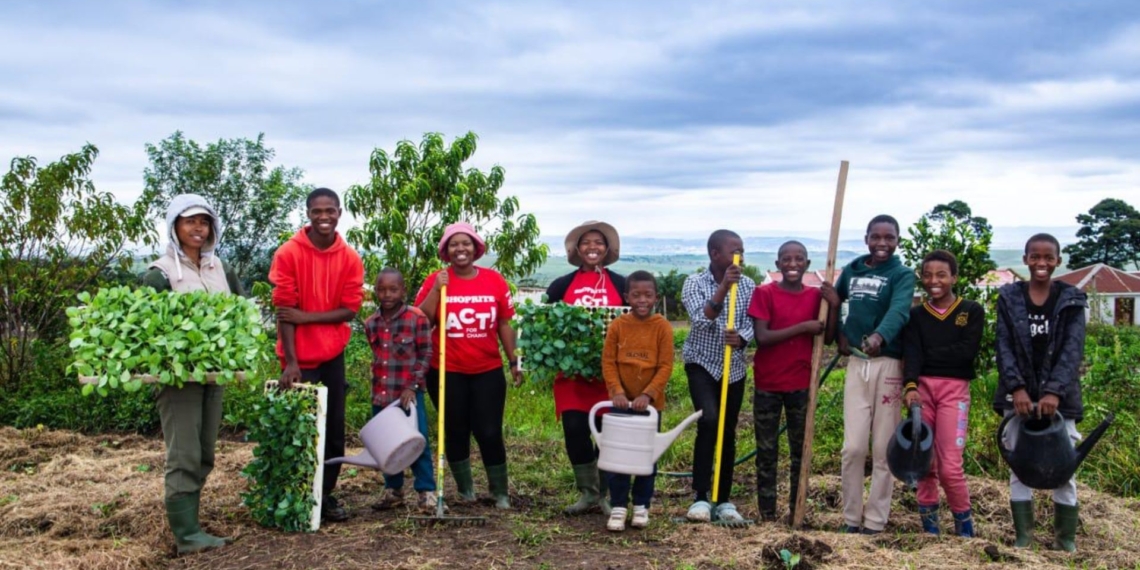
Unemployment is high in Mzansi, and many communities still lack access to knowledge about food that truly nourishes. In Libode, Eastern Cape, young people chose to act. They started Ngxanga School Garden, which gives back while introducing children to farming early on.
What they are building goes beyond growing food. It is shaping a generation that understands where food comes from, how to grow it, and why it matters.
The Ngxanga School Garden operates under Terrestrial Kulture NPC, part of Greenvines Agricultural Primary Co-operative Limited, which is a profit-driven enterprise. The co-operative, co-founded by Tabo Sitsheke, Palesa Tyathuza, and Nandiwe Walaza, began in 2018 and was formally registered in 2021.
Seeds of change
Ngxanga was founded by young people from Misty Mount in Libode, with Neziswa Mlenzana and Inganathi Swana leading the initiative.
Mlenzana says, “Our goal was to inspire learners to enjoy farming while improving nutrition. Children are more likely to eat vegetables they have grown themselves.
“The garden doubles as a practical educational tool for subjects like natural sciences, life skills, and intergenerational agro-ecology training. It was born out of a desire to address food insecurity and unemployment.
“The main goal of the garden is to help the community access fresh produce while teaching schoolchildren and others about agro-ecology and land restoration.”
Neziswa Mlenzana
Sustainability and providing fresh food became key passions.
“This led us to start the garden initiative with support from the Human Rights Foundation and Seriti Institute through the Social Employment Fund,” Mlenzana explains.

They grow spinach, baby marrow, cabbage, broccoli, cauliflower, herbs (basil, mint, turmeric, parsley, rosemary), red cabbage, and seedlings.
Mlenzana notes that these crops contribute to healthy meals, suit the local climate, and mature quickly, allowing learners to experience the full growing cycle from planting to harvest.
Related stories:
- Small-scale food gardens win big in Shoprite’s Act For Change
- Ihawu Lesizwe: Farming co-op empowers youth, grows community
- Water-wise food garden grows hope and dignity in Gqeberha
- Soweto residents turn dumping site into food haven
Where veggies meet vision
Swana is in charge of marketing and branding.
On average, the garden supports approximately 243 school learners per month through food provision, skills development, and community involvement. It also provides food donations to five vulnerable households, explains Swana.
She adds that the garden helps address unemployment by generating small incomes through full-time and seasonal employment.
The garden sells its produce to local community members and nearby retailers such as Spar, Fresh Market, and Ideal Veg Packhouse in Mthatha.

For marketing, word of mouth works well, alongside direct sales to local hawkers and promotion through their Facebook page and WhatsApp channel.
She notes that the team is successfully blending their skills into the business. Mlenzana studied vegetable production and project management at Buhle Farmers Academy. The same year, she graduated with a bachelor’s in economics and statistics from Nelson Mandela Metropolitan University (NMMU), while Tyathuza holds an honours degree in geography from the University of Johannesburg (UJ).
Some of the members did not have formal agricultural backgrounds when they started Greenvines,” Swana says.
“I dropped out of Nelson Mandela University while pursuing a diploma in agricultural management, but later completed a degree in environmental management through the University of South Africa (Unisa).”
Inganathi Swana
The co-operative has also benefited from workshops and training on agro-ecology, entrepreneurial skills, and socio-environmental sustainability through North-West University, attended by all members.
Ngxanga changes lives
Ngxanga School Garden has eight members, comprising youth and women, says Sitsheke. He explains that responsibilities are divided according to each member’s strengths and interests, contributing to the collective’s success.
The roles include vegetable production and maintenance, training and educating children, marketing and sales, administration and finance, as well as fundraising and stakeholder engagement.
“This shared responsibility approach fosters collaboration, skill-sharing, and a sense of ownership among members,” he says.

“It also distributes the workload, allowing each member to focus on specific areas, ultimately benefiting both the business and the community.”
Sitsheke notes the group has grown steadily, celebrating milestones along the way. During Arbour Week 2023, community members, teachers, and learners came together to plant 130 fruit and indigenous trees on the school grounds.
“The school now has citrus and stone fruit trees that serve multiple purposes. Learners enjoy fresh produce, supplementing their meals and adding variety to their diet.”
Tabo Sitsheke
The trees also support the garden’s ecosystem by attracting beneficial insects that control pests and pollinators like bees, while acting as windbreaks that protect school buildings.
In March 2026, Ngxanga School Garden was named second in the top six of the Shoprite Holdings Act For Change programme. “Going from the top ten to being ranked number two has been truly amazing and uplifting. The school management took great pride in this achievement,” Sitsheke says.
Looking ahead, he says the garden aims to build a food-secure, skilled community proud of what they cultivate together, while creating more full-time jobs and reaching more schools


READ NEXT: Visionary farmer takes agritourism to KZN village