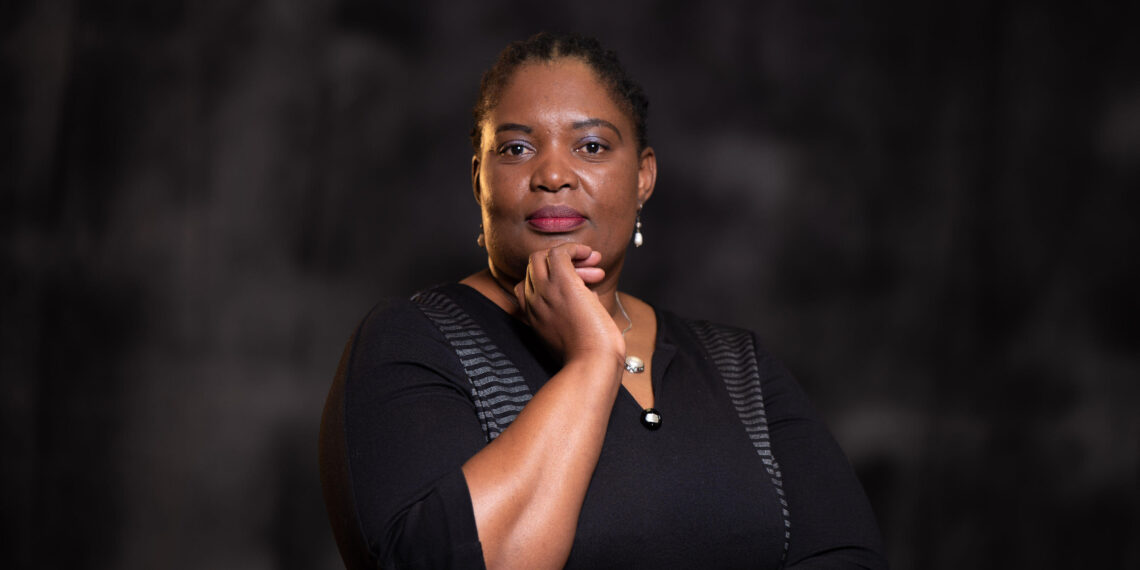
Heritage Day is often seen as a welcome day off or a reason to gather around the braai. However, its meaning runs far deeper, says Mankodi Moitse, CEO of Kagiso Trust, one of South Africa’s leading development agencies.
“It’s a day to remember the foundations of our society – and the way they retain their value as the basis for a more equitable future,” Moitse says.
She notes that South Africa’s multifaceted heritage has been shaped by thousands of years of human history and the blending of cultures, languages and traditions. While the nation celebrates Heritage Day on 24 September, it continues to grapple with how best to honour this inheritance while building a more inclusive future.
“This is a challenge for communities, businesses, governments and development agencies such as Kagiso Trust, which traces its foundations to the apartheid era,” says Moitse.
The trust, which marks its 40th anniversary this year, continues to work in areas where the legacies of centuries of oppression still restrict people’s potential.
Related stories
- Kagiso Trust CEO: Put soul into agriculture for real change
- R30m boost for black sugarcane farmers through Kagiso Trust deal
- Mother-daughter farmers cultivate heritage, not just crops
Heritage as a development asset
For Moitse, South Africa’s heritage is not just a cultural touchstone but a strategic resource. “Many cultural traditions embody sophisticated knowledge systems, and sustainable development recognises that solutions which incorporate traditional wisdom are more likely to be embraced by communities.
“Strong cultural identity enhances resilience and social cohesion, and when people feel connected to their heritage, they’re more invested in their community’s long-term wellbeing. That makes cultural richness a strategic asset for development.”
She stresses that sustainable development is not about discarding traditions in favour of modernity. Instead, it is about enabling communities to adapt and evolve their traditions while preserving their core identity and values. “In that way, human capacity becomes South Africa’s most valuable inherited asset,” she says.
Igniting human capacity
Kagiso Trust was established in 1985 to provide direct assistance to people oppressed under apartheid. Today, it focuses on education, socio-economic development, civil society and local government.
Its mission, says Moitse, is “to ignite the human capacity bequeathed to us by everything that has gone before”.
Recent initiatives highlight this approach. In August, Kagiso Trust announced a R30 million loan facility to help more than 24 000 new-era sugarcane farmers in KwaZulu-Natal and Mpumalanga overcome cashflow challenges. Many of these smallholders farm on communal plots of about 2.5 hectares, while medium-scale farmers manage up to 80 hectares.
The funding provides early payments to farmers who have long been excluded from traditional finance. “We’re committed to growing this two-year facility into a long-term solution,” Moitse says.
Partnering for success
In Limpopo, the trust has also partnered with schools, teachers and learners in Sekhukhune East Education District. The results have been striking: the matric pass rate climbed from below 60% in 2021 to 84% in 2024. Investments included internet connections for 26 schools, an electrical workshop, an ICT centre and teacher skills development.
“In the long-term, igniting human capacity in Sekhukhune East will initiate a self-sustaining virtuous circle by improving the community’s socio-economic conditions, but also by strengthening its inherited foundation: heritage,” Moitse explains.
For Moitse, Heritage Day serves as a reminder for those in development work. “To succeed and achieve sustainability, their efforts must be built on partnerships, a long-term vision, and a platform that honours South Africa’s diverse heritage.
“The greatest tribute we can pay to our ancestors is to ensure that future generations inherit even stronger foundations.”
READ NEXT: SA dairy industry tested by farmer losses and market challenges