Friday, May 1, 2026
SUBSCRIBE
21 GLOBAL MEDIA AWARDS
Food For Mzansi
  • News
  • Changemakers
  • Lifestyle
  • Farmer’s Inside Track
  • Food for Thought
No Result
View All Result
  • News
  • Changemakers
  • Lifestyle
  • Farmer’s Inside Track
  • Food for Thought
No Result
View All Result
Food For Mzansi
No Result
View All Result
in News

Indigenous crops: The climate-smart superfoods we need

To combat climate change, we must turn to indigenous crops like sorghum and millet, says Prof. David Katerere. The challenge, however, is a lack of promotion and market demand, exacerbated by policies that make these superfoods more expensive than traditional staples like maize

by Vateka Halile
3rd September 2025
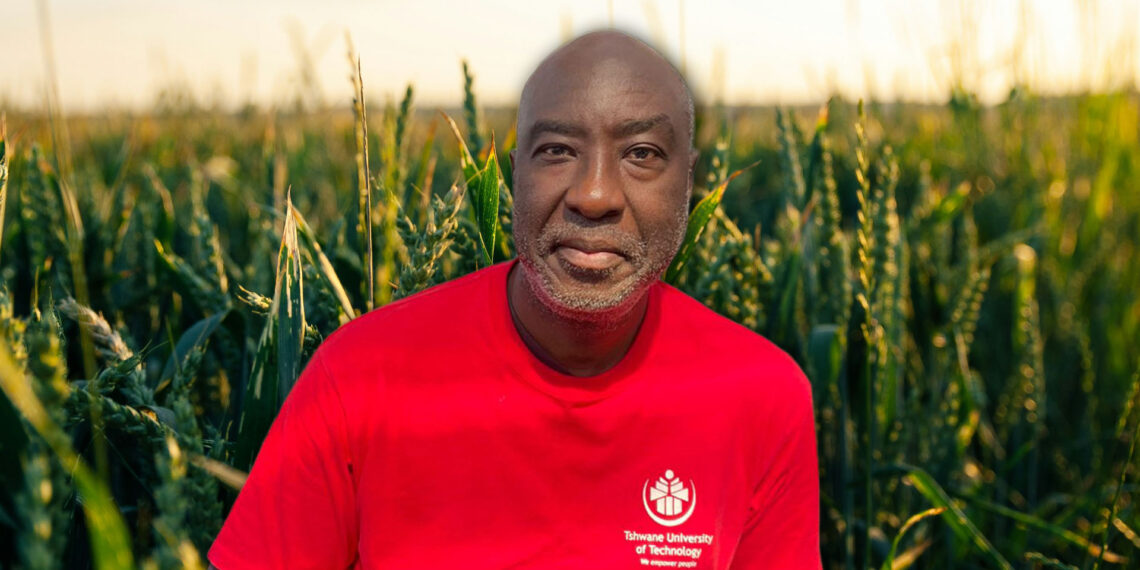
Professor David Katerere of Tshwane University of Technology says indigenous crops such as sorghum and millet can absorb significant carbon from the soil, improving its health and helping fight climate change. Photo: Gareth Davies/Food For Mzansi

Professor David Katerere of Tshwane University of Technology says indigenous crops such as sorghum and millet can absorb significant carbon from the soil, improving its health and helping fight climate change. Photo: Gareth Davies/Food For Mzansi

Share on FacebookShare on TwitterShare on WhatsApp

Farmers are on the frontline of climate change. Scorching heat is burning fields, floods are washing away harvests and livestock, and trees are struggling to survive. Climate-smart action is no longer optional; it is urgent. According to Professor David Katerere, research chair in pharmaceutical and biotech advancement at Tshwane University of Technology, we do not have to look further than indigenous climate-smart crops.

Food For Mzansi caught up with Katerere on the sidelines of the 9th International Conference of the Society for Medicinal Plants and Economic Development (SOMPED), in Benoni, Johannesburg. He shares his insights on the importance of indigenous grains and their role in climate-smart agriculture.

From protecting soil and saving water to cutting emissions and securing food, the solutions must match the scale of the crisis.

Vateka Halile: Which African plants show the greatest potential for supporting climate-smart agriculture in South Africa?

Professor David Katerere: Sorghum and millet are very important for good soil health. They also tend to absorb a lot of carbon into the soil. And in South Africa, we’re not really farming enough of these indigenous grains.

By the way, these are the indigenous grains of Africa and Asia, so we probably need to be farming them. The reason why people are not farming them anymore is simply because they’re very difficult to farm. And then you get a bird problem, right? Because they are open-pollinated varieties, the seeds are out there.

So what happens is birds can come through and eat them, and that’s why maize has kind of taken over. Maize is also very dense in carbohydrates. When you consider the history of South Africa, with wanting men to have a lot of energy for the mining industry, maize just became the universal staple, if you like. There’s room for these grains to come back.

FARMER POLL

📢 Which bank is powering your farming journey?

Tell us which bank you use so we can better advocate for the specialised financial tools and accessible capital needed to help South African farmers overcome growth barriers and thrive!

All submissions are kept strictly confidential. 

The other thing, though, not quite South African or African as many people might want to think, would be hemp and cannabis. Hemp, in particular, is very good for the soil. It actually takes in a lot of carbon, and it should really be promoted in communities.


Related stories
  • Medicinal plants conference highlights healing & profit potential
  • Agroecology: Make farmers profitable, not poor
  • Solar success: Poultry farmer turns setback into comeback
  • Nampo Cape: Sign up for sustainable veggie farming event

How can traditional knowledge of these plants be integrated with modern climate-smart farming practices?

In terms of traditional knowledge, I’m not really into farming as such, but I can tell you that there were traditional ways of doing things. So, millet and sorghum do not really require a lot of water, which makes them really climate-smart in that sense. And you can pretty much use everything from the plant, the grain, and then the other biomass can go into biofuels and those kinds of things.

I think the main challenges are just that, technologically, sorghum and millet have lagged behind from an agro-processing perspective, particularly in Southern Africa, because Southern Africa just became a maize belt. 

And then, of course, in terms of sorghum, it was really looked down upon as animal feed, although it is a very good animal feed. It is fermented, as you know, into alcoholic and non-alcoholic beverages, like mahewu. So it has a lot of potential, at least on the agro-processing side.

Indigenous crops hold key to sustainable agriculture in SA

How can farmers, communities, and policymakers collaborate to make the use of these plants more widespread and effective?

We need to promote the fact that they are healthy alternatives to what we currently have. We also need to create market demand. 

One of the most important things that policymakers should be doing is removing VAT from sorghum-based products, because at the moment, if you’re going to buy sorghum flour, it’s at least double the price of maize flour or mealie meal. 

That disincentivises people to switch, whereas it should be on par or even cheaper, because it’s a healthier alternative, a so-called superfood.

The other thing that one should also be looking at is plants like amaranthus. These [are] so-called leafy vegetables. Amaranthus is also considered a superfood, a very important climate-smart edible weed, but very healthy.

I don’t think we’re doing enough with amaranthus in a formal value chain. Its consumption is quite patchy, and people normally eat it as a leafy vegetable, but the grain of amaranthus is quite valuable. Pigweed; that’s what amaranthus is called. It holds the soil well.

Then there are also plants like blackjack, which are very important, both for food and for medicine, including herbal teas and that kind of thing.

READ NEXT: Minister vows to fast-track land reform, axe bad CPAs

Sign-up for the latest agricultural news delivered straight to your inbox every day with Mzansi Today!

Vateka Halile

Vateka Halile grew up in rural areas of Cofimvaba in the Eastern Cape. She was raised in a traditional family setting and found writing to be a source of comfort and escape. Vateka participated in an online citizen journalism course through Food For Mzansi, and her passion for health and medicine-related stories was born. Her dedication to community work and love for social justice and solidarity spaces is evident in her quality time with the community when she isn't working.

Tags: Climate-smart agricultureCommercialising farmerindigenous cropsInform meSorghum

Related Posts

Female farmers commit to stronger worker relationships

1st May 2026
On the frontline: Why veterinarians are critical infrastructure

On the frontline: Why veterinarians are critical infrastructure

30th April 2026
Local burrata named SA’s best dairy product

Local burrata named SA’s best dairy product

30th April 2026

Mopane & termites: Limpopo insect trade boosts rural livelihoods

Rockman unveils R1 billion budget to combat disease, boost jobs

Tsolo farmers’ day tackles disease and market access

SA growers keep Middle East citrus supply flowing

Women farmers call for inclusive growth and development

Mopane
News

Mopane & termites: Limpopo insect trade boosts rural livelihoods

by Ndidzulafhi Innocent Sinthumule
29th April 2026

In Limpopo, harvesting mopane worms and termite alates is doing more than preserving tradition; it is helping rural families survive....

Read moreDetails
Rockman unveils R1 billion budget to combat disease, boost jobs

Rockman unveils R1 billion budget to combat disease, boost jobs

29th April 2026
Industry experts and stakeholders lead a panel discussion at the Eastern Cape Farmers’ Day Fair Trade hosted by Food For Mzansi in partnership with Inga Qeja, a trailblazing vegetable farmer and the proud owner of Bhayi Holdings in Mbokothwana, Tsolo. Photo: Food For Mzansi

Tsolo farmers’ day tackles disease and market access

28th April 2026

Livestock prices remain high as disease and supply shocks reshape the market

28th April 2026

Sorghum: Forgotten grain rises as climate-smart crop choice

28th April 2026

Calf rearing: Why the first few hours define your future herd

This week’s agri events: 27 April-01 May

SA shearers honoured as wool sector rides global resurgence

Sorghum: Forgotten grain rises as climate-smart crop choice

Stoep to cellar: Sauvignon blanc takes centre stage this May

Join Food For Mzansi's WhatsApp channel for the latest updates!

JOIN NOW!
Next Post
Stepping up safety: Why farmers need the right boots

Stepping up safety: Why farmers need the right boots

THE NEW FACE OF SOUTH AFRICAN AGRICULTURE

With 21 global awards in the first six years of its existence, Food For Mzansi is much more than an agriculture publication. It is a movement, unashamedly saluting the unsung heroes of South African agriculture. We believe in the power of agriculture to promote nation building and social cohesion by telling stories that are often overlooked by broader society.

Stoep to cellar: Sauvignon blanc takes centre stage this May

Female farmers commit to stronger worker relationships

Healing through nature: Letitia builds wellness brand from home

Fairtrade Africa sharpens 2026–2028 strategy for impact

On the frontline: Why veterinarians are critical infrastructure

Local burrata named SA’s best dairy product

  • Awards & Global Impact
  • Our Story
  • Contact Us
  • Cookie Policy
  • Privacy Policy
  • Copyright

Contact us
Office: +27 21 879 1824
News: info@foodformzansi.co.za
Advertising: sales@foodformzansi.co.za

Contact us
Office: +27 21 879 1824
News: info@foodformzansi.co.za
Advertising: sales@foodformzansi.co.za

  • Awards & Global Impact
  • Our Story
  • Contact Us
  • Cookie Policy
  • Privacy Policy
  • Copyright
No Result
View All Result
  • News
  • Changemakers
  • Lifestyle
  • Farmer’s Inside Track
  • Food for Thought

Copyright © 2024 Food for Mzansi

This website uses cookies. By continuing to use this website you are giving consent to cookies being used. Visit our Privacy and Cookie Policy.